Federal Reserve Chair Jerome Powell has stood firm in the face of White House interference in monetary policy. When his term ends in May, the institution will need other leaders to step up and continue to counter the Trump administration's blatant attempts to undermine the independence of the world's most important central bank -- including a gratuitous new broadside against Fed researchers by Trump advisor Kevin Hassett. Fortunately, that already appears to be happening.
The latest dust-up began on Wednesday when Hassett, director of the National Economic Council, said on CNBC that researchers at the Federal Reserve Bank of New York should be "disciplined" for a paper that found US consumers and businesses were overwhelmingly shouldering the burden of Trump's tariffs. Leaving aside the fact that the research was statistically sound and consistent with similar findings by other top economists, the comment was jarring in its call to punish researchers for simply doing their jobs.
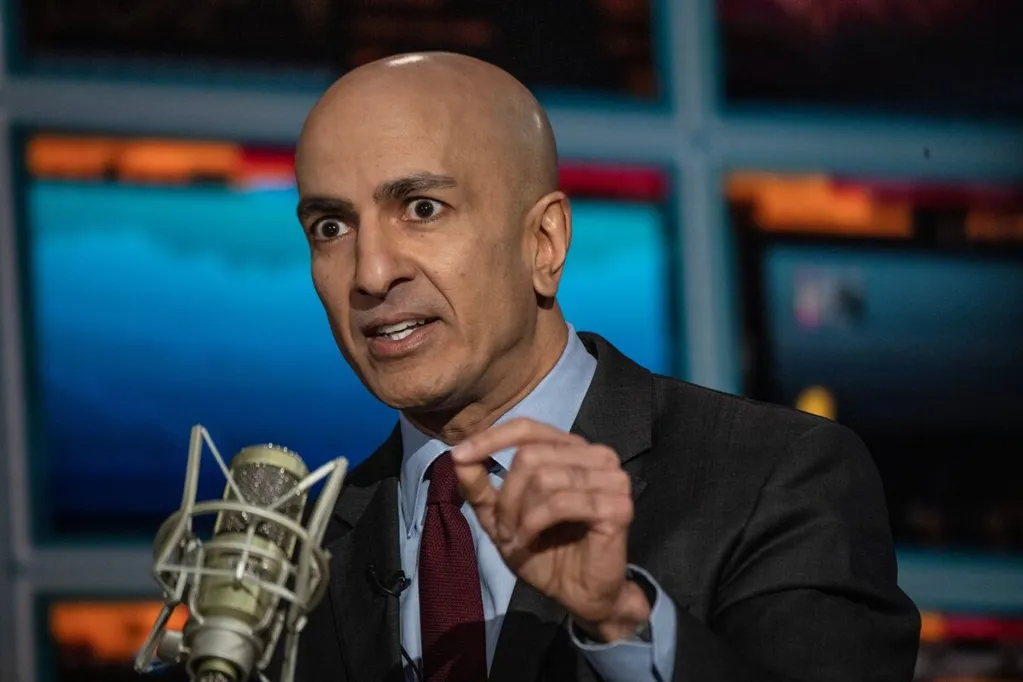
Federal Reserve Bank of Minneapolis President Neel Kashkari called out the broadside for exactly what it is. "I think this is just another step to try to compromise the Fed's independence," he told the audience at an event Thursday in Fargo, North Dakota. "Over the last year, we've seen multiple attempts to try to compromise the Fed's independence," he added. "It's really about monetary policy."
Other reserve bank presidents and governors should follow Kashkari's lead.
Trump's misguided attacks on the Fed began in his first presidency and resumed as soon as he took office for the second time. Month after month, he has insulted Powell on social media, demanded lower interest rates and weaponized the Justice Department to achieve his desired outcomes. The administration used the pretext of alleged mortgage fraud to try to get Governor Lisa Cook removed from her position (she denies the claims and is defending her right to continue voting on monetary policy), and Trump pointed to cost overruns in the renovations of the Fed's headquarters to go after Powell.
Powell initially turned the other cheek and declined to address Trump's meddling directly, apparently hoping to preserve the Fed's technocratic tradition by staying above the fray. But that all changed when the Justice Department served the Fed with grand jury subpoenas in January. In a video message to the American people, Powell cut through the pretext about the Fed's building renovations and said the attacks were really about "whether the Fed will be able to continue to set interest rates based on evidence and economic conditions -- or whether instead monetary policy will be directed by political pressure or intimidation."
For Trump, the Fed is a convenient political scapegoat for his economic problems. Presumably, the White House created this drama in the interest of delivering lower rates ahead of midterm elections. That plan was always ill-conceived since mortgage rates and Treasury bond yields are set by the market, not directly by the central bank. In fact, fears about government interference tend to nudge longer-term borrowing costs higher, on the premise that a compromised central bank would permit inflation to fester. As Kashkari reminded us Thursday, the best economic outcomes are delivered when governments stay out of central banking (emphasis mine):
If you look all around the world, every advanced economy in the world has an independent central bank. The reason they have an independent central bank is because politicians... conservative and liberal, would rather have monetary policy that serves their political needs in the moment. And what economies all around the world have learned is that ... the people are better off over the long run if monetary policy is based on data and analysis, not on short-term political gains.
In May, Powell is likely to be replaced as chair by Trump nominee Kevin Warsh, assuming he's confirmed. As a longtime hawk who conveniently turned dovish when the search to replace Powell started in earnest, Warsh will have much to prove to financial markets and the American people in his first year, both about his policy instincts and his commitment to independence. Equally uncertain is whether he will match Powell's accomplishments as a moral leader of the institution.
As I've noted before, Powell technically has the option to stay on as a Fed governor even after his term as chair ends. Although outgoing chairs conventionally depart, these are extraordinary times that may call for extraordinary measures, and he could use his voice and vote as governor to continue to protect the institution. Still, the odds of that outcome seem pretty low, and the duty to advocate publicly for central bank independence may fall to the Fed's governors and reserve bank presidents.
Clearly, monetary policy officials need not -- and should not -- respond to every comment by politicians. Their work should focus, first and foremost, on understanding the evolving economy and delivering the best outcomes for the country. But the battle for Fed independence is playing out not just in the legal system but also in the court of public opinion, and the Trump administration can't be allowed to dominate the conversation with its massive media megaphone. Instead, the leaders of the institution will need to keep advocating for the virtues of independent central banks in the service of the American people, not their politicians. And Kashkari's comments on Thursday are an excellent start.