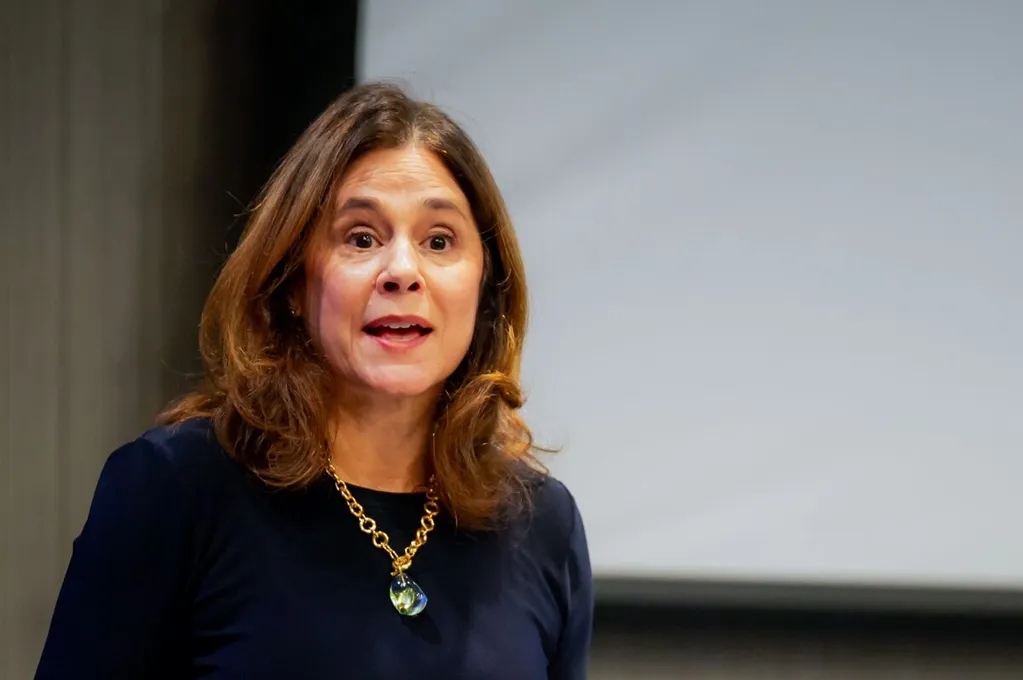
Federal Reserve Bank of Dallas President Lorie Logan said she's hopeful inflation will continue to come down, though it would take "material" weakness in the labor market for her to support more interest-rate cuts.
"We will learn in coming months whether inflation is coming down to our target and whether the labor market will remain stable," Logan said Tuesday in prepared remarks for an event in Austin.
"If so, this would tell me that our current policy stance is appropriate and no further rate cuts are needed to achieve our dual mandate goals," she said. "If instead we see inflation coming down but with further material cooling in the labor market, cutting rates again could become appropriate."
Logan, who votes on the US central bank's policy-setting Federal Open Market Committee this year, said she supported the decision to keep interest rates unchanged at the FOMC's January meeting after three straight cuts to end 2025. She had previously spoken out against rate cuts in October and December, arguing inflation was still too high and that the labor market was in balance.
On Tuesday, the Dallas Fed chief reiterated both sentiments. She said hiring in the past six months or so was near her staff's estimate of the break-even rate -- where the pace of job creation matches population growth -- and that she is "not yet fully confident inflation is heading all the way back to 2%."
Logan, who before taking the helm in Dallas managed the central bank's asset portfolio at the New York Fed, also spoke about balance-sheet initiatives the central bank has undertaken in recent months.
Late last year, volatility in funding markets surged as increased government borrowing, combined with the Fed's move to unwind its bond holdings, had siphoned cash reserves out of the financial system. The central bank pivoted back to balance-sheet expansion to ease the pressures and has purchased about $110 billion of Treasury bills since Dec. 12.
Logan said the process, which is technical in nature and unrelated to the stance of monetary policy, shouldn't be mechanical.
"Reserve demand will likely change over time in response to economic growth, changes in the banking and payments businesses, and adjustments in the supervisory and regulatory environment," Logan said. "The amount of reserves we supply will need to roughly track those developments, upwards or downwards, to remain efficient."
She added that money-market rates, such as the tri-party general collateral rate, should on average be close to the interest rate on reserve balances over time if the central bank is maintaining an ample level of reserves in the banking system.
Logan also reiterated her call for the Fed to offer centrally cleared transactions through its standing repo facility and lauded elevated usage of the facility at the end of 2025, calling it an "encouraging sign."