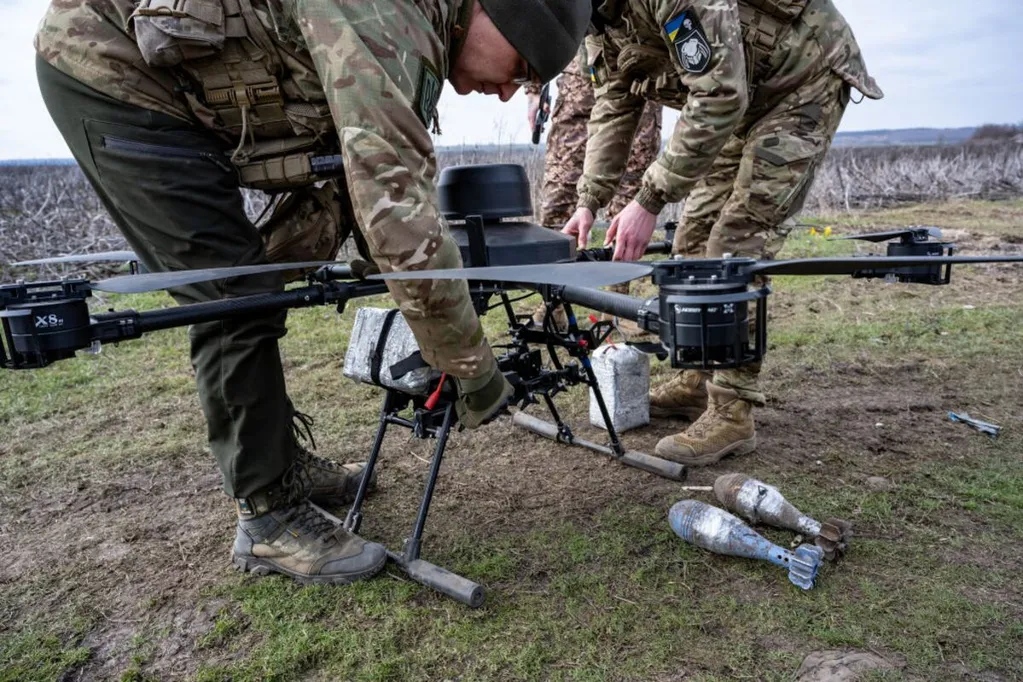
Russia said Ukraine attacked Primorsk port on the Baltic Sea, a key oil export hub, causing a fire that local authorities said was quickly extinguished.
Air defense downed more than 60 Ukrainian drones in the region, with the port the key target, Leningrad regional governor Alexander Drozdenko said Sunday in a Telegram post. He added that the consequences of the fire had been eliminated, without indicating the extent of any damage.
Primorsk is a vital cog in Russia's oil industry, having typically exported well over 1 million barrels of crude oil and diesel daily before a series of attacks by Ukraine this year as part of Kyiv's broader campaign against ports and refineries. The port temporarily suspended tanker loadings on March 23 following a drone assault.
Ukraine is intensifying strikes on Russian energy infrastructure in an effort to curb the Kremlin's revenues amid higher oil prices linked to the Iran conflict. Operations at the Black Sea Tuapse port have been intermittently disrupted after repeated attacks over about two weeks.
Separately, two tankers from Russia's so-called shadow fleet were struck near the entrance to the Port of Novorossiysk on the Black Sea, Ukrainian President Volodymyr Zelenskiy said in a post on the X platform Sunday. The vessels were used to transport oil and are no longer operational, he said.
Russia said it faced 334 drones in total overnight, including near Moscow. Ukraine's armed forces said its defenses downed 249 out of 268 Russian drone attacks and also recorded a ballistic missile strike.
A drone flying in Russia's Leningrad region violated airspace in nearby Finland overnight, according to a statement from the Finnish defense forces. Estonia's Defense Forces also reported a brief drone incursion into its airspace.
The US Air Force agreed to buy an undisclosed number of interceptor drones from a company backed by President Donald Trump's sons, according to the firm, deepening the military's ties to defense contractors linked to the first family as the US war with Iran enters its third month.
The West Palm Beach-based company, Powerus, will sell the drones to the Pentagon following a demonstration at a facility in Arizona, according to Brett Velicovich, the company's co-founder and president.
The deal represents the first sale of this kind of weapon -- which can zip into the sky and blow up enemy drones -- by Powerus to the US military. The company declined to detail the terms of the deal or the size of the contract, but the military frequently enters into such deals as it weighs whether to adopt a new weapons system.
The arrangement fits with a broader US push to counter cheap Iranian attack drones with similarly inexpensive interceptors instead of far pricier missiles. The US Army has already sent 10,000 AI-enabled Merops interceptor drones developed in Ukraine to the Middle East.
At a contentious congressional hearing on Wednesday, lawmakers grilled Defense Secretary Pete Hegseth about the costs of the conflict, which the Pentagon estimates has reached $25 billion so far.
Velicovich said that the US has lagged its adversaries in development of low-cost drones. He said that interceptor drones of the kind Powerus sold to the Air Force can save taxpayer funds and adapt more quickly to threats.
"As a country, we're behind," Velicovich said in an interview. "We're finally taking the steps to fix that."
But the company's ties to Donald Trump Jr. and Eric Trump could invite scrutiny of the deal.
Rather than pursuing an initial public offering, Powerus is planning to merge with Aureus Greenway Holdings Inc., a golf-course operator backed by the Trumps that already has a Nasdaq listing, according to an announcement earlier this year.
Democrats in Congress have asked the Pentagon for more information about other defense contractors and technology firms with ties to the president's family. In addition to Powerus, Eric Trump backed a reverse-merger deal between Israeli drone maker Xtend and JFB Construction Holdings, a publicly listed construction company.
In response to criticism of their business partnerships in their father's second term, his sons have repeatedly said they are private businessmen.
Velicovich pushed back against the criticism, saying that Powerus impressed the Air Force on the merits of its technology.
"They're not going to pick a system because of who's on an investor list," he said. "They're picking because they need it now."
The Pentagon's focus on drone warfare thrust companies like Powerus and Xtend -- and other companies in the industry, including Neros Inc. and Halo Aeronautics -- into a greater national spotlight.
Even before the Iran war broke out in late February, the Pentagon was working on a "Drone Dominance" program to equip US forces with hundreds of thousands of the weapons, arguing that procurement processes had been too bureaucratic and slow-moving.