Washington has rapidly removed three of the most consequential figures in the global security landscape since the start of the year.
In January, Venezuelan leader Nicolás Maduro was captured in a U.S. operation that dismantled the regime's command structure. In February, Mexican security forces killed cartel leader El Mencho with intelligence provided by the United States. Days later, Iran's Supreme Leader Ayatollah Ali Khamenei was eliminated in a strike carried out by Israel with U.S. support. And in March, Trump indicated that Cuba is up next.
Each of those developments carries enormous strategic implications on its own, but taken together, they create a situation far more complicated. Individually, many Americans would probably view each event as a victory. Maduro presided over a regime sustained by corruption and illicit oil networks that allowed Venezuela to endure years of sanctions pressure. El Mencho led perhaps the most violent and sophisticated drug trafficking organizations the world has ever known. Khamenei ruled through repression at home while destabilizing the Middle East abroad.
Few Americans would argue the world is worse off without any of these individuals. But removing powerful leaders from long held power structures rarely ends the story. It merely begins the next phase. Leadership removals disrupt hierarchies. Alliances shift. Rival factions begin competing to fill the vacuum. Sometimes the system stabilizes over time, but in others, the system falls into chaos.
That uncertainty now stretches across several regions at once. Iran is navigating the loss of the figure who anchored its political and religious authority for more than three decades. Venezuela is confronting the sudden absence of a regime that controlled everything from oil exports to internal security forces.
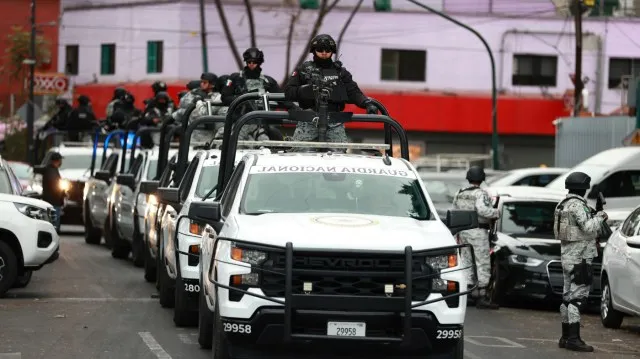
And along the United States' southern border, Mexico has entered a period of uncertain cartel realignment following the death of El Mencho. The implications of that development, however, extend far beyond Mexico's internal security landscape.
The Jalisco New Generation Cartel functioned less like a group of thugs, and more like a sophisticated multinational enterprise. Its networks stretched across continents. Its revenues were tied directly to the production and trafficking of synthetic drugs, particularly fentanyl. Synthetic opioids now drive the majority of overdose deaths nationwide, turning cartel logistics networks in Mexico into a direct and severe public health threat in the United States.
When the leader of an organization like that is removed, the structure beneath him does not disappear. Cartel factions fight for territory. Smuggling routes are contested. Groups experiment with new trafficking and laundering methods as they attempt to consolidate control. The timing makes the situation more complicated.
Mexico's cartel power dynamics are changing at the same time Washington is navigating geopolitical anarchy in several countries. Venezuela's political future remains uncertain following Maduro's removal. Iran is losing their leadership by the hour. The war in Ukraine continues to demand diplomatic and military focus. Individually, each flashpoint carries strategic weight. Taken together, they create unprecedented strategic demand.
The instability along the United States' southern border results in consequences that are well known to American citizens. Fentanyl trafficking moves through supply chains tied directly to cartel infrastructure in Mexico. Production labs, trafficking corridors and distribution networks all intersect with systems operating within reach of the U.S. border. Changes within these networks can have repercussions that directly impact American communities.
Drug trafficking organizations also depend on money laundering to convert illicit proceeds into usable capital. When cartel structures reorganize, those financial pathways evolve with them.
The strategic challenge facing Washington lies in the accumulation of events rather than any individual operation. The difficulty of this emerges when several power centers collapse within a compressed period of time.
The United States has initiated actions that reshape the geopolitical landscape across multiple regions at a frenetic pace. Those actions may ultimately prove justified, but their long-term consequences remain uncertain. What is certain is that the repercussions will not wait for policymakers to address each crisis one at a time. They will be forced to deal with them simultaneously.
Washington now faces the unenviable task of managing regime change in Venezuela, a leadership transition in Iran, the ongoing war in Ukraine and Mexican cartel restructuring along our southern border. While the United States' attention is forced to stretch across multiple nations, perhaps the most immediate security challenges facing the country may be developing right in our backyard. And if that instability grows while Washington is focused elsewhere, Americans may be the ones to feel the consequences first.
Brett Erickson is managing principal at Obsidian Risk Advisors, an advisory board member at DePaul University Driehaus College of Business, Seton Hall School of Diplomacy and International Relations and Loyola University Chicago School of Law Center for Compliance Studies.