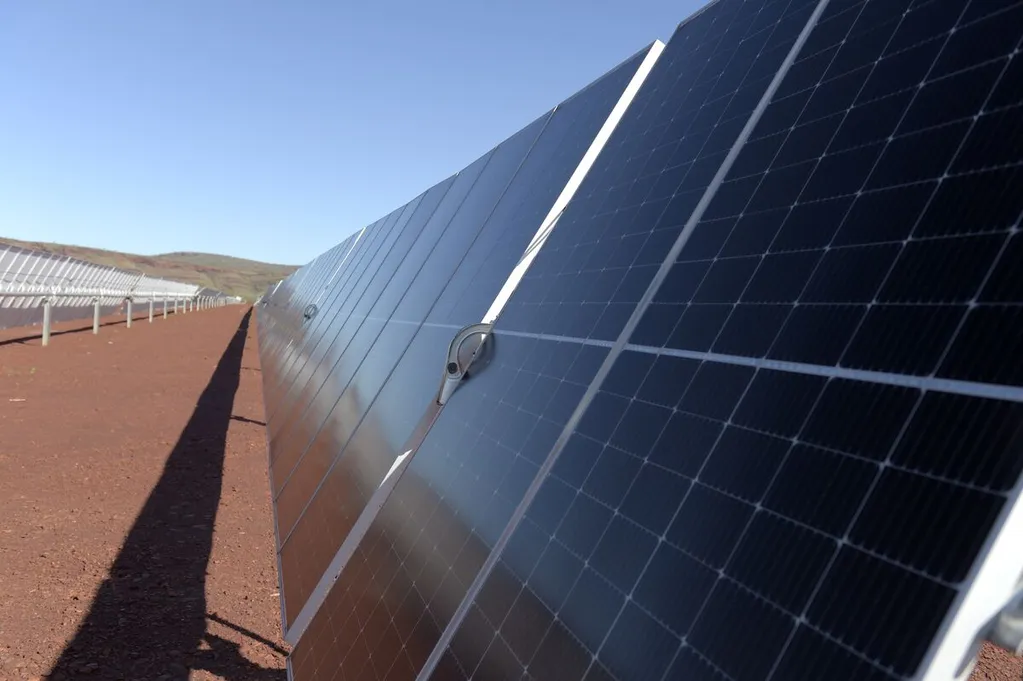
Power project developer Globeleq plans to build a 250-megawatt solar and battery hybrid project in Zambia for completion in 2029.
The plant will be capable of four hours of storage from a battery with 150 megawatts of capacity, Globeleq said in a statement. The company, owned by British International Investment and Norfund, targets financial close on the project in December, followed by 24 months of construction.
Batteries are increasingly being built around the world as costs decline to help supply data centers and also to balance out generation from solar and wind installations. Hybrid projects combine renewable energy and storage.
Zambia relies on hydropower to generate more than 80% of its electricity, but the dams are susceptible to extreme weather and droughts that lower reservoirs and output.
Globeleq's Leopard Hill project, located 25 kilometers (15.5 miles) southeast of Zambia's capital, Lusaka, will provide enough power for about 150,000 households.
The company also holds a 51% stake in the Lunsemfwa Hydro Power Co., which provides access to the Southern African Power Pool that connects the grids of regional states, and owns the 56-megawatt Kafue Solar project.
The UK Navy said two ships were fired at near the Strait of Hormuz, the latest incidents following shootings over the weekend that ratcheted tensions higher in the vital waterway and kept maritime traffic at a near standstill.
An Islamic Revolutionary Guard Corps boat approached a container ship about 15 nautical miles off the coast of Oman and opened fire that caused "heavy damage" to the vessel's bridge, the UK Maritime Trade Operations said in a statement. Another cargo ship reported being fired at 8 nautical miles off Iran, it said. The agency didn't identify either vessel.
The incidents show the high risk of transiting the world's most important energy chokepoint, even as US President Donald Trump indefinitely extended a ceasefire with Iran just before its expiration. He kept a naval blockade of Iranian ships in place after planned peace talks between the two sides didn't materialize.
Iran has said it will maintain its grip on the Strait of Hormuz until the US lifts its blockade, and the strait remained largely devoid of commercial traffic on Tuesday. Some Iranian oil tankers, however, have sailed out and past the US barrier in recent days, according to data intelligence firm Vortexa.
Trump said earlier that without the blockade, "there can never be a Deal with Iran, unless we blow up the rest of their Country, their leaders included!" Iran's semi-official Tasnim news agency reported there were some signs Bloomberg Terminal that the US is ready to break the blockade, citing Tehran's envoy to the UN, Amir-Saeid Iravani. It didn't provide more details.
Related coverage:
- Why Unlocking the Strait of Hormuz Is Proving So Difficult
- Iran Tankers Go Dark to Sail Past US Blockade Laden With Crude
- Trump Extends Iran Ceasefire, Blockade as Peace Talks Stumble
- Oil Falls After Iran Says It Received Sign US Will End Blockade
- Asia's Largest Oil Buyers Running Low on Hormuz Alternatives
The UKMTO said Saturday a tanker was approached by IRGC gunboats off the coast of Oman before being fired at. A container ship was then hit by an unknown projectile in a separate incident, the UKMTO said later. It followed a period of chaos after Iran said Friday that the Strait of Hormuz was open, which started a race among ships to exit the Persian Gulf.
Many of these vessels U-turned after Iran closed the strait hours later on Saturday after Trump said the US naval blockade would remain.