Welcome back to Canada Daily, the newsletter on business, economics and politics from Vancouver to Montreal and beyond. If this was forwarded to you, sign up here.
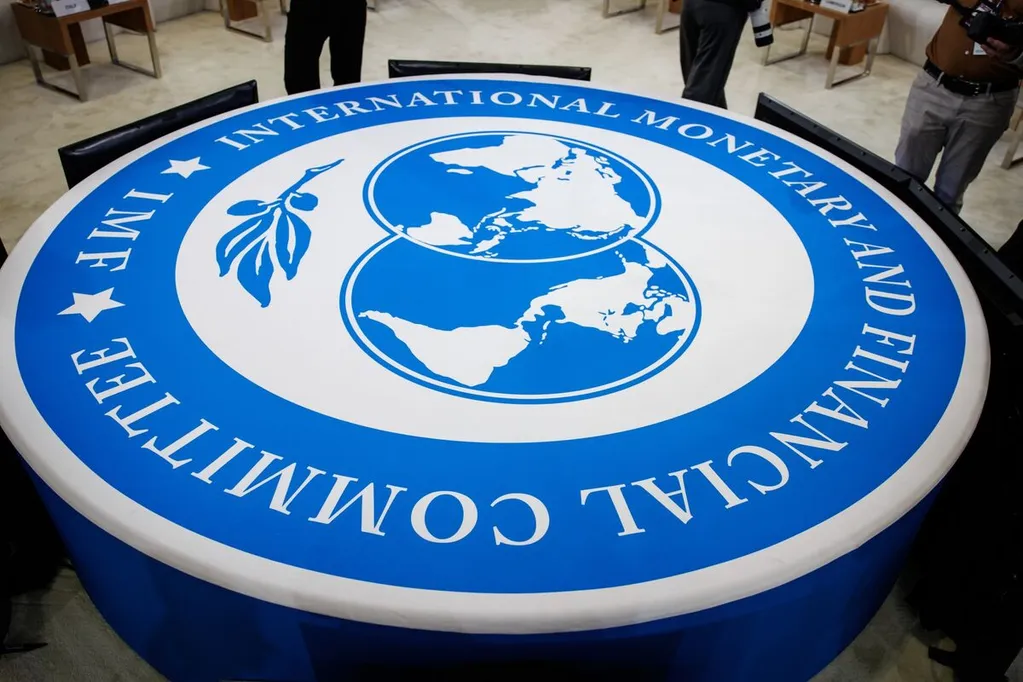
The International Monetary Fund has good news for Canada: We're number one.
"Across the Group of Seven, Canada's probably in the strongest position fiscally," Nigel Chalk, director of the IMF's Western Hemisphere Department, told us in an interview.
This pronouncement may seem at odds with an anticipated C$65 billion ($48 billion) deficit this fiscal year. But even after years of elevated borrowing, Canada's net debt is expected to be in the ballpark of 43% of gross domestic product, while some G-7 peers are running closer to 100% or above. Economists have described Canada as the "cleanest dirty shirt."
The IMF believes there's room to spend, particularly to boost productivity and build infrastructure, as Prime Minister Mark Carney has pledged to do. Chalk also praised recent changes to Canada's tax framework, including expanding write-offs for capital expenditures.
"The environment to invest in Canada is very persuasive," he said. (There is not unanimous agreement about that.)
Chalk's message is one Carney will enjoy hearing. The prime minister has invited the world's largest investors to a summit in September in hopes of attracting more international dollars. The event, to be held in Toronto, will be co-hosted with the Canada Pension Plan Investment Board and the Public Sector Pension Investment Board.
Invitees include sovereign wealth funds, pensions, financial institutions and private equity firms. Let's make sure we have a fresh outfit for the occasion.
Also in today's newsletter: Air Canada cuts some routes because jet fuel is so expensive. There's a new Canadian billionaire, thanks to Nvidia. A trader-turned-philanthropist warns that prediction markets are dangerous for young men.
Top stories
Air Canada will suspend summer flights to John F. Kennedy International Airport in New York due to soaring jet fuel costs. The airline will halt its four daily flights from Toronto and Montreal beginning June 1, and plans to resume them on Oct. 25. "Jet fuel prices have doubled since the start of the Iran conflict and some lower-profitability routes and flights are no longer economic," the company said.
Carney's government is conducting a review of the country's international communications infrastructure, according to a person familiar with the matter. Much of Canada's data and voice traffic is routed through telecommunications networks in the US, and there are only a handful of submarine cables -- all foreign-owned -- that directly connect the country with the rest of the world without going through the US.
The founder of quantum computing startup Xanadu Quantum became a billionaire on paper in a matter of days after Nvidia threw its weight behind the emerging technology. Christian Weedbrook's stake in Xanadu was worth about $1.5 billion as of midday Friday, according to Bloomberg calculations, as the company more than tripled in value this week. It went public last month.
Chip Wilson is building up a business of small athletic-focused brands, setting up new avenues for potential growth for the billionaire who founded (and is now sparring with) Lululemon Athletica. He hired an operating partner to be part of the new business, which is based in Vancouver, according to a person with knowledge of the matter. Wilson, whose wealth is estimated at more than $7 billion, is a major investor in Amer Sports, the owner of sporting lines including Arc'teryx and Wilson tennis gear (which is not named after him).
Bank of Canada Governor Tiff Macklem said central banks around the world are positioned differently when it comes to economic slack and inflation, and their responses to the oil price shock are likely to vary. "We're all feeling like you don't want to jump too early and raise interest rates and lower growth, particularly when growth is already weak," he told reporters from his meetings at the International Monetary Fund in Washington. "On the other hand, you don't want to be late and let inflation get a hold and get entrenched."
Royal Bank of Canada and Bank of Nova Scotia have abandoned plans to reduce the carbon footprint associated with loans to heavy emitters such as oil and gas producers. The Canadian banks said they're withdrawing their 2030 financed emissions targets.
Markets and commodities
Oil and European natural gas prices tumbled after the promised re-opening of the Strait of Hormuz bolstered sweeping optimism that the US-Iran conflict will reach an end and ease disruptions to global energy markets. Brent futures retreated to about $90 a barrel, while West Texas Intermediate slumped to around $85 in New York.
The S&P/TSX Composite Index joined the big global rally in equities, rising 0.9%. Consumer, materials and technology stocks all rallied, while energy shares naturally fell along with oil prices. The Canadian bourse benchmark is up 8.3% so far this year.
Before you go...
John Arnold, a billionaire energy trader-turned-philanthropist, made his fortune by predicting the direction of markets. Now, he's sounding the alarm on fast-growing prediction markets, saying they're harmful to young men and boys. His concern lies in how platforms for sports-event contracts and online betting more broadly are designed to keep users constantly engaged. Unlike traditional forms of gambling, wagers can be placed seamlessly through mobile apps with direct links to bank accounts, he said, raising the risk of addiction, particularly among young males. "The sites have, deliberately or not, created a pathway for teenagers to get accounts and start gambling heavily," Arnold said in an interview. "It's leading to a lot more irresponsible play."