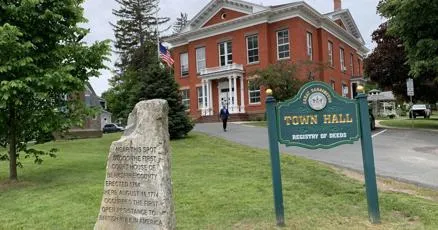
GREAT BARRINGTON -- Salary increases, stipends and rising debt obligations are front and center as town officials begin reviewing the town's proposed $17.7 million operating budget.
The Select Board and Finance Committee began diving into the 883-page budget this week, with two meetings totaling nearly six hours to go over the operating budget. They'll return next week for two more meetings to go over the capital budget.
Town Manager Liz Hartsgrove hasn't been shy in calling out the town's spending problem since she started in November. Debt service currently consumes 17.7 percent of the $17,673,695 operating budget, and officials say they hope to reduce that over the next two years by paying for more capital projects in cash. She is proposing a proposition 2½ override and no new borrowing in an attempt to get control of the town's finances.
The operating budget represents a 6.23 percent increase over last year's $16.7 million approved operating budget. The total proposed budget for fiscal 2027, which includes education, capital and other expenses, is $42,176,731.
Here are three takeaways from the operating budget review.
SALARY INCREASES
Most union positions are budgeted with a standard 2 percent placeholder increase amid ongoing contract negotiations.
Larger raises are proposed for several positions, however, to make them competitive with surrounding towns, account for expanded responsibilities and reflect required professional certifications.
The Council on Aging outreach coordinator would have a 30 percent increase, due to high demand from the town's growing senior population and a lack of past raises. The town clerk and assistant town clerks would get raises that bring them to the level of other department heads.
Some positions appear to have larger raises that are really a result of budget consolidation because pay was previously split between line items in different departments. Hartsgrove explained that though it looks like the administrative assistant would get a 33 percent increase, it's consolidating pay that had been split across budget lines.
Hartsgrove framed the raises as a strategic necessity to "make us an attractive employer for really good quality" candidates while ensuring existing staff feel valued enough to stay.
STIPENDS DEBATE
A point of contention was the use of stipends to compensate for duties outside a job description.
Hartsgrove said in some cases, stipends clarify the cost of specific services and can be required for certain state or federal grant funding. This includes the $5,000 emergency management stipend that currently goes to the police chief and an increased stipend for the IT coordinator, who is playing a large role as the town expands online permitting.
Critics argued that for transparency, pay for tasks should be folded into the base salary for transparency, especially when employees could see a raise in salary and a stipend.
TRAVEL, TRAINING AND LONG-TERM SAVINGS
Several departments have proposed increases for travel and training funds, which Hartsgrove said supports professional development, required certifications, and onboarding new personnel, as it aligns with the Select Board's strategic priorities of professional growth, safety and succession planning within the town department.
For some departments, like the Department of Public Works, training can reduce the town's insurance costs through earned credit. For other departments, increases are designed to support getting new employees up to speed and make sure they get the needed certifications.
For libraries, a $2,000 increase is proposed to allow the 10-person staff to attend conferences and professional training. Similarly, $1,500 is proposed for buildings and grounds. For police and fire departments, $1,000 has been proposed. The Health Department’s travel and training has been doubled to now be $4,000 to support new staff members and the high demand for permit reviews.
Also highlighted were operational shifts aimed at reducing long-term expenses. The transfer station is moving toward a more self-supporting model funded by user fees, and digital permitting is being expanded to cut postage and certified mail costs.