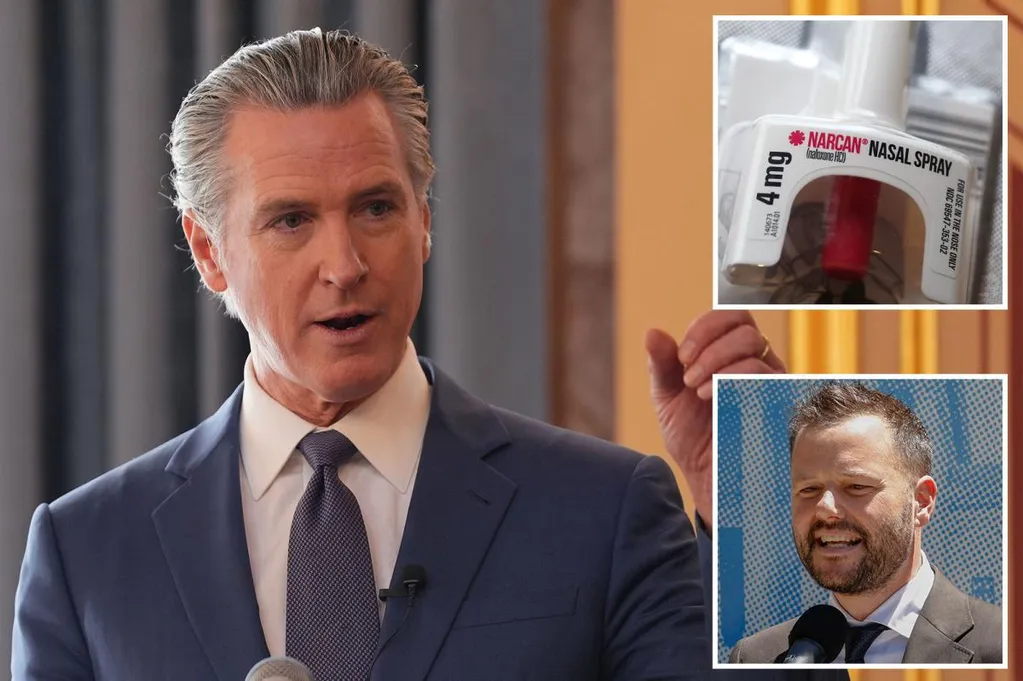
California public universities will be required to offer students who overdose a path to treatment -- giving them the option of rehab or drug education before facing discipline.
Assembly Bill 602 (AB 602) was passed and signed into law by Gov. Gavin Newsom last October and will take effect across the state in July.
"In that moment, when someone is overdosing, the stakes are life and death. But for the person on the ground, there is no guarantee that help will mean healing," TJ McGee told California State Assembly members in a committee hearing in April 2025 after he overdosed as a second-year student at University of California, Berkeley.
Before this, there was no statewide requirement for California public universities to prioritize rehabilitation over punishment in the event of a drug overdose.
Instead, campus policies were often inconsistent and strictly disciplinary. Students who overdosed on California campuses often faced a disciplinary process rather than a medical one.
"No one asked if he was OK. No one pointed him toward support. ... He spent the next months crawling his way through recovery alone, piecing together what he could, holding his education together with duct tape and desperation," McGee said during the hearing as he recounted his story in the third person.
It comes after it was revealed California is home to two of the top party schools in the nation.
The University of California, Santa Barbara snagged the No. 1 party school spot for 2026, according to Niche, while just down the coast, the University of Southern California climbed from No. 5 last year to No. 4 this year.
The more staggering figures are seen in causes of death among college-aged students. As of February, drug overdoses were the third-leading cause of death among 18- to 24-year-olds in California, according to the California Department of Public Health.
This effort was led by students from various California universities, including UC Berkeley and UC Davis, who were motivated by personal tragedies and the stories of peers who had suffered overdoses but were too afraid of university retaliation to seek medical help.
"They would much rather just see what happens and hope that they're OK -- leave it up to fate, honestly -- than call or go downstairs and bring an RA or a trusted campus official to help them," Saanvi Arora, one of the students involved in drafting the bill, told CalMatters.
They partnered with Assemblymember Matt Haney, a Democrat from San Francisco, to draft the legislation.
"We should protect students from these hugely harmful academic consequences when they do the right thing and call for help," said Haney, who represents District 17 in San Francisco.
Campuses are now in a waiting period as they work to secure the funding needed to hire new addiction coordinators and medical staff.