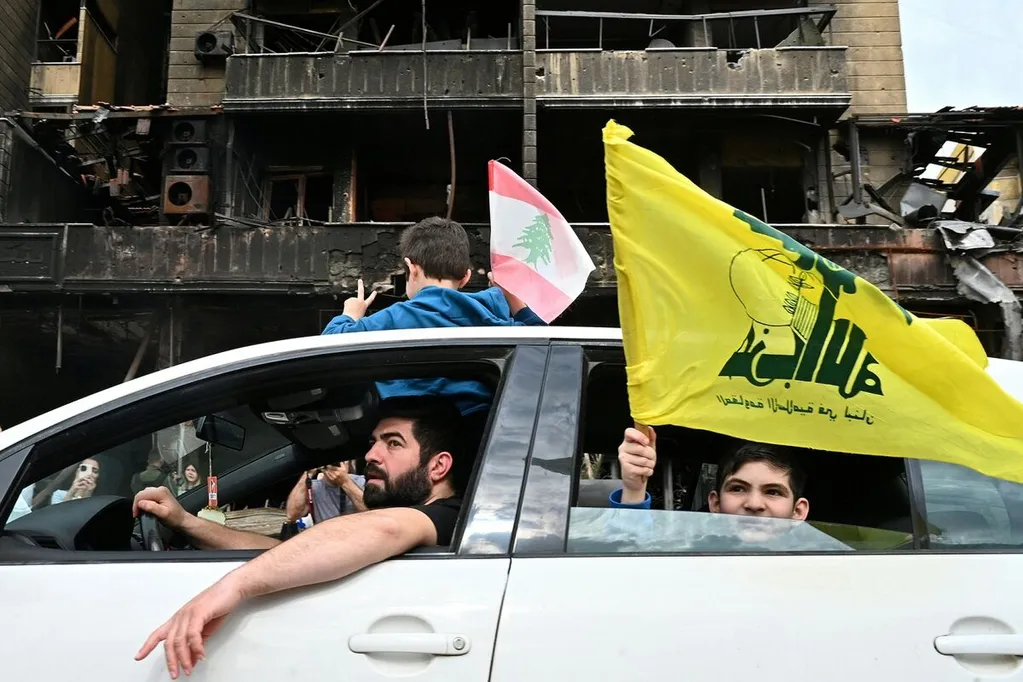
Minutes after a ceasefire in Lebanon went into effect at midnight, heavy gunfire was heard in Beirut. Hezbollah supporters were celebrating in the southern suburbs of the capital, which have been pounded by weeks of Israeli strikes.
In Israel, the reaction to the truce, announced hours earlier by US President Donald Trump, was gloomier. Residents in the north expressed anger after weeks of sheltering from Hezbollah rockets and hearing promises from Prime Minister Benjamin Netanyahu's government that the Iran-backed militant group would be crushed once and for all.
"It's a very cruel morning," Eliezer Biton, a resident of Avivim, a settlement close to the Lebanese border, told Israel's Kan radio. "Last night marked our biggest slapping by the government of Israel. For them, we don't count. They'll end up encountering us at the ballot box."
Those conflicting reactions highlight the challenging dynamic now confronting Netanyahu. The prime minister had insisted the conflict in Lebanon was separate from the ceasefire between Iran and the US and that fighting against Hezbollah would continue, even as Tehran demanded any broader deal with Washington include a halt to those hostilities.
Israel's government sought to dismiss any suggestion it was pressured by the Trump administration in its campaign against Hezbollah.
"We began receiving calls from Lebanon to hold direct peace talks between us," said Netanyahu, who needs to call another election by around October. "I answered that call, and I agreed to a timeout, or more accurately, a temporary ten-day ceasefire."
Israeli troops, he said, will remain in southern Lebanon and are ready to restart fighting if necessary. Israel has "not yet finished the job" against Hezbollah, the prime minister's office said Friday, claiming the goal remains to dismantle the group.
Resuming operations against Hezbollah, however, risks drawing Trump's ire. The US president has called on Netanyahu and Lebanese President Joseph Aoun to meet at the White House for peace talks.
On Friday, Trump said in a phone interview that he hoped to help secure a lasting deal. "We're going to get along hopefully with everybody, and we're going to straighten out Lebanon," he said. "We're not going to be bombing the hell out of Lebanon, not going to let anybody do that."
The shakiness of the ceasefire was underlined on Friday afternoon when Lebanese media reported that an Israeli drone killed a motorcyclist in a southern village. The Israeli military didn't immediately comment on the incident.
Permanent Accord
The 10-day truce is meant to enable negotiations toward a permanent security and peace accord between the two countries, which don't formally recognize one another.
Hezbollah, Iran's most formidable proxy group, wasn't named in the agreement. But the organization has been battered since it triggered Israeli strikes by firing on the Jewish state in early March. It acted in solidarity with Iran after its main sponsor came under fierce US-Israeli attacks.
In response to Hezbollah's rocket fire, Israel launched airstrikes and a ground invasion that devastated much of Lebanon. More than 2,200 people were killed, according to the Lebanese government. Around 350 died during mass strikes over the space of about on hour on April 8, many of them children, the government said.
The Israeli military said the majority of people killed on April 8 and overall were Hezbollah commanders and fighters, though it's given few details as to how it came to that conclusion.
Israel has occupied large parts of southern Lebanon, creating what it says is a buffer zone to protect northern Israeli communities.
Two Israeli civilians and thirteen soldiers have been killed in the fighting with Hezbollah, while around 2 million Israelis were frequently forced into bomb shelters.
In Beirut on Friday, people began driving back to their homes in bombed areas. Others headed back to the south, where Lebanese soldiers were trying to remove rubble and clear roads.
Most Lebanese officials are trying to distance the government from Iran and reduce the influence of Hezbollah, which is also a political party and has significant support among Shiite Lebanese.
"This opportunity must not be squandered because it may not come again," Aoun said Friday, referring to the ceasefire and the potential talks with Israel. He said he will work to ensure Israel's withdrawal from south Lebanon.
Under the US-brokered agreement, Lebanon has 10 days to demonstrate it has the capabilities and "willingness" to dismantle and disarm Hezbollah, former deputy Prime Minister Ghassan Hasbani, also a member of the Lebanese Forces party, told Bloomberg.
Lebanon needs to "change its attitude" toward Hezbollah, he said.
Hezbollah, however, is unlikely to lay down its arms. It is still formally committed to the destruction of Israel and is designated a terrorist organization by the US and many other countries.
There is concern in Lebanon that Hezbollah will try to incite protests and even go as far as attempting to topple the US-backed government to thwart direct talks with Israel.
"The ceasefire took place because of the pressure from Iran," said Hezbollah lawmaker Ali Fayyad, according to a local journalist; comments that demonstrate where the group's loyalties still lie.