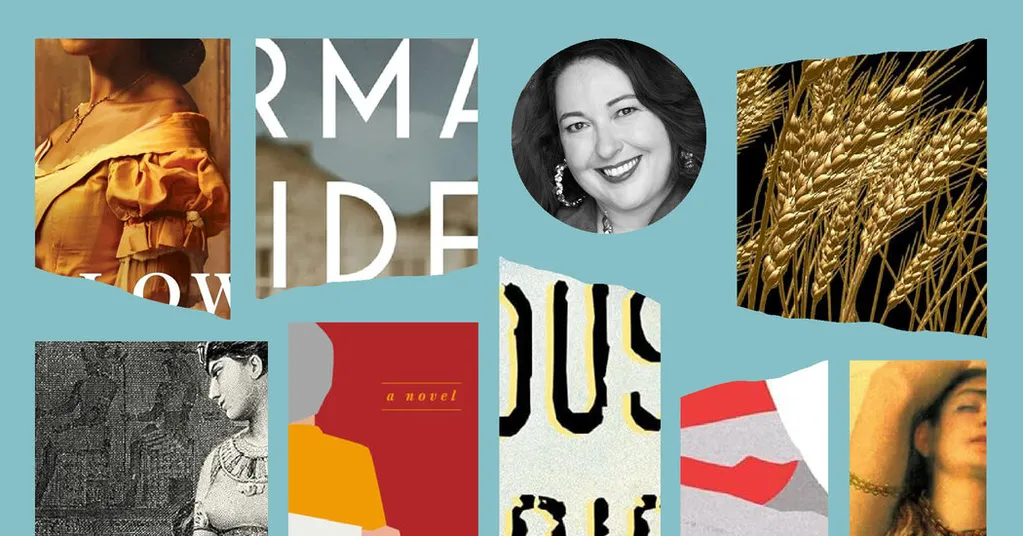
We often think of the past as if it were another world -- and in some ways, it is. The politics, religion and social customs of other eras can be vastly different from our own. But one thing historians and historical fiction writers alike often notice is the constancy of human emotion. The righteous anger of a customer complaining about a Mesopotamian copper merchant in 1750 B.C. feels familiar. Tributes to beloved household pets from ancient Romans and Egyptians make us smile. And we are captivated by stories of love, betrayal and sacrifice from Homer to Shakespeare and beyond.
In literature, letters, tablets and even on coins, we find overwhelming evidence that people in the past felt the same emotions we do. Love, hate, fear, grief, joy: These feelings were as much a part of their lives as they are of our own. And they resonate especially acutely in the bond between mother and child. Here are eight historical novels that explore the meaning of motherhood across the centuries.
The Red Tent by Anita Diamant
This retelling of the life of Dinah centers motherhood in all its forms. A minor figure in the Old Testament, overshadowed by her tribe-founding brothers, Dinah comes of age raised not only by her biological mother, Leah, but also by Jacob's other wives. These women connect her to a cultural inheritance of maternal wisdom -- including the tradition of the titular red tent, where they seclude themselves during menstruation -- that leads her to midwifery. Diamant unspools Dinah's story with a lyrical beauty that has inspired millions of readers.
The Four Winds by Kristin Hannah
When we first meet Elsa, the heroine of this sweeping Great Depression epic, she does not seem destined to be a good mother, much less a great one. A wallflower who married late, she is deeply insecure, timid and terrified at the thought of her husband leaving her. But when the country's economic collapse coincides with the ecological catastrophe unfolding in the Dust Bowl, and Elsa’s worst fear comes to pass, she transforms into a woman of fierce resilience — one who risks everything, including her own life, to secure a better future for her children.
Pachinko by Min Jin Lee
Starting in the early 20th century, this multigenerational saga follows Sunja, a Korean fisherman's daughter who is forced to make impossible choices when she learns that the lover who impregnated her is not the man he seemed. The novel explores the discrimination against Koreans in Japan, the hardships of two world wars, the gonzo capitalism of the 1980s and the ripple effects of sacrifice. Through it all -- the persecutions, privations and even fragile prosperity -- Sunja's maternal devotion shines through.
The School for German Brides by Aimie K. Runyan
It's 1939 in Nazi Germany. Hanna, a rebellious young woman, is sent to "bride school" to be molded into the perfect wife for an S.S. officer and a suitable mother of the so-called master race. But Hanna's friendship with Mathilde, a Jewish dressmaker desperate to save her child, teaches her the true meaning of both motherhood and sisterhood. The book offers a compelling peek behind the curtain of German society under fascism, as fascinating as it is infuriating.
A Thousand Splendid Suns by Khaled Hosseini
Hosseini's tragic, brutal novel is set in Afghanistan during the decades of conflict that resulted in the rise of the Taliban. Forced into a miserable marriage to the same man, Mariam and Laila forge an unlikely bond. In the midst of war and fear, young Laila provides the affection and companionship that Mariam craves. In turn, the older and wiser Mariam takes on the role of second mother to Laila’s children. And when the two find it easier to present themselves to others as mother and daughter, that lie slowly transforms into the emotional truth.
Yellow Wife by Sadeqa Johnson
Johnson was inspired by the life of Mary Lumpkin, an enslaved woman in Virginia who, after the Civil War, legally married the man who purported to own her; upon his death, she inherited his infamous slave jail and transformed it into a college (now Virginia Union University). In the novel, a similarly situated woman must wage a battle of wits and will against the jail’s cruel master to protect her children from being sold away. A heartbreaking, unflinching exploration of motherhood in antebellum America.
The Memoirs of Cleopatra by Margaret George
This fictionalized account of the life of the renowned Egyptian pharaoh explores the particular meaning of motherhood in a dynastic system. As her political and personal identity become increasingly defined by her status as mother to Julius Caesar’s son, Cleopatra must navigate geopolitics in a way that appeases Roman interests while protecting Egypt, the nation of which she is also a mother. A thrilling exploration of ambition and survival, this novel is perfect for anyone looking for an immersive read.
The Joy Luck Club by Amy Tan
Tan's beloved novel -- a collection of interwoven stories framed around a group of women in 1940s San Francisco who bond playing mahjong -- explores the relationships between Chinese immigrant moms and their American-born kids. The modern-day frustrations of the daughters are brilliantly juxtaposed against the historical experiences of their mothers, who have survived ordeals including concubinage and the Japanese invasion of China during World War II.