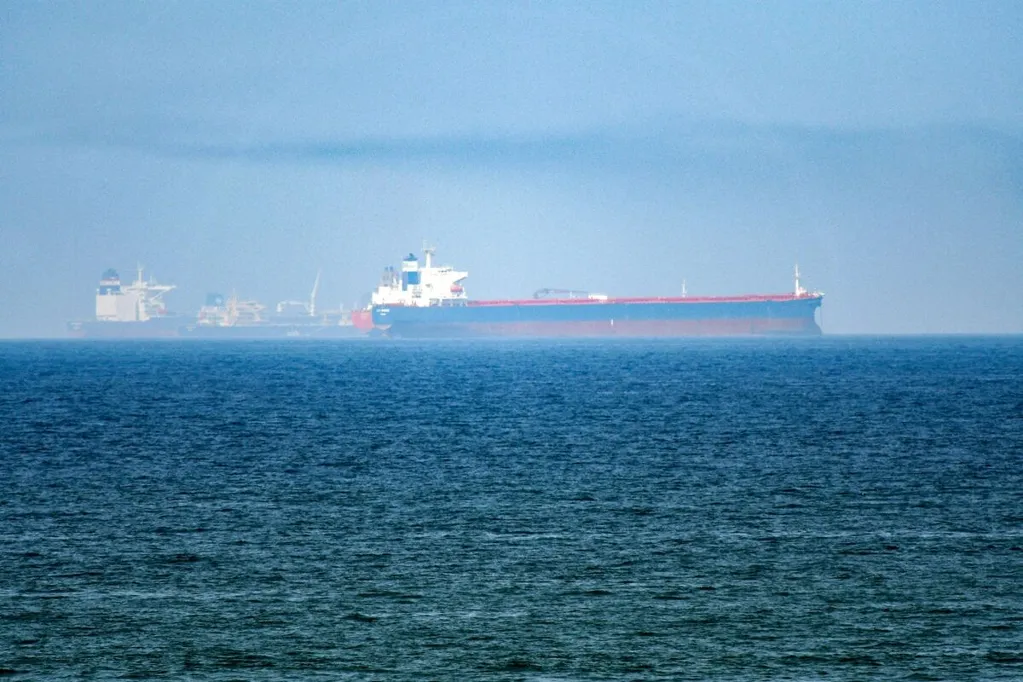
Electronic interference in the area degrades the accuracy of regional vessel-tracking systems, and with most ships deactivating their transponders in high-risk waters, reported data can appear with a time lag.
Commercial vessel traffic through the Strait of Hormuz continues at very low levels, with just a handful of oil and liquefied petroleum gas tankers transiting in the last 24 hours amid heightened regional tensions.
A Suezmax carrying Saudi crude crossed the strait earlier this week in "dark mode" -- disabling its tracking system -- and resurfaced off Mumbai on Saturday, according to vessel-tracking data compiled by Bloomberg. That's the second instance of a non-Iranian crude-laden tanker exiting the waterway since it became virtually impassable.
An LPG carrier was also seen exiting the passage late Friday, and another LPG tanker bound for India appears to be underway. Both loaded at Qatar's Ras Laffan terminal in late February.
A few more Iran- and China-linked commercial vessels also crossed the strait in the past day.
Electronic interference in the area degrades the accuracy of regional vessel-tracking systems. At the same time, with most ships deactivating their transponders in high-risk waters, reported data can appear with a time lag, meaning transit totals may later be revised upward.
The trickle of visible departures over the past day includes the LPG tanker headed for India, an Iran-linked oil-products tanker and a bulk carrier linked to China. One additional India-bound LPG carrier is yet to appear outside the passage.
A medium-range refined-products tanker entered the Persian Gulf during the past 24 hours.
NOTE: Because vessels can move without transmitting their location until they're well away from Hormuz, automated positioning signals were compiled over a large area covering the Gulf of Oman, the Arabian Sea and the Red Sea to detect those that may have departed or entered the Persian Gulf.
When potential transits are identified, signal histories are examined to determine whether the movement appears genuine or is the result of spoofing -- where electronic interference can falsify the apparent position of a ship.
Some transits may not have been detected if vessels' transponders haven't been switched back on. Iran-linked oil tankers often steam from the Persian Gulf without broadcasting signals until they reach the Strait of Malacca about 10 days after passing Fujairah in the UAE. Other ships may be adopting similar tactics and won't show up on tracking screens for many days.
NOTE: This Hormuz tracker will be published during heightened tensions involving Iran, and aims to capture traffic for all classes of commercial shipping.