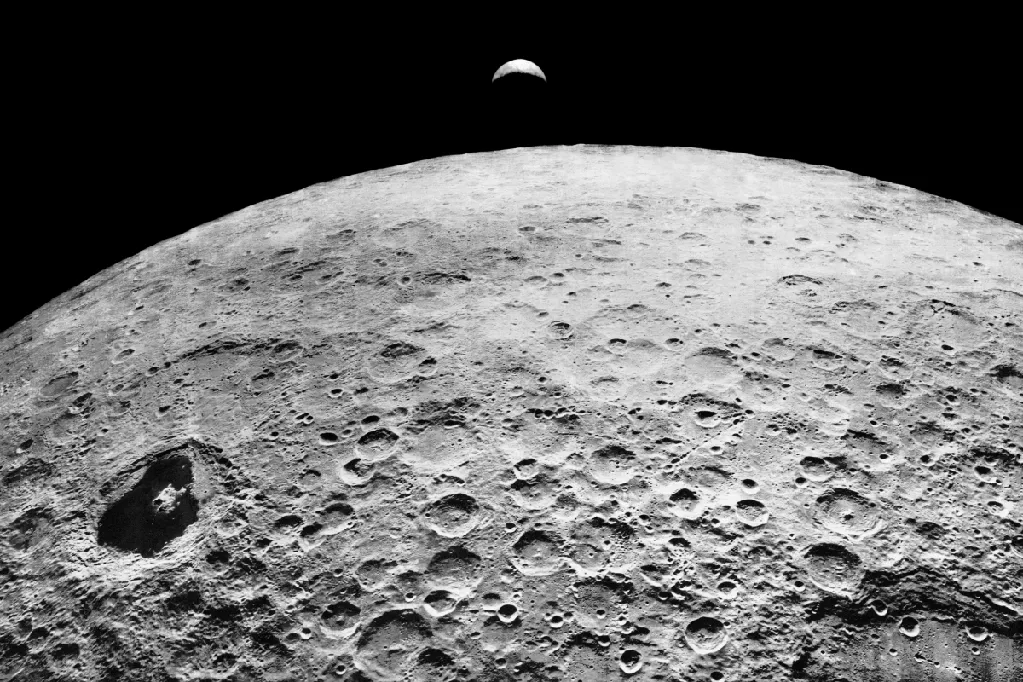
NASA's Artemis II mission is approaching one of its most significant public milestones: an historic lunar flyby that will carry astronauts around the Moon farther than any humans have ever traveled, according to NASA.
The event, which is expected to take place on Monday, April 6, is being livestreamed globally across multiple platforms, including Netflix, allowing viewers around the world to see a deep‑space mission in real time.
Artemis II is NASA's first crewed mission in the Artemis program and the first human journey around the Moon since Apollo 17 in 1972.
The mission launched on April 1 from Kennedy Space Center, carrying four astronauts aboard the Orion spacecraft: NASA astronauts Reid Wiseman, Victor Glover, and Christina Koch, along with Canadian Space Agency astronaut Jeremy Hansen.
During the lunar flyby, Orion will swing around the far side of the Moon without entering orbit, using lunar gravity to propel the spacecraft back toward Earth. At its peak, the crew will surpass the distance record set by Apollo 13 in 1970, reaching more than 252,700 miles from Earth, according to NASA.
NASA's live coverage of the lunar flyby will begin at 1:00 p.m. Eastern Time (ET) on Monday, April 6, with the most visually striking moments occurring over several hours rather than a brief pass.
Here are the key livestream start times by region, according to What's On Netflix:
These times reflect the start of NASA's official broadcast window, with coverage expected to continue for much of the day as Orion completes its pass around the Moon.
Viewers can watch the Artemis II lunar flyby live on Netflix, which is carrying NASA's official broadcast feed -- despite not streaming the April 1 launch.
According to NASA, the event is also available on NASA+, YouTube, Amazon Prime Video, Apple TV, Hulu, HBO Max, and Roku, giving audiences multiple ways to tune in and watch the historic moment.
According to NASA, the livestream will include real‑time views from Orion, commentary from mission controllers, and scheduled milestones such as the moment the crew breaks the Apollo 13 distance record and Orion's closest approach to the Moon, expected around 7:02 p.m. ET.
There will also be a planned 40‑minute communications blackout as the spacecraft passes behind the Moon's far side, temporarily cutting off contact with Earth before the signal is reestablished.
As Artemis II continues, the mission is expected to splash down in the Pacific Ocean later this week, paving the way for future Artemis missions that aim to return humans to the lunar surface.