Michael Barnes, who stepped down this week from spearheading Sydney's fight against organized crime, has a message for the wealthy professionals whose rampant drug use has turned Australia into the unlikely cocaine capital of the world: you're funding criminal enterprises that engage in murder, human trafficking and extortion.
The latest United Nations World Drug Report shows some 4.5% of Australians use cocaine each year - double the rate in the US. And wastewater analysis by the Australian Criminal Intelligence Commission shows cocaine use nationwide jumped 69% to a record in the 12 months ended August 2024.
"The thing that absolutely distresses me is the normalization of drug taking," Barnes, who led the New South Wales Crime Commission for more than five years, said in an interview in his office in downtown Sydney. "Lawyers, accountants, doctors are quite comfortable buying cocaine."
"These are the same people who want fair-trade chocolate, but they're happy to buy cocaine that's absolutely dripping in blood," he said. "There is no fair-trade cocaine."
The relentless consumption has made Australia a lucrative market for international criminal gangs, despite its remoteness. In Sydney, cocaine can fetch around A$300 per gram, the equivalent of about $213. That's almost double prices in London.
The financial burden of the habit is becoming vast. Illicit drugs were the biggest component in a wave of serious and organized crime that in 2024 sucked A$82.3 billion ($58 billion) from Australia's economy, 20% more than the year before, according to the Australian Institute of Criminology. That dwarfs the government's annual defense budget.
Drugs sit at the heart of a web of crimes that includes murder, arson and offshore scam centers, the AIC said. Sydney has been hit by a series of brazen daylight hits and drive-by shootings as criminal gangs battle for control of the city's drug trade. On Tuesday, police said they found human remains believed to be those of an 85-year-old grandfather taken from his home in Sydney almost two weeks ago in a suspected case of mistaken identity by an organized crime gang.
Australia's vast coastline means most illegal shipments evade border controls, with gangs recruiting Qantas Airways Ltd. employees, commercial shipping workers or port staff as trusted insiders to help smuggle in drugs.
According to an Australian parliamentary inquiry into the country's drug use, around 1,000 individuals and 100 companies were suspected of criminally hijacking the supply chain. Border officials only intercept one quarter of all illicit drugs coming into the country, the probe said in 2024.
One plot to import 100 kilograms of cocaine on a Qantas flight from Johannesburg to Sydney on Oct. 7, 2023, shows the mechanics of the exploitation. Details of the failed attempt are drawn from court filings obtained by Bloomberg News.
The plan revolved around workers with privileged access at Sydney airport. One was Michael James McPherson, a manager at Jets Transport Express, a Qantas subsidiary handling overseas freight. McPherson’s role let him enter secure areas of the airport, including the Qantas international freight terminal.
McPherson got together with another individual, Darren Steven Bragg, who lost his job at a local logistics firm in June 2023, months before the planned cocaine importation.
Bragg and another man offered McPherson A$10,000 and a “big bag of coke” to find a job for Bragg at Jets Transport, so he could shepherd drugs through the airport, court statements of facts show. By August, McPherson was Bragg’s manager.
Now on the inside, Bragg worked with overseas associates to get five cocaine-laden bags into a freight container in the belly of QF64. The consignment was scheduled to arrive on a Saturday, a day when Bragg was routinely on the roster. Bragg and McPherson collected the container and the drugs were then unloaded and put into a vehicle at the airport.
But Australian Federal Police were waiting. Under an investigation named Operation Lucian, officers had been trying to bust a drug-running syndicate that was using airport insiders. Bragg, McPherson and a third man, the driver, were arrested. Bragg got 10 years in prison and McPherson received a three-year sentence.
Qantas didn't reply to requests for comment.
The court records showed the price of turning salarymen into inside men. McPherson told police he'd been promised A$150,000 and a bag of cocaine for his part in the operation. And after pocketing A$10,000 as a reward for hiring Bragg, McPherson found it impossible to extract himself from the job. "You've taken the money. You've got to do it," Bragg told McPherson, according to court filings.
At other times, gangs operate import businesses legitimately for months or years. With a clean record established, companies then start hiding drugs in regular shipments, officials say. Law-abiding freight companies are also used as drugs vehicles without their knowledge. Either way, gangs are coming out on top.
"You can have a guesstimate of how much of the total consumption is being intercepted, and if you are brave, you’d say 30%," Barnes said. "Some people would say less than that."
Once inside the country, cocaine is only a text message away. Anonymous dealers fire off messages several days a week to regular or occasional users to drum up business, according to people who receive them. The sender’s number often changes but the product never does. Orders are taken only via WhatsApp, with dealers touting the quality of their product and offering discounts for bulk purchases.
According to one Sydney bar owner, who has run venues in New South Wales state and neighboring Queensland for 20 years, cocaine consumption crescendos on Thursday and Friday evenings. Discarded cash-machine receipts often match the cost of a bag.
The use of ecstasy -- also known as molly or MDMA -- in Australia and New Zealand is by far the highest anywhere in the world, according to the UN global drug use report. And in Australia alone, cannabis was taken by about 12% of the population, almost triple the global rate of 4.6%, the report said.
The cocaine user group is diverse -- spanning young laborers to executives and retirees, the person said, asking not to be named in order to protect their businesses.
"It's a relatively addictive drug and people do get into significant problems with it," said Michael Farrell, head of the Sydney-based National Drug & Alcohol Research Centre. "What happens is people start using these things and they think they're harmless."
The flow of drugs into Australia has become almost impossible to stem because they no longer come solely over the Pacific. These days, South American cocaine reaches Sydney through Europe, Asia, Africa and the Middle East. Authorities warn that drug shipments are getting larger.
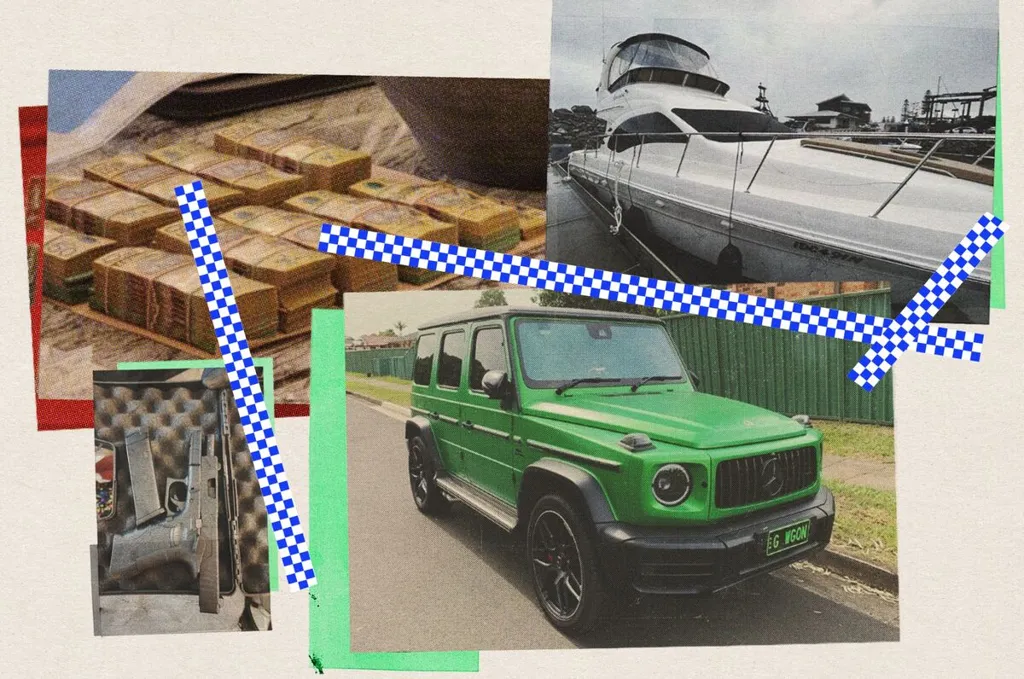
Law enforcement is fighting back. From July, the financial crime regulator will also oversee real-estate agents, lawyers and accountants—all professions exploited by criminals to hide the proceeds of drug sales. In the past two years, New South Wales police have seized a fleet of luxury cars, trays of gold bullion, boats, jewelry and watches that are suspected of being criminal assets.
Border officials have also notched up some spectacular wins. Last May, police intercepted a 13-meter motor cruiser about 500 kilometers north of Sydney that was carrying more than 1 ton of cocaine.
In November, police charged the chief officer of an international livestock-carrying vessel over an alleged plan to import more than 525 kilograms of cocaine. The drugs were allegedly dropped from the ship as it sailed toward Perth in Western Australia. Police found the packages tied to flotation drums 30 kilometers off the coast.
But authorities are fighting a losing battle against cocaine suppliers, and Barnes struggles to see the picture changing.
"As long as people are prepared to spend that much money to buy it, someone will find a way of supplying it," he said.