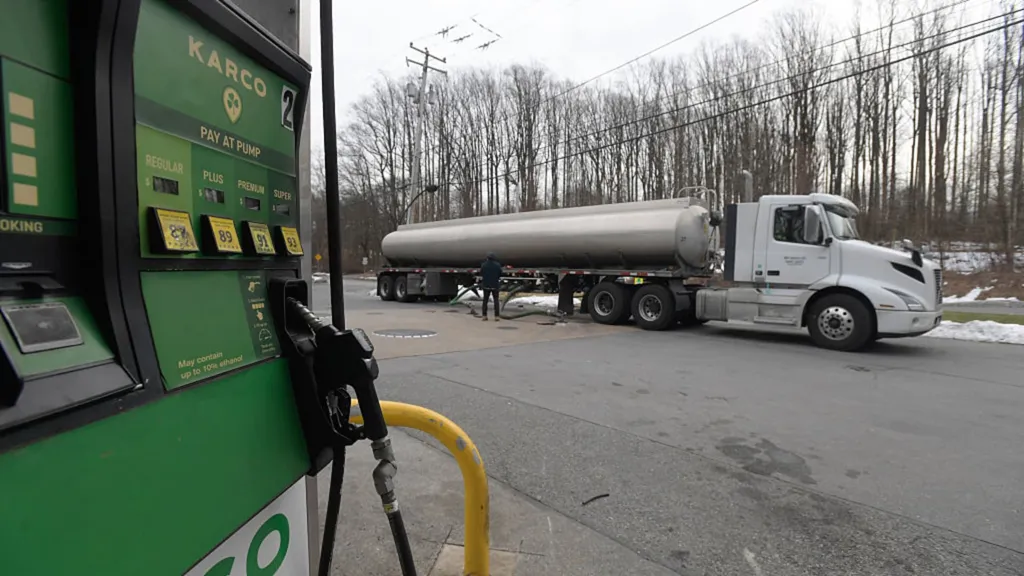
The last time oil prices broke $100 per barrel was after Russia invaded Ukraine in February 2022. Gasoline prices hit an all-time high of $5.016 per gallon nationally by June. The global oil market is facing a worst-case scenario as the U.S. war with Iran engulfs the Middle East with no clear off ramp, increasing the risk of a prolonged supply disruption that could slow the global economy. Tanker traffic through the Strait of Hormuz, the world's most important chokepoint for oil shipments, has come to a standstill as ship owners take precautionary measures. About a third of the world's total seaborne oil exports passed through the Strait in 2025, according to energy consulting firm Kpler. The Islamic Republic has expanded its retaliatory strikes to include regional energy facilities. Qatar on Monday shut down liquefied natural gas production after two drones hit key facilities. About 20% of global LNG exports come from the Gulf, primarily Qatar, passing through the Strait. "Our base case assumed that an unprecedented disruption would remain improbable. That assumption failed," Natasha Kaneva, head of global commodities research at JPMorgan, told clients in a note on Sunday. The war has already led to the first near total halt to shipping through the Strait in modern history, Kaneva said. Crude oil prices were up more than 5% on Monday after surging more than 12% earlier in the day. European natural gas futures soared more than 40%. Prices could rise higher still depending on how long the war lasts and whether Iran targets Persian Gulf energy infrastructure. Drivers in the U.S. will likely see gasoline prices start to rise today or tomorrow, said Patrick De Haan, head of petroleum analysis at GasBuddy. Motorists should expect an average 10- to 30-cent per gallon increase at the pump over the next week, De Haan said.
Oil and gas price scenarios Brent prices could surge above $100 per barrel and European natural gas prices could break 60 euros per megawatt hour if the regime in Tehran takes a hardline and attacks neighboring energy facilities, said Francisco Blanch, commodity strategist at Bank of America. A prolonged disruption in the Strait could spike Brent prices by $40 to $80 per barrel, Blanch said. A war that lasts more than three weeks would exhaust the Gulf countries storage capacity as barrels build up with nowhere to go, forcing them to shut down production, Kaneva said. Under that scenario, Brent -- the global benchmark for oil prices -- could hit $120 per barrel, the JPMorgan analyst said. Trump said on Monday that the war will likely last up to five weeks, but will continue as long as necessary to achieve U.S. objectives. Earlier, the White House said Iran had ignored U.S. warnings to abandon efforts to rebuild its nuclear program after the U.S. struck last year, and that Tehran was developing a ballistic missile program that would "shield their nuclear weapon development." Brent would surge toward $200 per barrel if Iran succeeded in enforcing a full closure of the Strait by deploying mines, anti-ship missiles and other weapons, said Michael Hsueh, a research analyst at Deutsche Bank, in a Monday note to clients.
The last time oil prices reached $100 per barrel was after Russia invaded Ukraine in February 2022. Gasoline prices in the U.S. hit a national average, all-time high of $5.016 per gallon by June, according to the motorist group AAA. A collapse of the Islamic Republic would also pose a serious risk to oil supplies, Kaneva said. The U.S. and Israel killed Iran's head of state Ayatollah Ali Khamenei over the weekend. The regime in Tehran faced mass protests in January that it brutally put down, killing thousands. "The main risk remains institutional breakdown and a potential civil war, amid pronounced domestic polarization and heightened ethnic tensions," Kaneva told clients. Iran's production of more 3 million barrels per day would be at risk in such a scenario. Oil prices typically spike more than 70% when regime change occurs in major crude producers, Kaneva said.
If hostilities end quickly, oil prices could drop back to the $60 to $70 per barrel range, Blanch said. "If hostilities end within days under the newly appointed leadership, tensions may only be mildly disruptive to the oil market," he said. But the U.S. and Iran appear dug in. Iran's security chief Ali Larijani rejected negotiations with the U.S. He said the joint U.S.-Israeli attack had dragged the entire region into an unnecessary war. "We will not negotiate with the United States," the former adviser to the late supreme leader said in a post on social media.