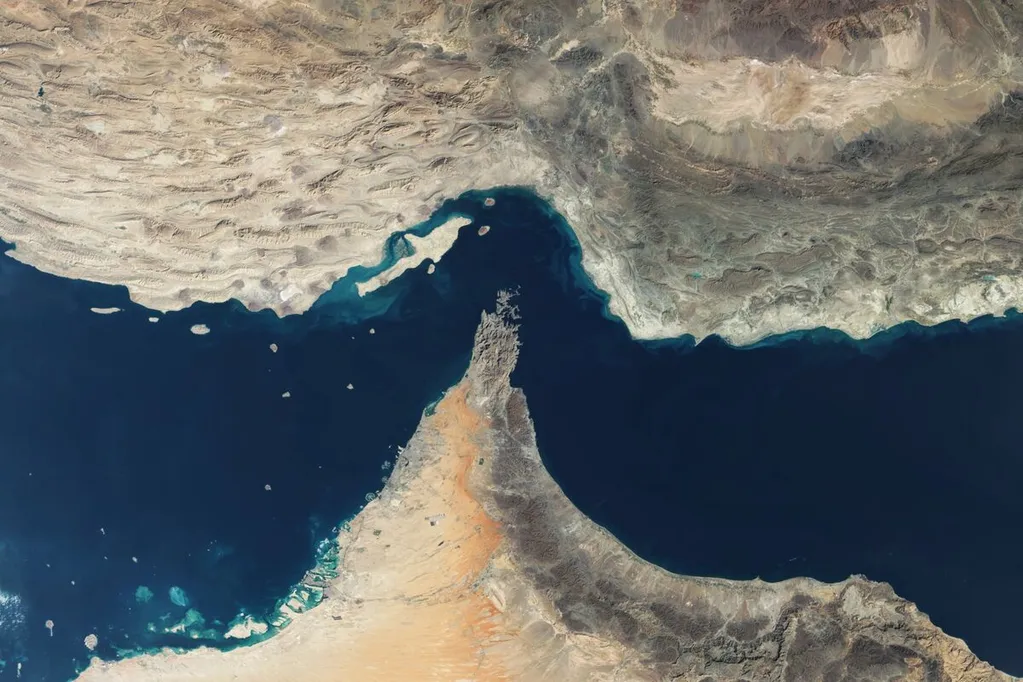
Maritime traffic through the Strait of Hormuz -- a vital route for exports of oil, natural gas and other commodities from the Persian Gulf -- remains severely constrained more than a month after the US and Israel launched strikes against Iran.
Iran sits above the strategic waterway and has effectively closed it to all but approved vessels. Oil and gas prices have surged since the start of the war, as the collapse in Hormuz transits tightens global supply.
In public, President Donald Trump has threatened to attack Iran's energy infrastructure unless it reopens the strait -- in the same breath as claiming "great progress" in talks to end the war. In private, he's told aides that he's willing to stop the US military campaign even if the waterway remains mostly closed, the Wall Street Journal reportedBloomberg Terminal. Iran has rejected a 15-point peace proposal from the US, and its own five conditions for halting the hostilities include international recognition of Iranian sovereignty over the Strait of Hormuz.
What's the significance of the Strait of Hormuz?
Situated between Iran to its north and the United Arab Emirates and Oman to its south, the Strait of Hormuz connects the Persian Gulf to the Indian Ocean. It's around 100 miles (161 kilometers) long and 24 miles wide at its narrowest point. The shipping lanes in each direction are just two miles wide.
The strait is an essential passage for the oil market, handling about a quarter of the world's seaborne oil trade. Saudi Arabia, Iraq, Iran, Kuwait, Bahrain, Qatar and the UAE all ship crude through Hormuz and the majority of their cargoes go to Asia. Gulf countries are also home to refineries that produce large volumes of diesel, naphtha -- used to make plastics and gasoline -- and other petroleum products that are exported globally via the strait.
The waterway is crucial for the liquefied natural gas market, too. Around a fifth of the world's LNG supply -- mostly from Qatar -- passed through this channel last year. Asian countries also buy most of the super-chilled fuel shipped from the Middle East.
Beyond energy, the Strait of Hormuz is a choke point for products including aluminum, fertilizer, and even helium, which is used in the production of semiconductors.
What's been happening in the Strait of Hormuz?
Iran has sporadically attacked ships in and around the Persian Gulf. While insurance is available for vessels traversing the Strait of Hormuz -- albeit at a much higher cost than before the war -- most shipowners have been unwilling to risk the loss of life, cargo and vessels.
Navigation has been compromised by the jamming of global positioning system signals. This tactic is used to disrupt shipping, but it's also a defense strategy to make it more difficult for drones and missiles to find their targets. More than 1,000 ships in the Persian Gulf have been affected by signal jamming, according to maritime intelligence firm Windward.
Iran has continued to move its own oil through Hormuz, maintaining shipments at close to pre-war levels. It's also allowed certain other vessels to cross the waterway in a route that hugs the Iranian coast, often after talks for safe passage and sometimes after requesting payments of as much as $2 million.
Around 80% of oil tankers that exited the strait in March were either Iranian or belonged to countries that are on cordial terms with Iran, according to ship-tracking data compiled by Bloomberg.
Does Iran have sovereignty over the Strait of Hormuz?
Iran has signaled that it intends to continue exercising control over Hormuz transits and monetizing this leverage even once the war is over. A bill is making its way through parliament that enshrines Iranian sovereignty over the strait in national law and formalizes a toll system for ships crossing the waterway, according to the semi-official Fars news agency.
Under the United Nations Convention on the Law of the Sea, countries can exercise sovereignty up to 12 nautical miles (14 miles) from their coastline -- an area known as their territorial waters. The Strait of Hormuz runs through Iran and Oman's territorial waters. However, nations must allow "innocent passage" of foreign vessels through their territorial waters and must not impede "innocent" or "transit passage" through straits used for international navigation. The treaty also says that countries cannot charge foreign ships merely for passage through their territorial waters.
While Iran signed UNCLOS in 1982, its parliament never ratified the treaty.
How much can Gulf oil producers bypass the Strait of Hormuz?
Kuwait, Qatar and Bahrain have no other sea route for their exports.
Saudi Arabia, which ships the most oil through Hormuz, is rerouting crude through a pipeline that runs to the Red Sea port of Yanbu. Flows have reached the pipeline's full 7-million-barrel-a-day capacity, according to a person familiar with the matter, although only 5 million barrels a day are actually being shipped from Yanbu -- below the kingdom's usual export levels. The remainder of the oil is going to Saudi refineries.
This alternative route isn't without risk. Iran has already targetedBloomberg Terminal a refinery in Yanbu, and now that the Iran-backed Houthi militants in Yemen have entered the war, they could resume attacks on vessels in the Red Sea.
The UAE can also bypass Hormuz to a certain degree. But the port of Fujairah, which sits at the end of a pipeline that connects the UAE's oil fields to the Gulf of Oman, has been disrupted by drone attacks. And while Iraq is resuming flows through the pipeline that links its semi-autonomous Kurdistan region to Turkey's Mediterranean port of Ceyhan, this route can only carry a fraction of what the country normally exports through the Persian Gulf.
How realistic is the prospect of naval escorts through the Strait of Hormuz?
The US has struggled to recruit partners to help provide naval escorts while the fighting is ongoing. Trump has said that countries facing pressure from the effective closure of Hormuz should go to the strait and "get your own oil."
Military analysts largely agree that escorts would be risky without a ceasefire. The narrow width of the Strait of Hormuz leaves convoys vulnerable to attack and limits the number of vessels that can be escorted at one time.
"Until we've neutralized Iran's layered, asymmetric capabilities -- mines, fast attack craft, submarines and drones -- we won't want to put commercial or even escort ships through," said Bob McNally, president of consultancy Rapidan Energy Group and a White House adviser during the administration of President George W. Bush.
Big Take
Should convoy operations materialize and give shippers the confidence to make the journey, it could still take weeks to clear the backlog on either side of the strait. Even then, energy exports from the Gulf may take a while to recover from the damage inflicted by missile and drone attacks.