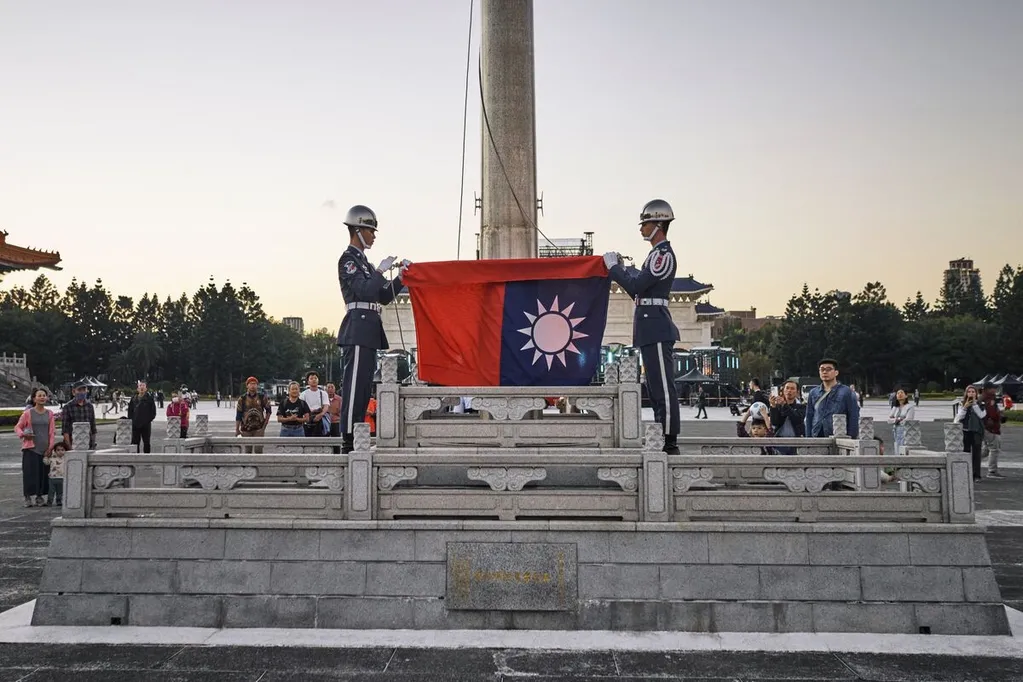
The closure of the Strait of Hormuz has highlighted the potential for long-running theoretical chokepoints to turn into reality, with dramatic results for both geopolitics and the global economy. But the hypothetical scenario that policymakers have arguably been losing the most sleep over for decades is the prospect of a major conflict between China and Taiwan. So how likely is it, and what would such a conflict actually look like? On this episode, we speak with Eyck Freymann, author of the new book, Defending Taiwan: A Strategy to Prevent War With China, and a fellow at the Hoover Institution at Stanford University. We discuss Xi Jinping's strategy, whether Taiwan's "silicon shield" of semiconductor manufacturing can last forever, the state of Taiwan's domestic politics, and what the US can do to deter such a conflict.
US Central Command has asked to send the Army's long-delayed Dark Eagle hypersonic missile to the Middle East for possible use against Iran, seeking a longer-range system to hit ballistic-missile launchers deep inside the country.
If approved, it would mark the first time the US will have deployed its hypersonic missile, which is running far behind schedule and hasn't been declared fully operational even as Russia and China have deployed their own versions.
The Request for Forces submission justifies the move by saying Iran has moved its launchers out of range of the Precision Strike Missile, a weapon that can hit targets at more than 300 miles, a person with direct knowledge of the request said.
The person asked not to be identified discussing a request that hasn't been made public. No decision has been made yet on the request, the person said. US Central Command declined to comment.
A ceasefire between the US and Iran has been in place since April 9 but the request suggests that the US is preparing for more strikes if President Donald Trump decides to go ahead. Both sides have used the time to rearm and planBloomberg Terminal, according to Bloomberg Economics Defense Lead Becca Wasser, who said "future rounds of fighting may be more deadly."
The decision, if approved, would also send a signal to strategic adversaries Russia and China that the US is finally able to match a capability that they've long since mastered.
Dark Eagle, also known as the Long-Range Hypersonic Weapon, or LRHW, has a reported range of more than 1,725 miles; although its exact capabilities are secret. It is designed to glide to its target at more than five times the speed of sound and can maneuver to avoid interception.
The weapon was designed to fight Chinese or Russian advanced air defenses. Each Lockheed Martin Corp. missile costs about $15 million; and there are no more than eight missiles, the person said.
The Government Accountability Office has said each battery will cost about $2.7 billion.
The US already transferred most of its supplies of the stealthy JASSM-ER cruise missile, also designed for a fight with a near-peer adversary, to the Iran fight. About 1,100 of the missiles have been fired so far in the conflict.
The US has said it has local air superiority, meaning that in some parts of Iran its aircraft can operate without facing much of a threat. But dozens of MQ-9 aircraft plus several crewed fighters have been downed, showing that other parts of Iran's airspace remain dangerous.