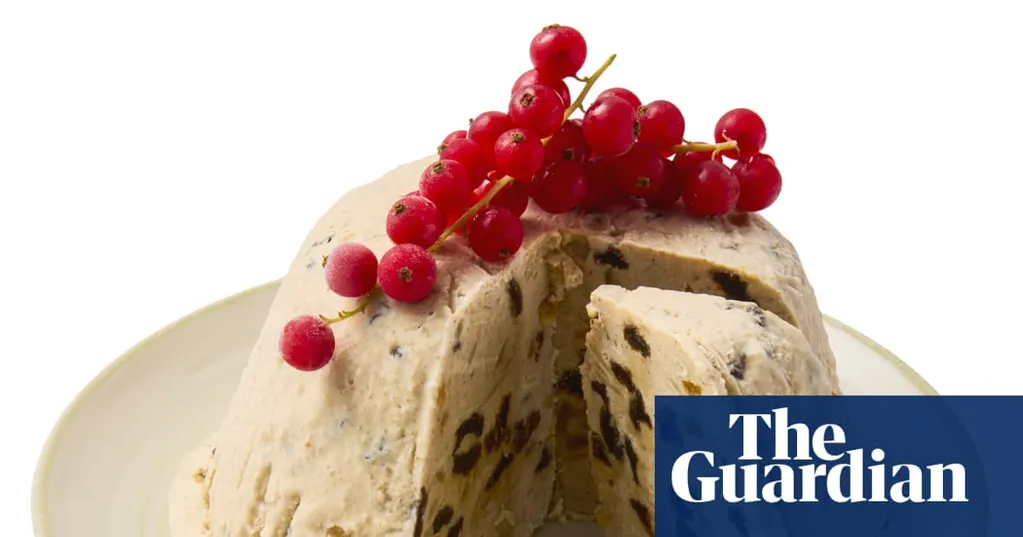
A luxurious iced dessert stuffed full of boozy dried fruit, candied peel and frozen chestnut puree
This festive, frozen chestnut puree dessert is often credited to the great 19th-century chef Antonin Carême, even though the man himself conceded that this luxurious creation was that of Monsieur Mony, chef to the Russian diplomat Count Nesselrode (albeit, he observed somewhat peevishly, inspired by one of his own chestnut puddings). It was originally served with hot, boozy custard - though I think it's just enough as it is - and it makes a fabulous Christmas centrepiece.
Put the fruit and peel in a bowl. Mony's recipe is reported to have contained currants and raisins (though other vine fruit, or indeed any chopped dried fruit you prefer, will work), as well as candied citron, the peel of a mild, thick-skinned citrus, which is available online, as are other candied peels that are far nicer than those chewy, greasy nubs sold in supermarkets.
Add the alcohol: maraschino, an Italian sour cherry liqueur, is the original choice, but Claire Macdonald uses an orange triple sec, Victorian ice queen Agnes B Marshall brandy and noyaux, an almond-flavoured liqueur made from apricot kernels, and Regula Ysewijn mixes maraschino with dark rum. Madeira, sherry, port, etc, would surely be good, too. Soak the fruit for a few hours, or overnight.
An hour or so before you begin, slit the vanilla pod down its length and use a sharp knife to scrape out the seeds. Put these and the empty pod into a small pan with the cream, bring gently just to a simmer, then turn off the heat and leave to infuse. (If using extract, stir in and use immediately.)
Put the egg yolks in a heatproof bowl near the hob (freeze the whites for cocktails or meringues - a pavlova makes a lovely New Year's Eve dessert). Gently reheat the cream back up to a simmer. Meanwhile, whisk the sugar into the egg yolks (if you have a notably sweet tooth, you may wish to increase the amount of sugar to 75g).
Lift the vanilla pod out of the cream, then whisk the hot cream into the egg yolk bowl. Pour back into the pan, set it over a gentle heat and cook, stirring constantly, until the mix is just thick enough that a distinct line can be drawn in it on the back of the spoon. Put the pan in a sink of cold water to cool.
Meanwhile, toast the almonds in a dry pan until golden. If using whole chestnuts, whizz them in a food processor, or pound to a powder in a mortar.
Drain the fruit, add the alcohol to the blitzed chestnuts and whizz again until creamy (if need be, add a little of the custard to help loosen). If using chestnut puree, just stir in the alcohol.
Put the creamy chestnut puree in a large bowl, then gradually whisk in the cooled custard until well combined. Churn in an ice-cream maker until fairly thick. Alternatively, pour into a sturdy, freezer-proof box, cover and freeze for an hour, then use electric beaters or a spoon to beat. Repeat roughly every 30 minutes until thick and semi-set.
Once the ice-cream is thick and semi-frozen, fold the drained fruit and almonds through it until well distributed. Line a two-pint (1.1-litre) pudding basin or loaf tin with clingfilm and spoon the ice-cream into it (or use a well-greased decorative mould).
Pack solid and fold the clingfilm over the top to cover.
Freeze for a couple of hours until solid (you can make this up to two weeks ahead and still enjoy it at its best).
To serve, turn out the pudding on to a serving plate (dip the basin or mould in hot water to help, especially if you haven't used cling-film) and top with a candle or a sprig of something decorative.