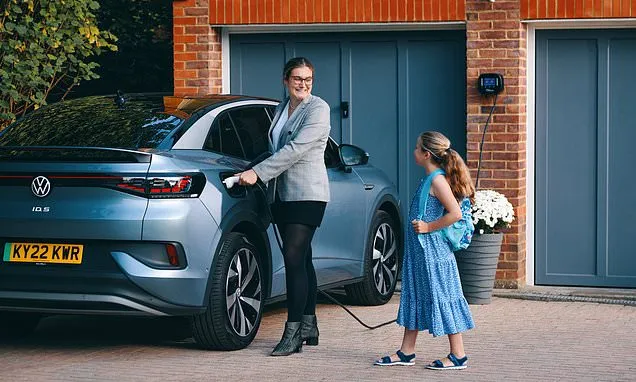
Home charging EV owners taking part in a 'Crowdflex' home energy trial have seen combined savings of £750,000 in 13 months.
Ohme, the UK's largest home charging company, encouraged its electric vehicle-owning customers to participate in the trial - which studied how households can help increase flexibility in the electricity grid by shifting when energy is used - in order to unlock greater value for customers and help grid demand.
The trial was led by National Electricity System Operator (NESO).
Drivers were told to plug their EVs in whenever they were parked at home in order to earn rewards.
By plugging-in more frequently and for longer, Ohme had more time to intelligently manage customer charging - helping customers benefit from cheaper rates.
Over trial started in May 2024 and ran until September 2025, with Ohme participating in more than 400 flexibility events, turning chargers up or down, depending on what the electricity grid required.
Home charging EV owners taking part in a 'Crowdflex' home energy trial - a study into how households can help increase flexibility in the electricity grid by shifting when energy is used - have seen combined savings of £750,000 in 13 months
Based on the savings made over the 13 months, Ohme says that the Crowdflex trials will help customers save more than £470 million per year in energy costs by 2036.
There were 20,000 customers taking part during peak trial - the biggest number of participants involved by any UK home EV charging company in a flexibility trial - flexing almost 150MW of electricity.
During the trials, Ohme saw plug-in rates rise by 40 per cent compared with a control group - showing that effective engagement can change driver habits.
Optimisation of customer charging enables better provision for important grid services, like helping the electricity system to meet peak demand, or making the most of renewable energy when it is available.
In turn, it unlocks greater value for all customers by reducing costs and also lowering carbon emissions.
Results from Ohme's trial, led by National Electricity System Operator (NESO ) predicts that customers could save more than £470 million per year in energy costs by 2036
David Watson, Ohme CEO, says: 'We've demonstrated that our customers will shift their plug-in behaviour when needed, delivering significant flexible capacity through dynamic automated charging.
'But to move this knowledge on from trial to reality, we need more coordination across the Government and energy industry to give greater value and more rewards to our customers for the full system value that their home EV chargers can offer.'
Marzia Zafar, Deputy Director of Governance for Data and Digitalisation, Ofgem: 'Crowdflex is more than a trial, it's a blueprint for the future of domestic flexibility.
'By developing real life data driven models that demonstrate how households can reliably support the grid, were laying the foundation for a smarter, more decentralised energy system.
'This work is critical to delivering the ambitions of Clean Power by 2030 and ensuring that consumers are at the heart of the energy transition.'
Battery degradation is the gradual and permanent reduction in a battery's ability to store energy. Do these Crowdflex trials impact battery health?
Vehicles that frequently use both high-power and high-frequency DC fast charging are projected to have a battery capacity of 76% after eight years
Does fast charging an electric car shorten the battery's lifespan?
Do energy flexibility trials damage EV batteries?
Rapid charging an EV battery frequently has been found to degrade it over time.
Frequently using high-power DC fast charging - which means plugging into a public device offering speeds above 100kW - puts EV batteries at risk of acccelerated degradation by 100 per cent compared to those predominantly charging at slower speeds, like a typical 7kW homecharger.
But what if customers are encouraged to plug in whenever they are parked at home, more frequently and for longer, when taking part in Crowdflex trials?
Does this impact EV battery health long term?
Ohme has assured us that trials like this don't affect battery health at all.
All the trial does is shifting the actual charging curve - there's no vehicle-to-grid or vehicle-to-load (where you can use the car to charge home appliances) in play.
The domestic charging takes place at a maximum of 7.4kW, which we've aleady explained doesn't impact the battery's state-of-health like 100kW+ rapid charging.
Crowdflex encourages people to plug their cars in whenever they were parked at home to earn those rewards, but there is no difference in how the cars are charged or the amount the cars charged - just that EV owners are rewarded for plugging in.