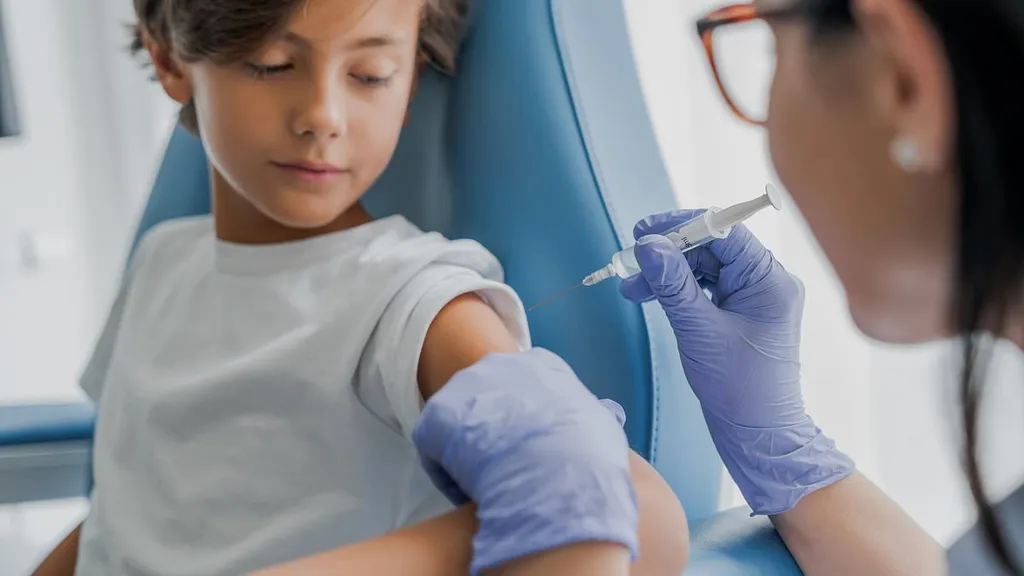
Boys who receive the HPV vaccine could slash their risk of developing cancer by nearly half, a major new study suggests.
Researchers found that males given the latest version of the jab were significantly less likely to develop a range of cancers linked to the virus, including head, neck and penile cancers.
The study, published in JAMA Oncology, analysed health records from more than three million young men.
Men who received the version of the HPV vaccine which protects against nine strains of the virus, had a 46 per cent lower risk of HPV-related cancers overall.
The protective effect was seen across both younger teenagers and young adults.
In real terms, the risk dropped from around 12.5 cases per 100,000 in unvaccinated males to 7.8 per 100,000 among those who had the jab.
Human papillomavirus, or HPV, is an extremely common virus spread through skin-to-skin contact.
While often harmless, it can lead to serious diseases and is known to cause a number of cancers, including those affecting the head and neck, anus and penis, and cervical cancer in women.
Until now, most evidence showing that the vaccine prevents cancer has focused on women, particularly in relation to cervical cancer.
Much of the previous research in men looked at whether the vaccine reduced infection rates rather than whether it prevented cancer itself.
This latest study directly compared vaccinated and unvaccinated males, making the findings more robust and offering some of the clearest evidence yet that the vaccine can protect men from cancer.
Despite this, many countries still primarily offer HPV vaccination to girls. Scientists say that expanding programmes to include boys could help reduce transmission of the virus, protect men directly and speed up the global decline in HPV-related cancers.
The researchers cautioned that cancer cases in young men remain relatively rare and that not all of the cancers studied are caused by HPV.
They also said longer follow-up over several decades will be needed to fully understand the vaccine's long-term impact.
Even so, they concluded that the HPV vaccine is not just for girls and could play a key role in preventing cancer in men as well.
Since September 2019, the UK's HPV vaccination programme has been extended to include all boys in Year 8 (aged 12 to 13), ensuring broader protection against HPV-related cancers after previously being offered only to girls.
The vaccine is typically delivered through school-based programmes and targets high-risk HPV strains linked to cervical, genital and head and neck cancers.
Men who have sex with men aged up to 45 can also request the vaccine for free through sexual health and HIV clinics in the UK.
Studies suggest this group may face a higher risk of anal cancer and vaccination can help reduce that risk by protecting against HPV.
Oral sex is considered a leading risk factor for HPV-related oropharyngeal cancer, a type of throat cancer, largely due to transmission of high-risk strains such as HPV-16.
While many people contract oral HPV, most clear the infection naturally but a small proportion develop persistent infections that can lead to cancer over time.