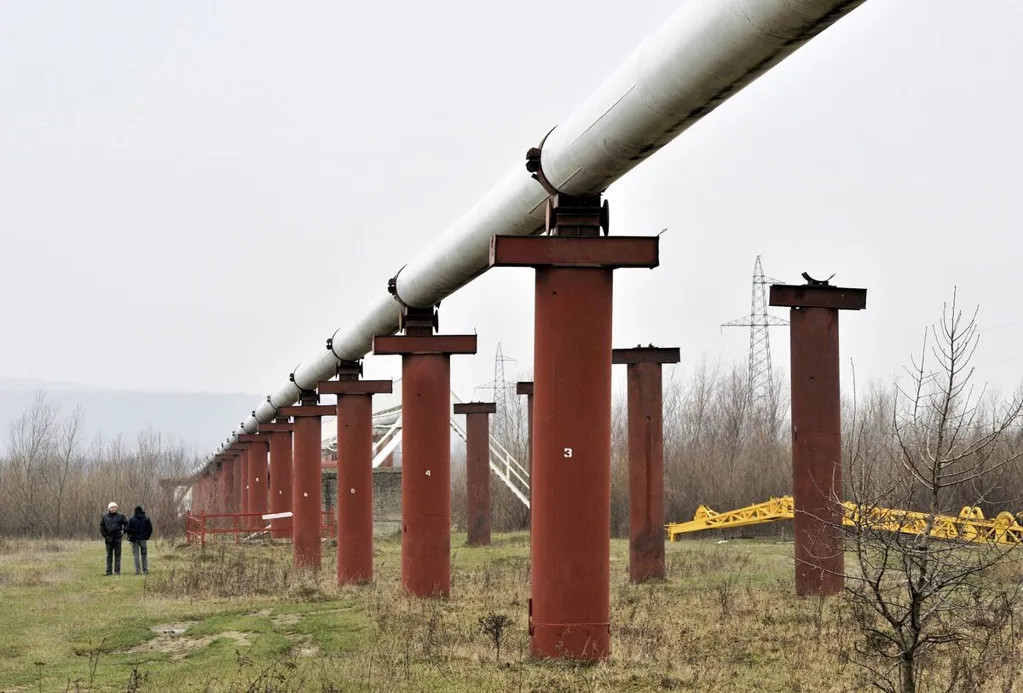
Ukraine denied a Hungarian accusation that it had blocked Russian crude shipments for political reasons as flows through a key pipeline remain suspended following an attack by Moscow's forces.
Budapest's Foreign Minister Peter Szijjarto said in a post on X on Friday that there were no technical reasons why crude deliveries to Hungary through the southern branch of the Druzhba pipeline couldn't restart.
Transit had not resumed because of "a political decision by President Zelenskiy," he said.
The operation of the pipeline has not been restored, according to people familiar with the matter in Ukraine's government who requested anonymity, as the matter is sensitive. They said quick repairs are not possible given ongoing Russian attacks and dismissed Hungarian statements to the contrary as manipulation aimed at a domestic audience before elections in April.
The strike on Druzhba, which took place on Jan. 27 near the town of Brody in western Ukraine, had significant consequences for the pipeline's operation, said a person familiar with the matter. Anticipating complaints from Hungary, Kyiv's Foreign Minister Andrii Sybiha advised Budapest in a post on X on Thursday to direct them at "friends in Moscow."
It was one in a series of large-scale Russian attacks on Ukraine's energy infrastructure amid freezing temperatures, including several on that of Naftogaz Group which owns the pipelines. The state-run company's facilities were attacked more than 20 times since the start of the year, the person said. Naftogaz declined to comment due to security reasons.
The dispute between Budapest and Kyiv also comes two months before a closely-fought general election that Prime Minister Viktor Orban has cast as a last-ditch effort to keep Hungary from being dragged into what he calls Kyiv's war. The Hungarian opposition and other European countries reject that characterization.
Szijjarto said in the post on Friday that Kyiv aimed to put Budapest "in a difficult position by jeopardizing our energy security" ahead of the vote.
Orban, Russia's closest ally in the European Union, has described Ukraine as Hungary's "enemy," and has made warnings about the claimed costs and risks of Ukraine's potential European Union membership a centerpiece of his campaign.
Russia has not supplied any oil to Slovakia or Hungary so far this month, a person familiar with the information told Bloomberg on condition of anonymity. The decline in the Druzhba supplies to the two European nations was already visible last month, when combined flows dropped to below 150,000 barrels per day, the person said.
This compares to a historic average of some 200,000 barrels per day for January-February 2022-2025, Bloomberg calculations show, based on historic data.
The southern leg of the Soviet-era Druzhba pipeline runs across Ukraine and has continued to supply landlocked Hungary and Slovakia with Russian crude oil even as the two countries wage war. Slovakia has said it holds sufficient reserves to cushion short-term disruptions.