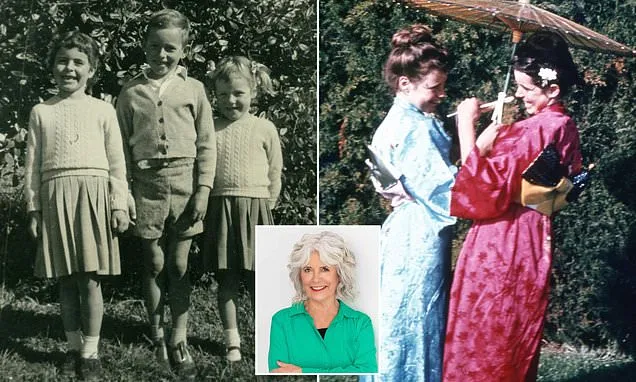
Mary Garden was just six-years-old when her family moved to a rural property in New Zealand. Her brother, who was nine months older, had a bedroom inside the house. Mary and her sister, who was nearly two years younger, were sent to sleep in a separate hut about 100 metres away.
At first, it felt exciting. Like the sort of childhood adventure that might later become a fond family story. Two little girls with their own space, slightly apart from the grown-ups, feeling older and more independent than they really were.
'We thought it was fantastic,' Mary told Daily Mail. 'Like, how incredible. We've got our own little house.'
But the reality of it was very different. They were very young, isolated from the rest of the family at night, and expected to manage on their own. Mary can still remember how frightening that felt.
'It was actually quite terrifying,' she said.
What made it more frightening was what was happening inside that hut. Even then, Mary says, it was clear her sister was struggling psychologically, but nobody dealt with it. Not in any meaningful way. Not as a mental health issue, and not as something that was placing Mary in danger.
'She had very early on exhibited symptoms that she wasn't quite well psychologically,' Mary said. 'But it was the 1950s. My parents weren't going to do anything about it.'
So nothing was addressed. Not her sister's distress or her behaviour, and certainly not what that behaviour was doing to Mary. Instead, the responsibility was quietly handed to her.
'My job was to look after my sister,' she said.
That expectation would shape her whole childhood. At night, it meant trying to soothe, manage or survive whatever might happen next. Sometimes Mary would be asleep when she felt her sister on top of her, attacking her in the dark.
'I might be sleeping and suddenly she's there, biting me, scratching me,' she said.
Mary would scream and fight back. Her father would come running down the path from the house. But instead of stepping in to protect her, he blamed her.
'I was always blamed: "What have you done to upset Anna?",' she said.
That question became the refrain of her childhood.
What makes sibling abuse so difficult to recognise, Mary said, is that it can sit right alongside love, closeness and loyalty. To outsiders, and often to the people living through it, it does not always look like abuse.
'Despite her bullying, my sister and I were best friends,' Mary said. 'We shared everything.'
That is one of the hardest things for people to understand. Mary was not simply terrified of her sister. She was also attached to her. Protective of her. Deeply bound up in her. Looking back now, she understands more clearly what was happening psychologically.
'It's the appeasement response,' she said. 'You befriend the person who is attacking you.'
Even when she fought back in the moment, her longer-term instinct was to smooth things over, to stay close, to make things feel normal again. It was a way of surviving within a family dynamic that offered her no real safety and no clear language for what was happening.
That contradiction is part of why sibling abuse is so often dismissed as ordinary rivalry.
If the children still seem close, if they still laugh together, if one of them still fiercely defends the other, adults can tell themselves there is no real harm being done. But as Mary's story makes painfully clear, closeness does not cancel out abuse.
As the years went on, the pattern did not improve. It deepened. Mary was expected to be the calm one, the good one, the one who did not add to the chaos. Her sister's violent behaviour was treated as something to be worked around rather than confronted.
'I was to be the nice, good girl. Don't have tantrums like Anna. Just look after her,' Mary said.
'I had no one to tell me what's happening to you is not okay.'
Even when the violence escalated into something clearly serious, the family response stayed the same. As a teenager, while living away from home with an aunt, Mary went into her sister's room to check on her.
'She just started screaming at me,' she said. 'When I turned around, I felt something go into my back.'
Her sister had thrown a compass. The sharp metal spike lodged deep into her body, narrowly missing her spinal cord.
'I remember the nurse at the hospital saying, "Oh my God, she's been stabbed",' Mary said.
Mary still becomes emotional when she talks about it. Not only because of the violence itself but because of what followed.
'I was blamed for that,' she said. 'I must have done something to upset Anna.'
When you are a child and every adult around you keeps repeating some version of that message, it sinks in.
Mary did what so many children do in abusive homes. She absorbed the blame because the alternative was too destabilising. If she was not the problem, then the people meant to protect her were failing to do so. And that was a much harder truth to hold.
For Mary, the scars of her childhood still remain in her 70s, but she has learnt to accept she needed to cut her sister out of her life to heal.
For decades, Mary did not have a name for what she had experienced. That silence around sibling abuse is something experts say remains a major problem.
Mary left home at 16. On the surface, she looked like someone who was doing well. She was bright, outgoing, sociable, and by her own account, the sort of girl people noticed. But beneath that outward confidence, something was building.
'I just pushed it all down,' she said.
By university, it caught up with her. The feelings she had buried for years began to surface in ways she could not yet understand.
'I became extremely depressed and anxious,' she said. 'I didn't know what was going on with me.'
At the time, she did not make any connection between her adult distress and her childhood. That would come much later.
What she understands now is that those early family patterns did not remain safely boxed in the past. They shaped her nervous system, her sense of self, and what she had come to accept in relationships.
It was not until Mary (pictured with her family) was in her forties, after leaving a violent relationship, that she began to understand the shape of what had happened to her.
'They carried into my adult relationships,' Mary said.
'I would be blamed for the abuse. Physical violence. Rape. And I just took it on.
'It's the key pattern from my childhood.'
Mary believes sibling abuse is a niche issue or a sad sidebar to more serious forms of domestic violence. She believes it sits right at the centre of how violence is learned, tolerated and repeated.
'If we don't address sibling abuse, we don't fully understand domestic violence,' Mary said.
It is a line she has been repeating for years because, in her mind, the connection is obvious.
If a child grows up in a family where violence between siblings is normalised, excused or ignored, then that child is being taught something profound about power, fear, blame and love.
'Siblings are the most common form of violence in the family,' she said.'And if that's not addressed, those children grow up and repeat those patterns.'
It was not until Mary was in her forties, after leaving a violent relationship, that she began to understand the shape of what had happened to her.
'I went and got help and started unravelling things,' she says.'It was like a lightbulb moment.'
For the first time, she could see the patterns: The self-blame; The way she had accepted being harmed and then persuaded herself it was somehow her fault; The way she had been trained from childhood to accommodate other people's violence.
'I realised I needed to cut off from my sister for my own mental health,' she said.
Even then, it took time to find the right language.
'I had never heard of sibling abuse,' she said.
But naming it mattered. Once she could identify what had happened, the guilt that had sat on her for so long began, finally, to loosen.
'I stopped blaming myself,' she said.
Since publishing her memoir My Father's Suitcase , Mary has heard again and again from people who recognise themselves in her story.
Sometimes they tell her openly. Sometimes they struggle to get out the words but the message is often the same: They did not realise there was such a thing as sibling abuse.
They thought what happened in their family was just the way siblings were. They thought they were the only one.
Sometimes they can see the pattern continuing in the next generation.
'One woman told me her brother abused her and now he's abusing his wife,' she said.
That for Mary is exactly why this conversation matters so much. Her memoir may be deeply personal but she is under no illusion that it is only about her.
'This isn't just my story,' she said.'It's many people's stories.'
She also knows how much shame can cling to estrangement.
That is not a neat or painless resolution. It is grief-laden and complicated. But for some people, it is what safety looks like.
Sydney clinical psychotherapist Julie Sweet said early family violence can reverberate through a person's life.
Over time that can show up as self-blame,fear of intimacy,trouble trusting other people or a tendency to normalise behaviour that is actually abusive.
Mary is 75 now.The memories are still there.So is the aftershock of what happened.
Trauma does not vanish simply because time has passed,and insight does not erase impact.But understanding has changed something fundamental for her.She can now see where those patterns came from.
She can see how they shaped her.And she can see how easily they are still being missed in other families,in other homes,in other children.