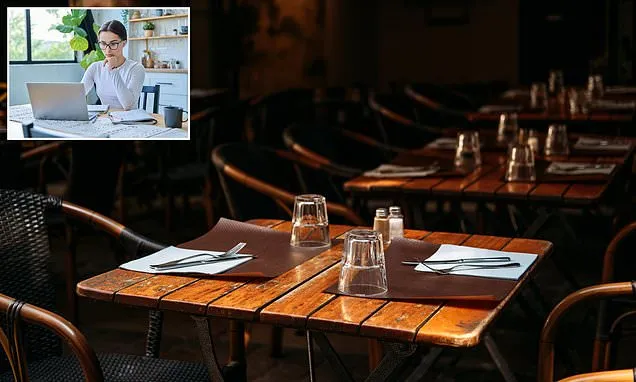
An Australian diner revealed how their honest review about a 'subpar' restaurant led to consequences they never could have predicted.
The diner, a young dad, had a poor experience at a restaurant in Western Sydney near Parramatta and decided to leave a review online criticising the food, service and cost.
He said nothing on his account mentioned his workplace and the review was written in a personal capacity like the many others he's written over the years.
Yet shortly afterwards, the restaurant's owner contacted the man's employer directly after looking him up on LinkedIn.
'I had a very unfavourable experience at a restaurant and left a Google review not disclosing the company I worked for,' he explained, adding that he works in a 'totally unrelated sector' to hospitality.
'The founder of the restaurant then called my employer and I have now been spoken to by the management team about [it] despite not mentioning the company I work for in the review.'
The worker said there were no formal consequences from the meeting but that senior management had noted the incident and was 'keeping score on negative events'.
While tempted to complain, he said hitting back at management's response to the bizarre scenario 'isn't worth my job in the current climate'.
He did, however, admit he would be actively looking for new employment in the weeks to come.
'I believe it's a good sign to keep looking for something else.'
When reviews leave the internet
Online reviews have become one of the most powerful tools for diners to share experiences, with platforms like Google, Yelp, and TripAdvisor allowing customers to publicly rate restaurants and services.
But the story has raised questions about where the line is between personal opinions online and professional reputations.
Many people were stunned that the restaurant owner contacted the reviewer's workplace at all.
'I am surprised your employer even entertained this,' one commenter wrote.
Another suggested the situation should be added to the review itself.
While tempted to complain, he said hitting back at management's response to the bizarre scenario 'isn't worth my job in the current climate'
'Update the review to say that they harassed you via your employer,' they said.
Others said the situation highlighted how easily online activity can be traced back to someone's professional life.
'If they have a clause in the employment contract about communications that bring the company into disrepute, they can let you go,' one commenter warned.
They said a friend had lost their job after posting something critical on Facebook when people involved tracked down their workplace through LinkedIn.
The blurred line between personal and professional
The incident also sparked debate about whether employers should become involved in situations like this at all.
Some people questioned why a company would weigh in on an employee's personal restaurant review if the business itself was not mentioned.
'If you didn't mention your company by name, I fail to see the issue,' one commenter said.
'If an unfavourable review written in your personal time constitutes inappropriate workplace conduct, why do we have reviews at all?'
Others raised concerns about privacy.
'If your employer provided or confirmed your personal details to a third party, that's a breach of privacy,' a man wrote.
A warning about online reviews
While many commenters criticised the restaurant and employer, others said the situation was a reminder that anything posted online can sometimes travel further than expected.
'I know it sounds tough, but be professional always - you never know who's watching,' one warned.
They suggested that if management had chosen to address the issue, it was possible the wording of the review crossed a line.
Regardless of who was in the right, the story has struck a chord with people who rely on online reviews both to vent about bad experiences and to decide where to eat next.
After all, most diners assume a critical review might earn them a reply from the restaurant - not a conversation with their boss.