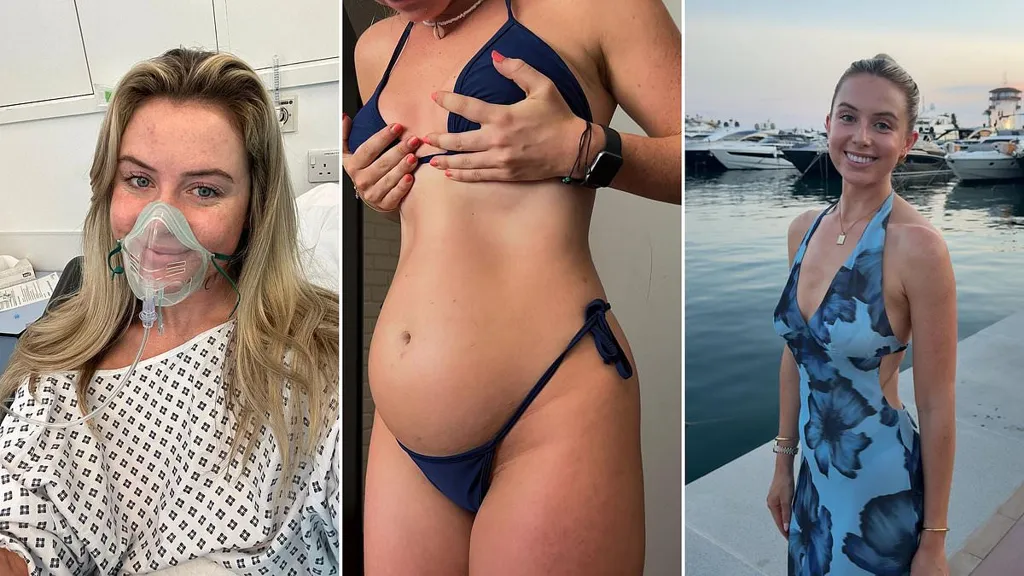
For nearly a decade, I was exhausted in a way sleep never fixed. I was bloated in a way no 'clean eating' could flatten. I was in pain that felt medieval. And I was told, over and over again, it was normal.
Doctors shrugged at my distended stomach and crippling period pain. I was advised to 'toughen up'. To go on the Pill. To accept that this was simply part of being a woman. When I cried in consulting rooms, desperate for answers, I was labelled dramatic. Hysterical. At one point, I was told I was experiencing 'phantom symptoms' - that the pain and bleeding were essentially in my head.
They weren't.
My story, as I've since learned, is far from rare. Millions of women are navigating fatigue, acne, weight gain, brain fog, anxiety and depression while being told these symptoms are common - and therefore normal. But common and normal are not the same thing. That distinction changed my life.
I was 16 when I finally got my first period. Within months, I went from being an outdoorsy farm girl - raised on home-cooked meals, constantly moving, happiest feeding baby calves - to someone doubled over in pain. I bled heavily, sometimes from my rectum as well as vaginally. I felt a corkscrew-like twisting sensation in my pelvis. I fainted. I missed school. I was exhausted but couldn't sleep.
When I plucked up the courage to explain all this to a GP, I was told periods hurt and I'd grow out of it.
I didn't grow out of it. Instead, the symptoms grew with me.
At university, my body collapsed under the pressure of late nights, stress and cheap convenience food. My pelvic pain worsened. My bloating was so extreme I looked heavily pregnant. Sex became painful. I was repeatedly tested for STIs despite being in a long-term relationship. Each negative result left me back at square one.
Even after being diagnosed, my skin would erupt in acne and my mood was unpredictable.
After years of dismissal, when I was 21 a doctor finally uttered the word endometriosis. A laparoscopy confirmed the diagnosis. You might imagine that was a turning point. In some ways it was - but not in the way I'd hoped. They told me my options were to have a hysterectomy or have a baby, neither of which I felt ready to do.
Instead I underwent another type of surgery, which I discovered was the wrong type. Instead of excision - which removes endometriosis lesions at the root - I had undergone ablation, which burns the surface. A specialist explained it to me like this: ablation cuts the weed; excision pulls it out properly. I underwent further surgery at 22, which revealed extensive recto-vaginal endometriosis - explaining the bleeding and the searing pain no one had taken seriously.
The surgeries helped but they didn't fix everything. I still experienced daily bloating, fatigue and flare-ups that sent me to A&E. At 24, after a week-long pain episode, I was rushed into emergency surgery with appendicitis. Due to cysts complicating the operation, there was a real risk I could lose my ovaries.
I woke from that surgery screaming, not because of pain but because I needed to know: did I still have them?
I did.
That brush with infertility led me to freeze my eggs. It also marked a psychological shift. I realised that while surgery had a place, it wasn't addressing the deeper issue. Even after diagnosis, operations and medication, I didn't feel well. My weight fluctuated. My skin erupted in acne. My moods were unpredictable. I was inflamed - visibly and invisibly.
That word - inflammation - kept appearing in my research. I had started a blog and Instagram page to document my experience and raise awareness but privately I was studying, too. Hormones. Gut health. Blood sugar regulation. Autoimmune disease. Stress physiology.
Inflammation is the immune system's protective response. In acute situations - infection or injury - it's lifesaving. But when it becomes chronic, simmering in the background, it can contribute to hormonal imbalance, gut dysfunction, mood disorders, skin conditions and chronic pain. Emerging research suggests it plays a role in conditions such as endometriosis and polycystic ovary syndrome, too.
By making big changes to my daily life, my bloating reduced dramatically and my acne eased.
I could see inflammation in my body. The nine-month-pregnant bloating. The swollen face during flare-ups. The constant colds. I began experimenting with dietary changes including a strict autoimmune-style protocol. It helped - but it wasn't the full answer. I could eat 'perfectly' and still flare during stressful periods or after weeks of broken sleep.
That's when the bigger picture clicked.
Food mattered but it wasn't the only lever. Chronic inflammation is influenced by multiple lifestyle inputs: what we eat, how we sleep, how we manage stress, how we move, how well we eliminate waste and the health of our gut microbiome. I began thinking of these as pillars - foundations that either stabilise or destabilise the inflammatory response.
I left my corporate job and enrolled in formal training in menstrual and hormonal health. My goal was simple: understand my body well enough to stop living in fear of it.
Slowly, systematically, I rebuilt.
I prioritised blood sugar balance - pairing carbohydrates with protein and fats to reduce spikes and crashes. I increased fibre and diverse plant foods to support my gut microbiome. I addressed my gluten and dairy triggers. I stopped glorifying four hours of sleep. I built stress-management practices into my week rather than waiting for burnout. I moved in ways that supported rather than punished my body.
The results were not overnight - but they were profound.
My bloating reduced dramatically. My acne eased after a decade of painful breakouts. My mood stabilised. My energy returned. Most strikingly, my periods became manageable. The excruciating, floor-bound pain I had accepted as inevitable became rare.
I still have endometriosis. I am not 'cured'. But I am symptom-free when I support those pillars consistently. When a flare-up does occur, I can almost always trace it back - a run of poor sleep, a period of intense stress, dietary slip-ups layered with overwork. That awareness is power.
None of this replaces medical care. Surgery saved my life more than once. Hormonal treatments are appropriate and necessary for many women. But lifestyle is not trivial. It is not a wellness cliché. It is a powerful modulator of inflammation - and inflammation, I learned the hard way, sits at the root of far more symptoms than we are taught to connect.
We have normalised women being in pain. We have normalised burnout. We have normalised bloating, fatigue and hormonal chaos. But normalising suffering does not make it biologically inevitable.
If I could speak to my 17-year-old self - the girl leaving the GP's office feeling ashamed and weak - I would tell her this: your body is not broken. It is communicating. And with the right tools, you can learn its language.
I lost much of my late teens and early twenties to pain and misdiagnosis. I mourn that time. But I also recognise that it forced me to understand women's health in a way I might never otherwise have done.
Today, I don't fear my cycle. I don't dread my reflection. I don't organise my life around anticipated A&E visits. I understand my triggers. I understand my body.
And perhaps most importantly, I no longer accept 'common' as a synonym for 'normal'.