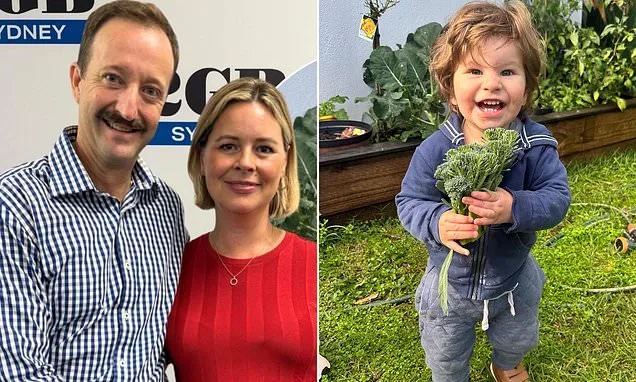
The grieving parents of a toddler who died due to systemic failures at a Sydney hospital are expecting their fourth child.
Danny and Elouise Massa rushed their two-year-old son Joe to Northern Beaches Hospital's emergency department in September 2024.
The toddler had spent that night violently vomiting. He was suffering a life-threatening condition called hypovolemia after losing too much fluid.
After a series of hospital failures and misdiagnoses, Joe suffered severe and irreversible brain damage and his life support was turned off three days later.
An internal review identified multiple failures at the hospital that day, including poor IT systems, incorrect triaging and ignoring the family's concerns.
Since their son's tragic death, the Massas have lobbied for legislative change, inspiring the passage of Joe's Law to enshrine a parent's right to be heard during the treatment of their children in NSW hospitals.
The couple appeared on Radio 2GB breakfast host Ben Fordham's program on Thursday with health minister Ryan Park to launch a new statewide hotline for patients and families to raise concerns about the care of a loved one in hospital.
They also revealed that their fourth child is due on June 2.
Danny and Elouise Massa will welcome their fourth child in early June, less than two years after the tragic death of their son Joe.
The death of Joe Massa at Northern Beaches Hospital in September 2024 sparked reforms.
'It's bittersweet,' Ms Massa told a delighted Fordham.
'This baby is already so loved and we knew that knew (in) our darkest times that hope and love will always been the main drive and force for us.
'This baby is a symbol of hope for our family and hopefully for others.'
The couple have chosen not to find out the baby's gender beforehand.
The NSW government launched Raise It on Thursday, a safety reform allowing patients, families, and carers to urgently raise concerns if a patient's condition deteriorates in a public hospital.
It replaces the previous REACH (Recognise, Engage, Act, Call, Help) program launched in 2013 to help people escalate concerns of clinical deterioration.
The state government overhauled REACH after the program failed Joe and his family.
'It is going to literally save lives in hospitals,' Ms Massa said.
Joe's death in September 2024 inspired Raise It, a new statewide hotline for patients and families to raise concerns about the care of a loved one in hospital.
'It's a way to empower every individual across NSW, whether you're a patient, parent, carer or healthcare practitioner to raise your concerns.
'It is not a weakness, it's a sign of compassion, care and professionalism.'
'It is Joe's love that is driving this change.'
Mr Massa added: 'El was in the hospital advocating for better care for Joe and they fell on deaf ears.'
'The old protocol failed and the Raise It reform is a tremendous step in the right direction.'
The Raise It program involves three clear steps to get help fast in a public hospital or health service.
- The first is to speak to a nurse or doctor about your concerns.
- If you're still concerned, the second step is to request the nurse in charge for a clinical review.
- If that also fails, the third step is to call the Raise It hotline on 1800 777 333, where a senior health professional will listen to your concerns and respond.
'Because patients and families often recognise early changes first, trusting your instincts when you or someone you love comes into hospital is critical,' Park said.
'You don't need medical knowledge. You don't need to be certain. You might notice small changes. You might feel something just isn't right.'
'You know yourself or your loved one best. If you're concerned, Raise It. NSW Health staff are here for you, will listen to you, and make sure you get the care you or your loved one needs.'
Following Joe's death, the NSW government has returned Northern Beaches Hospital to public hands and ordered a Clinical Excellence Commission review of its systems and processes surrounding paediatric care.
It has also requested a coronial inquest into Joe's death.