The thing about cockroaches is that when you spot one, you're probably seeing just the scouting party. JPMorgan Chase & Co.'s Jamie Dimon made this point last year in the wake of the First Brands Group and Tricolor Holdings scandals. Both companies, which existed in different corners of the automotive industry, were undone by obscure private-financing blunders. Now, Industry has provided us with a whole episode dedicated to financial bug-hunting.
In London we find Harper Stern (Myha'la) and Eric Tao (Ken Leung), the erstwhile principals of nascent fraud-busting hedge fund Stern Tao, in the middle of the type of crisis that often accompanies a particularly aggressive investment strategy, namely a short squeeze followed by a margin call. For the uninitiated, this can happen when you borrow and sell shares you don't have in the hope you can replace them later -- at a lower cost -- when the price crashes. The risk, as Stern Tao soon discovers, is landing on the wrong side of a one-way bet when you have to replace the shares at an even higher price.
Harper has gone all in on her thesis that Tender, the neobank at the heart of this season of the HBO show, is a sham. Not so much a house of cards, but a box of firecrackers sitting too close to a roaring fire.
Unfortunately for her fund, no one else thinks the same. Indeed, Morgan Stanley has just published a very bullish note on the financial technology company that's pushed its stock up 7%, turning the screws on her financial position. Could the sell-side analysts be wrong and one lone investor right? Well, in the case of First Brands, the auto parts supplier backed by JPMorgan, it took a junior analyst at another fund manager to detect the issues that would lead to its collapse, so it's fair to say collective delusion is still alive and well, whether it's on Wall Street or in the City of London.
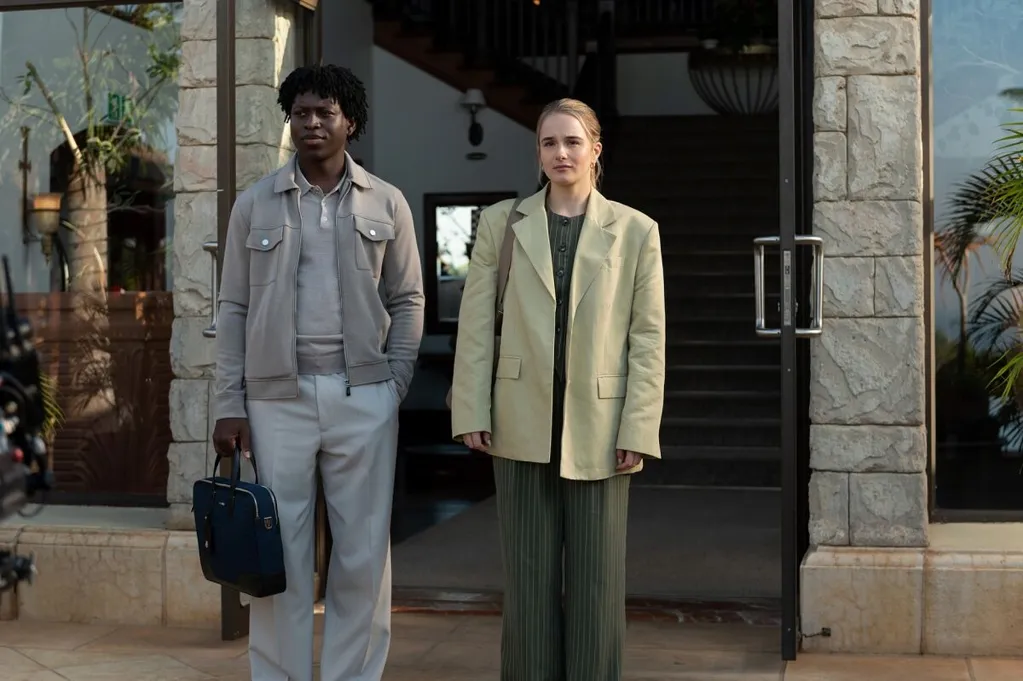
Back in the fictional world of Industry, Harper's brain trust is itching to jet out to Ghana to do the type of boots-on-the-ground analysis of Tender that no one else has. So it is that Sweetpea Golightly (Miriam Petche), Harper's attack-dog researcher, and Kwabena Bannerman (Toheeb Jimoh), her trader and on-and-off-again squeeze -- who, conveniently, is Ghanaian -- touch down in Accra and set about investigating Tender's African operations.
While Kwabena is initially skeptical that Tender Africa is any dodgier than similar firms, Sweetpea is convinced the fintech’s business on the continent is just a facade. The early signs support her thesis, as one clue after another shows there’s little of substance to the company, while an attempt to speak to Tony Day (Stephen Campbell Moore), the firm’s local head honcho, is fobbed off.
Sweetpea and Kwabena quickly learn the first rule of financial investigation: If this work were easy, someone else would already have done it. Tony later calls Sweetpea, having done some checking of his own, and questions her bona fides, citing the UK's financial register of authorized staff -- she’d claimed to work for a firm at which she doesn’t any longer. Of course, anybody who knows anything about the register could tell you it’s been about as useful as a chocolate teapot for more than a decade. Ironically, in Britain, the overhaul of the country’s regulations that followed the 2008 global financial crisis took one of the authorities’ few useful services and made it rubbish.
Tony, however, isn’t looking to catch out the intrepid team from Stern Tao; he actually wants to extricate himself from Tender. It turns out he’d already been in touch with Jim Dycker (Charlie Heaton), the investigative journalist who we last saw overdosing on a sofa after embarking on a drink-and-drug binge in the wake of being fired. Jim has died, Sweetpea tells Tony, who’d been unaware of the news.
Sweetpea is later attacked in a bar restroom; her head slammed into a mirror, seemingly an attempt to intimidate her as she looks into Tender. Kwabena, seeing his colleague’s broken nose, interrupts his karaoke to rush to her aid, which—as is typical with Industry—ends up in an intimate act in a bedroom.
In London, Harper and Eric are arguing about how to salvage the fund as its biggest trade is cratering. Having effectively lost all of his initial investment, Eric appears amazingly sanguine when Harper suggests a raft of schemes to keep the show on the road, most of which would likely result in the Serious Fraud Office’s opening a lengthy case file.
Fortunately for them, their dynamic duo in Accra save the day, having finally figured out Tender’s African scam, which involves using fictitious profits to pay for fictitious businesses. “It’s a feedback loop of fakery,” Sweetpea says. “It was a phantom.”
Having gotten to the bottom of Tender’s chicanery and bluff, Sweetpea and Kwabena take a novel approach to source-building, barging into the fintech’s Accra office again to confront Tony with their findings. A subtle way to persuade him to open up about his employer this is not, particularly given it’s done in front of an office full of staff.
But even with all this newfound knowledge, the question remains: How to get shareholders to listen to what the fund is saying? As other short sellers have found in the past, it’s one thing to point a finger at corporate fraud, and it’s quite another to get others to buy into the trade — particularly when there’s so much money to be lost by so many.
Fortunately for Harper, she has just the opportunity, having been invited to an investor conference to talk about women in finance. “I’m going to lay it out, brick by brick,” she tells Sweetpea, just back from Africa — a slightly unfortunate analogy given the recent run-in between her subordinate’s face and a hard surface.
- Sweetpea and Kwabena are seen drinking bottles of Guinness while out on the town in Accra. Guinness might seem an unlikely choice in such a warm climate, but the beverage is hugely popular in West Africa.
- Harper’s plan to expose Tender’s accounting trickery at an investor conference is a not uncommon tactic in the financial world. Fund managers have been known to use such appearances to explain their views on particular companies they’re invested in. Famed short seller Jim Chanos is a regular on the conference circuit.