Morgan Rynor joined the CBS News Miami team as a reporter in August 2023 and is excited to be back home.
This week is National Infertility Awareness Week, and someone you know is likely struggling with infertility. It affects one in six couples.
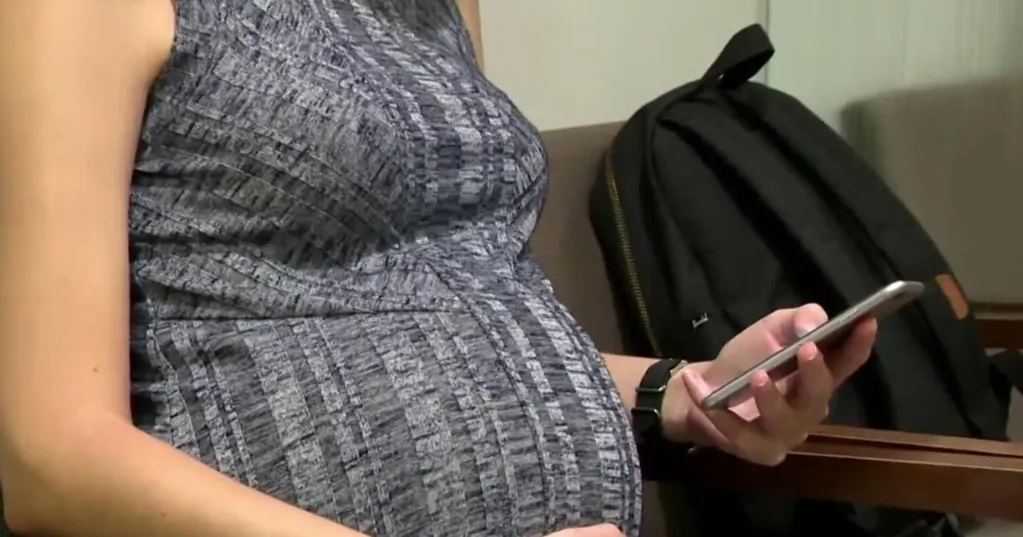
"It's unlike any other feeling," Lior Schwartz said about finding out she was pregnant. "It's just after a year and a half of hoping for this one thing, and it occupies your brain so much that's all you can think about, and then getting the good news is really amazing."
Lior Schwartz and her husband first started trying to have a child six years ago. After months of trying, she went in for testing. That's when she was diagnosed with Polycystic Ovary Syndrome, or PCOS.
"At that point, we came up with a plan," she said. "Let's go with IUI."
Intrauterine Insemination (IUI) is when millions of the healthiest sperm are put back into the uterus right when an egg is going to be released. It took three IUI cycles until Schwartz got the call that it worked.
"There are times where you can be so positive and say, 'it's going to happen, it's going to happen,' but you never know," she said. "And just because it happened the first time, there are a lot of people who have a second unexplained infertility."
It was even more difficult the second time around. Six failed IUI cycles followed until Schwartz found Dr. Bardos, a double board-certified OB-GYN and reproductive endocrinologist.
"She actually had a little niche in her uterus that, despite multiple attempts at fertility treatments, she was unsuccessful," Dr. Bardos said.
Through in vitro fertilization (IVF), the couple welcomed their baby girl.
Dr. Bardos says there's an increase in couples experiencing infertility.
"One of the main reasons is delayed childbearing," Dr. Bardos said. "So people are delaying when they're trying to conceive over the last couple of decades, and we know that as the ovaries age, the quality and quantity of those eggs decline."
For those considering delaying fertility, egg freezing is an option. He also says environmental factors like obesity, smoking, and drinking are playing a role in infertility.
Third, and often overlooked, Dr. Bardos says that men being the issue is overlooked. He says 40 to 50 percent of the time, the man is the reason behind the infertility.
"There is a whole field called reproductive urology that focuses on that," he said. "Sometimes men have a blockage. They're creating sperm, but it simply can't come out."
The good news is, he says, there are so many different avenues to help achieve a healthy pregnancy, but expanding access to the care is also a roadblock.
"Many insurances don't cover it, and that can be very difficult for patients because the cost of treatment is quite high," he said.
"There are a lot of organizations that are now coming out, not just in the Jewish community, but even across the nation, that are supporting patients in this journey which I hope will only increase," he said.
If you're interested in getting a baseline screening, you can go to a fertility specialist like White Glove Fertility or talk to your regular physician or your OB-GYN.