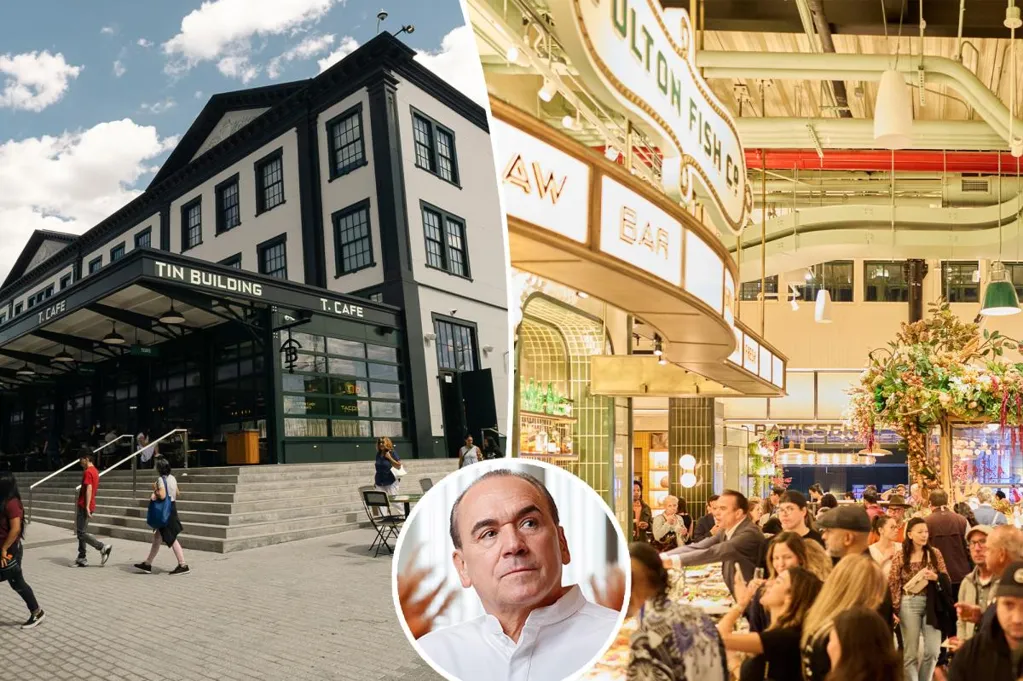
The Tin Building by chef Jean-Georges was once hailed as New York City's "new food epicenter." But now, however, it will become a Balloon Museum.
The waterfront food emporium's parent company, Seaport Entertainment Group, announced the Tin Building's immediate closure on Monday. An estimated 132 employees are affected, SEG told Gothamist.
It's an abrupt ending to three years of financial losses, vendor closures and workforce turbulence.
The highly anticipated launch of the Tin Building by Jean-Georges Vongerichten in August 2022 was 10 years in the making, born out of a partnership between the celebrity chef and the Howard Hughes Corporation. The $200 million project, which marked its debut with a grand opening event, was positioned to signal New York City's bruised culinary scene rising from the ashes of the COVID-19 pandemic -- bigger and bolder than ever.
A massive redevelopment effort had successfully turned the landmarked Fulton Street Fish Market into a shiny, 58,000-square-foot culinary hotspot. The grand opening included six restaurants, four bars, six counters, private dining and upstairs retail hawking imported cheeses and $25 artisanal olive oils.
The New York Times dryly dubbed the project "a shiny fantasy of a city built for consumers."
Where luxury food halls like Chelsea Market and Eataly succeeded, however, the Tin Building quickly failed.
The market's parent company revealed an annual loss of $33 million on the venture in 2024 alone. Over its less than four year run, the Tin Building reportedly lost its parent company more than $100 million, Gothamist reported.
The brand failed to entice New Yorkers to its relatively remote location along the East River. The South Street Seaport, which was brand-renamed into the Seaport District beginning in 2019 during its redevelopment, lacked year-round foot-traffic and stands far out of the way of most commuting New Yorkers.
In just three years, a large swath of the building's vendors reduced their hours or closed entirely. Howard Hughes Corp eventually spun off the property into a new public entity, Seaport Entertainment Group.
The vegetarian eatery abcV, an offshoot of Vongerichten's popular ABC Kitchen, closed in January of last year, less than a month after Gothamist reported that at least 100 Tin Building workers lost their jobs after their employer performed a surprise identity and employment check.
In an April 2025 earnings call, SEG execs announced they would scale back the venture in an effort to turn down the "cash burn." The company announced in June that it ended its management agreement with Jean-Georges Vongerichten's Creative Culinary Management Company, reportedly transitioning into a licensing agreement instead.
Signs of trouble for South Street Seaport continued into the fall, however. A small section remained closed off, and the rest of the building felt "eerily empty" on weekday evenings, one Bloomberg reporter found, save for popular spots like the speakeasy-style House of the Red Pearl restaurant.
The Tin Building by Jean-Georges is far from the city's only failed upscale food market.
The Lower East Side's sprawling Market Line shut down in February 2024, followed by Hell's Kitchen's ground-floor food court in Gotham West and Lower Manhattan's Canal Street Market. The already lean businesses struggled through the COVID-19 pandemic to keep a steady flow of customers.
It's not clear which Tin Building ventures will find new homes, and which are gone for good. SEG is ending their license agreement with Jean-Georges Restaurants, The Post previously reported, but intends to continue its partnership.
Popular eateries such as House of the Red Pearl and T. Brasserie might relocate elsewhere in the Seaport, Lois Freedman,Vongerichten's CEO,previously told The Post,but those plans are "under discussion."
One thing is certain -- the inflatables are coming. The Balloon Museum, an immersive inflatable art experience, is taking the space, according to the Monday filing. The contemporary art venture, run by Italian-owned Lux Entertainment, has evidently found global success across 23 cities since its Rome debut. The "museum" has been compared to a ticketed selfie backdrop, à la the Museum of Ice Cream.