Forbes contributors publish independent expert analyses and insights.
The AI capital spending (capex) boom looks to continue to roll through 2026, driving ongoing interest in innovative startups that can help build the next generation of cloud, communications, and AI infrastructure.
The major hyperscalers have all increased their capex budgets, with the four top hyperscalers (Alphabet, Amazon, Meta, and Microsoft) budgeting more than $600 billion in combined capex. Toss in additional major players such as OpenAI, Oracle, and Elon Musk's xAI, and aggregate AI capex spending totals about $1 trillion per year.
Building this infrastructure is an immense task. It needs to be done economically, with innovation providing needed efficiency. In addition to the electrical grid, cooling systems, and concrete behind AI datacenters, there is technology -- a lot of it. These technology stacks are complex and range from hardware compute, networking, and storage to the complex software stacks needed to move, store, and secure data.
Every year, Futuriom dives into numerous trends driving cloud and communications infrastructure investment. Over the course of a year, we meet with more than a hundred customers and private companies to understand where to find the best product/market fits that satisfy customer challenges. Our new Futuriom 50 report for 2026 includes all the details on the top private companies we are tracking, as well as the major cloud technology trends driving their success.
Key Changes in Architectural Thinking
One of the byproducts of the current AI investment cycle will be rapid change in the technology architectures for the supporting infrastructure. Here are some of these architectural changes and challenges:
Distributed AI architectures.
Historically, technology shifts have toggled between centralization and decentralization of compute. For example, when technology shifted from mainframes to client/server, it was a shift from centralization to decentralization. Cloud compute was the opposite. The current trend is toward vast distribution of both centralization and decentralization at the same time -- think of it as full distribution of data and apps. New infrastructure is needed to host, manage, and orchestrate distributed data architectures.
Companies to watch: Arcee AI, Databricks, Fivetran, Kong, Lamba, MinIO, Nasuni, Redpanda, UnifyApps, VAST Data, VDURA, Vultr, Wasabi, ZEDEDA.
Smarter and faster connectivity.
The distributed nature of the AI world will drive the need for faster and more efficient connectivity. This is driving the trends we are following such as multicloud networking (MCN), Infrastructure as Code (IaC), and NetDevOps, which seek to automate network and application connections among apps and infrastructure.
Companies to watch: Alkira, Arrcus, Aryaka Networks, Aviatrix, Aviz Networks, Cato Networks, DriveNets, Graphiant, Itential, Netris, Nile, Selector in networking. Pulumi and Spacelift in IaC.
The need for pervasive cybersecurity.
As the velocity of data, connectivity, and infrastructure deployment speeds up, so does the need for pervasive and automated cybersecurity models. Firewalls are no longer enough. Apps and infrastructure need to be embedded with zero-trust models that ensure that all apps and access points are accurately identified. Data must be secured with end-to-end encryption. Not only that, but cybersecurity silos such as Extended Detection and Response (XDR), Security Information and Event Management (SIEM), and Secure Access Service Edge (SASE) need to converge on a single distributed platform.
Companies to watch: Alkira, Aryaka, Aviatrix, Cato Networks, Eclypsium, Elisity, Exaforce, Fortanix, Index Engines, Stellar Cyber, Teleport, and Versa Networks.
2025 Exits From Our Futuriom list
Each year, as we review the Futuriom 50 list from the previous year, we look back to see how the choices we made last year are faring in the markets we cover. And of course, we're keeping an eye on who's still hot -- and who's not.
Two of our Futuriom 50 picks went public in the past year:
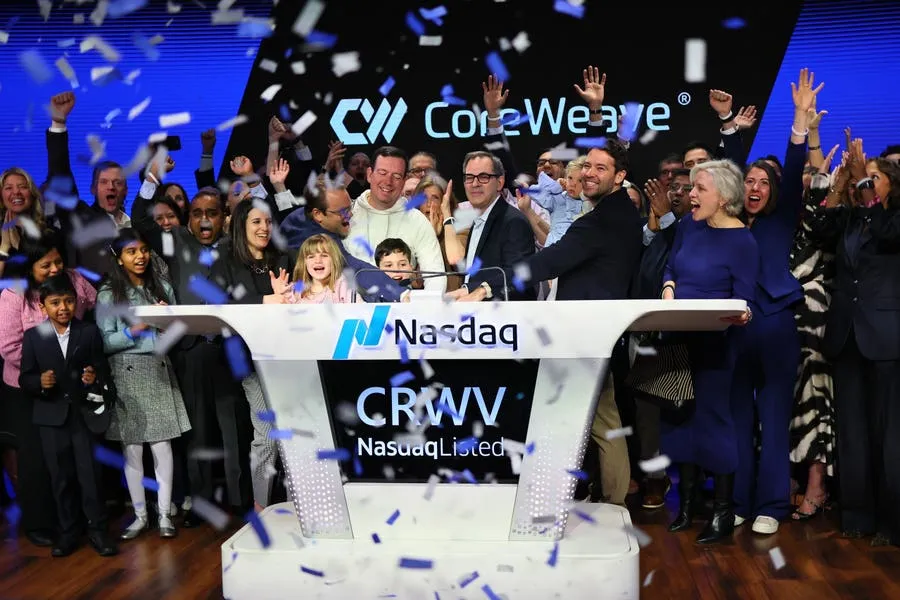
- CoreWeave's (CRWV) IPO raised $1.5 billion in March of 2025, which was followed by a 100%+ increase in the stock price YTD as of this writing. Since the IPO, CoreWeave also has made headlines for a lucrative deal with Meta for over $14 billion, which came just after CoreWeave expanded its multibillion-dollar arrangement with OpenAI. While challenges remain, CoreWeave's growth continues to prompt shock and awe.
- Netskope (NTSK) raised $908.2 million in its IPO on September 17. The cybersecurity company offers a fully integrated SASE solution built around its network of cloud points of presence (PoPs). Its Netskope Security Cloud platform provides access to a range of security functions, including zero trust network access (ZTNA). All of these features are in demand in the enterprise. Overall, Netskope's IPO has been a big disappointment, falling 50% from its first day of trading. The shares were recently trading around $11. This poor performance will likely have a negative effect on the IPO prospects of the closest comps in the existing Futuriom 50 list, which are Aryaka and Cato Networks.
What About M&A?
The companies we track are always active in M&A. For example, last year, Google announced a deal to buy Wiz for stunning $32 billion and incorporate it into Google Cloud (the deal has yet to officially close, but it's expected to close soon).
Palo Alto Networks completed its $3.35 billion acquisition of former serial F50 member Chronosphere in early 2026; this was a big chunk of change to acquire the cloud-native observability platform to bolster its AI-driven security operations. As of this writing ProsperOps had just been acquired by Flexera; Flexera is a private company said ProsperOps will remain independent so we are leaving them on our Futuriom 50 list for now.
Big Funding News
In total, the 50 companies on our list have garnered a total of more than $33 billion in funding. A variety of the companies on our list have garnered significant funding in the past year.
- Arrcus landed $67 million from Fujitsu in June 2025 and signed a deal with Fujitsu subsidiary 1Finity to jointly develop go-to-market plans to expand its business globally with a primary focus on Japan targeting network operators enterprise customers datacenter operators.
- CAST AI scored $108 million in April 2025 in a round led by G2 Venture Partners SoftBank Vision Fund 2. Since then the company has scored two undisclosed rounds at a valuation over $1 billion. The company uses an AI engine manage cloud costs targeting implementing ways reduce costs cloud services all major hyperscaler networks.
- DriveNets whose cloud-native software serves up telco-grade networking a series Tier 1 operators worldwide was focus $650 million stake AT&T 2025. The move significant indicator AT&T serious moving away heavy hardware reliance toward software-based networking solution.
- Enfabrica had CEO Rochan Sankar other engineers hired away Nvidia. The GPU giant also licensed Enfabrica's technology which connects massive GPU clusters higher utilization reduced AI job completion times compared typical NICs PCIe switches. Nvidia spent $900 million deal -- avoided uncomfortable questions government watchdogs buying Enfabrica outright.
- Graphiant received $19 million May 2025 Saudi Aramco's Wa'ed Ventures Saudi Telecom Co.'s Tali Ventures. Graphiant offers private NaaS provides policy-driven connectivity enterprise WAN hybrid cloud network edge customers partners.
- Spacelift July 2025 announced $51 million Series C funding round. The round led Five Elms Capital Endeavor Catalyst Inovo VC. The company said investment will "accelerate product innovation expand enterprise adoption advance commitment simplifying complex infrastructure management through AI-powered automation."
- Wasabi January 2026 announced $70 million equity funding round led L2 Point Management participation Pure Storage (now renamed Everpure) existing investors including Fidelity Management & Research Company . The new round values Wasabi at $1.8 billion brings the company's total funding to over $600 million . The capital will be used to accelerate Wasabi's expansion into AI infrastructure , broaden its global footprint , enhance its product portfolio meet growing data demands enterprises AI developers worldwide .
With AI demand fueling the need for vast distributed infrastructure , these trends companies will be interesting watch this year . Some them may become giants future . Next week , we will cover IPO market what might mean our list Futuriom 50 companies .