The 2026 Iowa legislative session began Jan. 12. Republicans hold control of the House, Senate and governor's office for the tenth consecutive year.
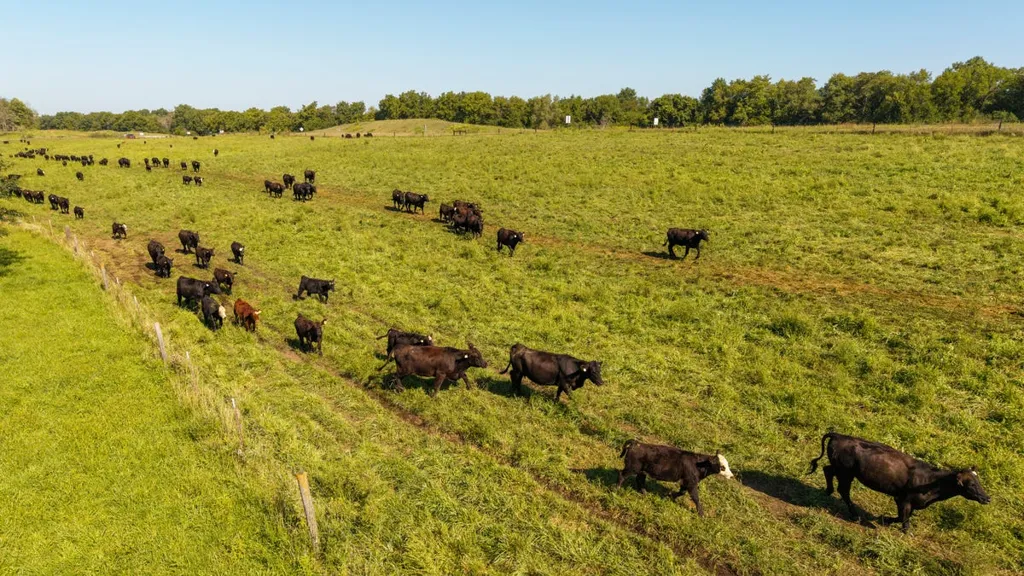
Iowa farmers would be protected from lawsuits and criminal charges based on greenhouse gas emissions caused by their farming operations, including, its sponsor says, "cow farts," under a bill advancing in the Iowa House.
The bill's sponsor, Rep. Derek Wulf, R-Hudson, said his goal is to avoid the "craziness" of lawsuits filed against the agriculture industry in other states over methane emissions.
"I believe that the American farmer is at a pivotal time right now that we need to do everything we can to make sure they can do what they do best, which is farm," he said. "And not have to worry about trivial lawsuits coming at them ... like being sued for cow farts."
New York Attorney General Leticia James in 2024 sued JBS USA, the world's largest beef producer, accusing the company of misleading the public about its environmental impact with claims that it could reach net zero greenhouse gas emissions by 2040.
Iowa's bill, House Study Bill 693, says that "a defendant is not liable, and is not subject to any judicial remedy, under any principle of law or equity, for damages or injury from any alleged actual or potential effect on climate caused wholly or partly by a greenhouse gas emission."
The limitation would apply unless a court finds clear and convincing evidence the defendant violated an enforceable law or restriction governing specific greenhouse gas emissions.
Any case against a farmer must specify each greenhouse gas emitted by the defendant and show by clear and convincing evidence that unavoidable and identifiable damage or injury has resulted based on the defendant's violation of a law, restriction or permit.
The legislation would apply anywhere that an agricultural commodity, including farm animals and crops, are produced, stored or processed.
A three-member subcommittee voted 2-1 on Feb. 10 to advance the bill to the full House Agriculture Committee, where it is on the schedule for later in the day.
Wulf and Rep. Travis Sitzmann, R-Kingsley, were in favor and Rep. Megan Srinivas, D-Des Moines, was opposed.
A 2023 report from the Iowa Department of Natural Resources said agriculture makes up 29% of Iowa's greenhouse gas emissions and 81% of the state's methane emissions.
What did Iowa groups say about the bill limiting lawsuits against ag?
Brad Hartkopf, a lobbyist for the Iowa Association of Business and Industry, said the group is undecided on the bill but appreciates its intent.
"Anytime you can mitigate risk against businesses, that is a good thing," he said.
The Iowa Corn Growers Association, Iowa Renewable Fuels Association and Iowa Pork Producers Association are registered in favor of the bill.
The Iowa chapter of the Sierra Club and Iowa Environmental Council are registered against it.
Nathan Hohnstein, a lobbyist for the Iowa Corn Growers Association, said the bill "protects farming and farming practices."
"Farmers right now have a lot of things on their mind trying to get ready for the next season and planning for the spring," he said.
Lisa Davis-Cook, a lobbyist for the Iowa Association for Justice, said she's concerned whenever lawmakers pass limits on civil and criminal liability, saying "we think people should be responsible for their actions."
"I'm curious if we've actually ever had any suits in Iowa in this regard," she said. "I feel like if we haven't, we're kind of putting the cart before the horse."
Wulf said he does not know of any lawsuits filed in Iowa related to greenhouse gas emissions from agriculture.
Srinivas said she agrees that she wants to protect small farmers but expressed concerns that the legislation doesn't distinguish between small farmers and large agricultural corporations.
She said taxpayers could also end up on the hook if there are environmental impacts that the state needs to deal with.
"If we're removing all liability for large bad actors then I'm concerned that the cost of any type of mitigation efforts are going to fall back on the taxpayers," she said.