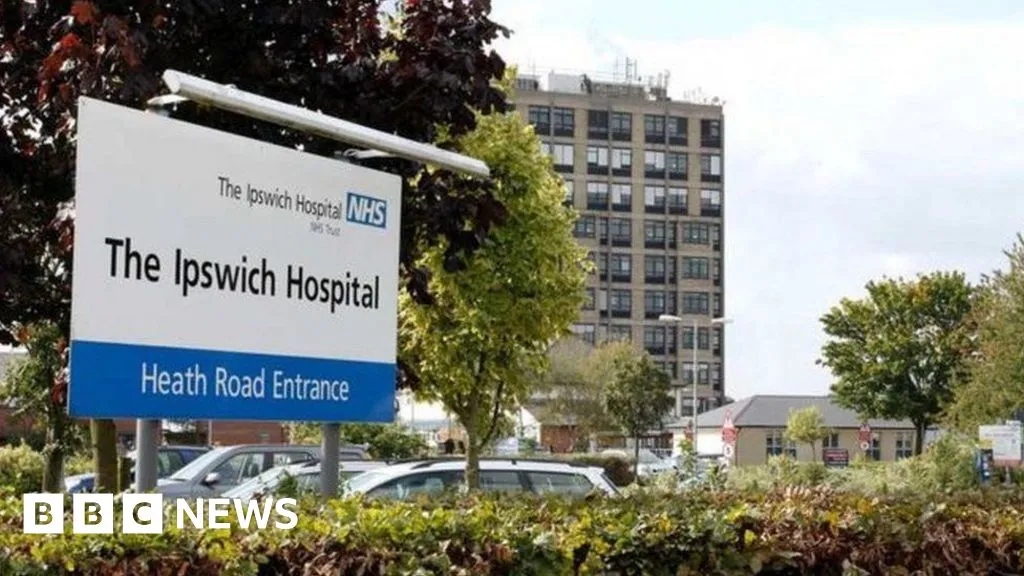
Two services at Ipswich Hospital require work to improve, the Care Quality Commission (CQC) has said.
The health watchdog inspected the hospital in September and lowered the rating for medical care from "good" to "requires improvement"; urgent and emergency services stayed at the "requires improvement" rating.
The CQC said it had found there were staff and capacity shortages which led to long waits for some patients.
The East Suffolk and North Essex NHS Foundation Trust (ESNEFT), which runs the hospital, said it "acknowledges and welcomes the CQC's feedback".
The CQC said it had carried out its latest visit to follow up on issues raised at previous inspections and in response to specific concerns people had raised.
- Staff did not always document mental capacity assessments clearly or understand how to respect the rights of people with limited mental capacity.
- Staff in emergency care did not clearly record some people giving informed consent to care, meaning inspectors couldn't confirm this had taken place.
- Staff did not always inform people clearly about details of their care, such as wait times, potential treatments, or when they might be discharged.
- Leaders had not ensured all staff were up to date on training, including in safeguarding.
- Staff did not always mark newly cleaned equipment, and some did not always wash their hands between patients.
- While staff did meet people's nutrition needs, most people on the medical wards told inspectors they did not like the food.
The CQC said people found "the emergency department was clean and calm, although the public waiting room could become crowded at times".
It reported that "staff were kind and working hard to meet people's needs under high pressure, but weren't always able to do so safely".
The hospital as a whole "requires improvement".
Carolyn Jenkinson, CQC deputy director of hospitals in the East of England, said: "When we inspected the Ipswich Hospital, we found staff were kind and working hard to meet people's needs under high pressure, but weren't always able to do so safely.
"Staff weren't able to triage everyone arriving at the emergency department within their goal of 15 minutes, and some people waited up to 20 hours to be treated or admitted to the medical wards.
"During this time, staff didn't always monitor them closely enough to keep people safe from risks of deterioration."
ESNEFT said: "Teams have been taking steps to address the recommendations since the inspection".
It said work had begun to:
- Improve the experience of patients who, temporarily, receive care in a corridor space
- Increase training compliance
- Improve patient flow
Adrian Marr, interim chief executive at ESNEFT, said: "While we are disappointed with the overall rating, the report also reflects the dedication, compassion and professionalism shown by our staff.
"We recognise the areas where we must do better, and we are already acting on the CQC's findings. I want to thank all our teams for their ongoing commitment and kindness."