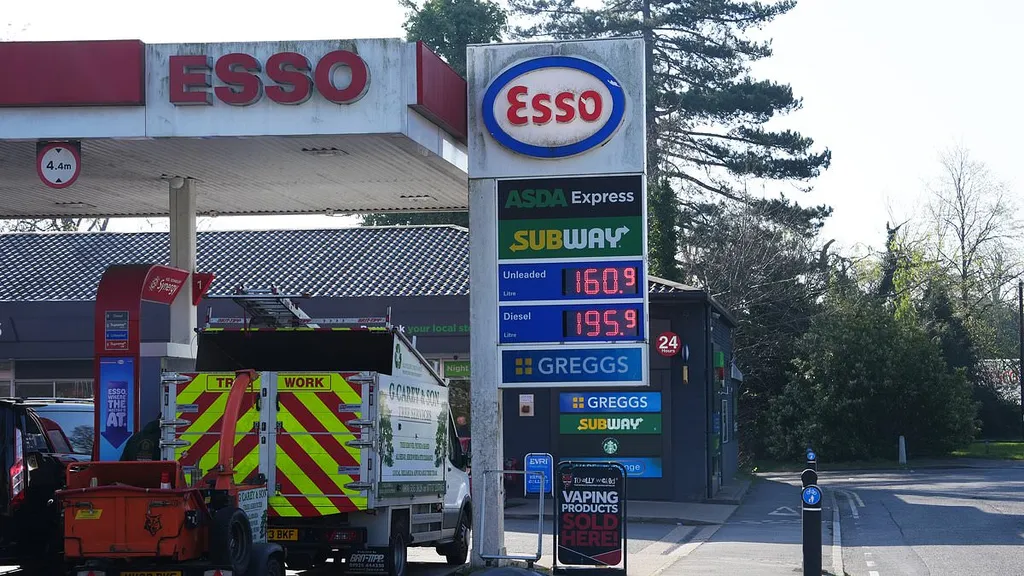
Drivers have been warned of further pain at the pumps despite some much-needed respite after the biggest fall in the price of oil since the Gulf War in 1991.
The price of crude tumbled as much as 16 per cent towards $91 a barrel on Wednesday morning after the US and Iran agreed a two-week ceasefire that will open the crucial Strait of Hormuz.
The waterway, which connects the Persian Gulf and the Arabian Sea, transports around a fifth of global oil and gas supplies but has been effectively closed since the Iran war erupted.
That has driven up the price of oil and gas, with crude rising as high as $120 a barrel last month, and trading at around $110 last night before Donald Trump announced the ceasefire.
The surge in the oil price, from around $70 a barrel before the conflict started at the end of February, has sent the cost of filling up on British forecourts soaring.
Latest figures from the RAC show the average price of litre of unleaded petrol is now 157.71p - up 25p or 19 per cent since the war began.
Diesel has topped the 190p mark, rising to 190.62p per litre, and is up 48p or 34 per cent since the end of February.
Both fuels are now at their most expensive since late 2022 - sending the cost of a tank soaring.
There are now hopes that fuel prices will start to ease - though experts warned they remain high and the outlook is uncertain.
RAC head of policy Simon Williams said: 'The conditional ceasefire announcement may have taken some heat out of global oil prices, but the outlook for drivers in the UK remains highly uncertain. 'The best hope in the short term is that pump prices stop rising at the rate they have been and hopefully top out in the coming days. 'Much will depend on the stability of the ceasefire, whether oil shipments can move freely through the Strait of Hormuz, and the longer‑term impact on oil production across the Gulf. 'As it is a sustained lower oil price - over several weeks, not just a few days - that is required to bring wholesale fuel costs down meaningfully.'
He added: 'Drivers should not expect significantly cheaper fuel in the short term, although some smaller independent forecourts buying on a spot basis may be quicker to pass on any reductions. 'We continue to recommend drivers shop around for fuel and make use of free apps to ensure they always get the best price each time they fill up.'
Nigel Green, chief executive of global financial advisory giant deVere Group, said: 'Drivers will feel some short-term relief as petrol and diesel prices edge lower, and markets are reacting strongly to the pause. 'But oil remains elevated, and that continues to feed through the entire economy, into prices, business costs and investment decisions.'
The surge in petrol prices has piled pressure on Chancellor Rachel Reeves to cancel a looming 5p rise in fuel duty given the windfall from the extra VAT she is raking in every time a motorist fills up.
The increase in fuel duty will take it from the current rate of 52.95p a litre to 57.95p over the next 12 months - hammering hard-pressed families and businesses already facing higher prices.
And analysts warned the price of oil is likely to remain elevated for some time even after the ceasefire was agreed.
Dan Coatsworth, head of markets at AJ Bell, said: 'The positive market reaction is understandable as a two-week ceasefire raises hope for a complete end to the conflict. The decline in the oil price puts energy prices in the right direction as far as businesses and consumers are concerned. 'However, it's impossible to assume they will quickly return to the sub-$70 a barrel level seen before the Iran crisis began. 'There has already been considerable disruption to the flow of supplies and that might remain the case for some time, even if the Strait of Hormuz becomes fully functional again. 'Potential damage to infrastructure and production shutdowns in the oil and gas industry, together with ongoing uncertainty over what happens after the two-week ceasefire ends, suggest oil prices might stay higher for longer. 'Make no mistake - this is a pause in the proceedings and not a full resolution. That means any market rebound could quickly lose momentum unless there is clear progress with US and Iran talks.'
Daniela Hathorn, senior market analyst at Capital.com, said: 'The potential reopening of the Strait of Hormuz is the most significant development from a market perspective. The disruption had removed as much as 20 per cent of global oil supply, and even a partial restoration of flows represents a major shift in supply dynamics. 'However, the situation remains fragile. The terms of the ceasefire appear heavily tilted in Iran's favour, raising questions about whether the agreement is politically sustainable, particularly for Israel and the US. 'There is also a real risk that talks break down and the conflict reverts to its previous state, or even escalates further, once the ceasefire window expires. As a result, markets are likely to treat this as a pause rather than a resolution.'