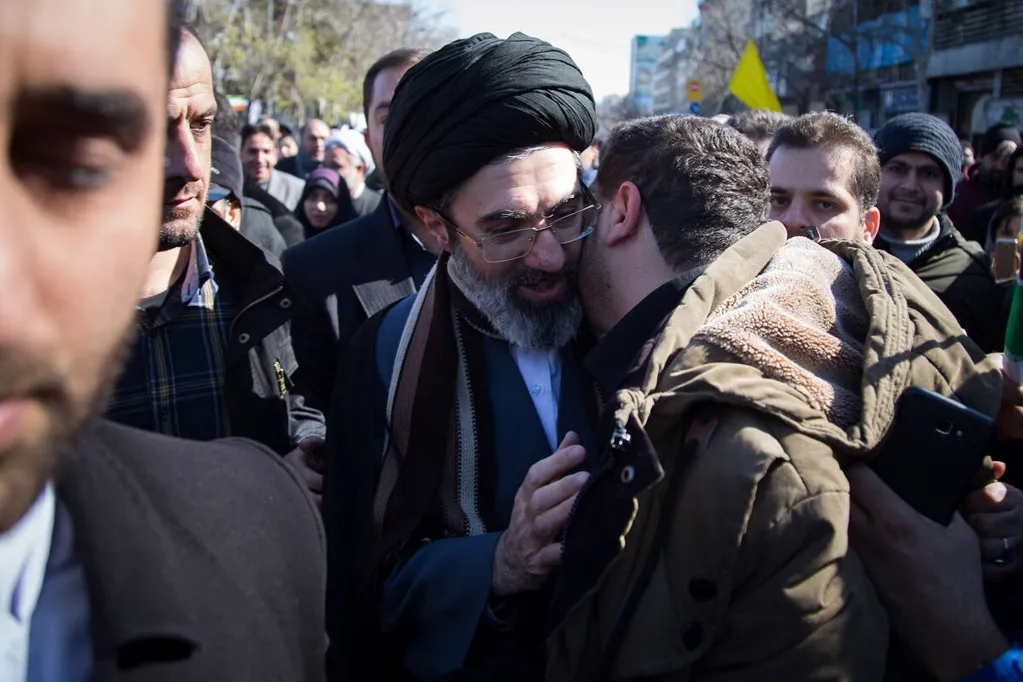
Iran chose Mojtaba Khamenei, the hardline son of the assassinated Ayatollah Ali Khamenei, as its new supreme leader, a choice quickly criticized by US President Donald Trump and one which signals the Islamic Republic won't back down in a war now raging across the Middle East and causing turmoil in energy markets.
Oil prices surged way past $100 a barrel in early trading on Monday, heaping pressure on Trump, as the effective closure of the Strait of Hormuz forces Gulf producers from Iraq to Kuwait and the United Arab Emirates to reduce output. Brent crude climbed about 16% to $108, its highest level in almost four years, as of 3 p.m. in Singapore.
Brent has risen to almost $120 but pared gains after the Financial Times reported that Group of Seven finance ministers will discuss a possible joint release of oil from reserves, co-ordinated with the International Energy Agency.
Trump, whose administration is already facing criticism because of US gasoline pump prices jumping last week, called $100 oil a "small price to pay" and said the cost "will drop rapidly when the destruction of the Iran nuclear threat is over."
Khamenei -- whose father ruled Iran for almost 37 years and was killed when US-Israeli strikes began on Feb. 28 -- won a "decisive vote" in Iran's Assembly of Experts to become supreme leader, Iranian media reported late on Sunday. The 56-year-old has deep ties to the Islamic Revolutionary Guard Corps, about the most powerful military and economic organization in Iran and which pledged full obedience to the new leader.
Trump told Fox News he is "not happy" with Iran's pick. Khamenei was a favorite to be selected, though there were several other candidates in the running, some of who might have been more amenable to the US.
"Like his father, Mojtaba is a conservative," Dina Esfandiary, a Bloomberg Geoeconomics analyst, said. "He shares many of the same ideological leanings as his father and will aim to maintain continuity -- including in the war."
His election "suggests Iran won't be shifting tack in the Middle East war," she said.
The US and Israel continued to strike Iran, including its capital Tehran, heavily over the weekend. Iran, meanwhile, is still attacking Israel and Arab Gulf states regularly with drones and missiles. Tehran has said it can sustain the war at this level for at least six months.
Saudi Arabia hardened its tone against Iran as it dealt with incoming projectiles again on Monday, including ones heading toward oil giant Aramco's Shaybah field and areas in and around Riyadh.
The Saudi foreign ministry warned that Tehran's actions risk further escalation, in which Iran "will be its biggest loser." The kingdom also said the Iranian attacks will have a "profound" impact on future relations.
The strikes and the comments suggest the kingdom's efforts last week to intensify its diplomatic outreach to Iran -- a bid to contain the war -- aren't working.
On Monday, the US ordered American non-essential diplomats in Saudi Arabia to leave the country, citing safety risks. The move marks Washington's first "ordered departure" since the war began. It follows a US service member dying overnight after being wounded in an attack on US troops in Saudi Arabia on March 1. That brought the US death toll in the war to seven.
Riyadh reported its first fatalities since the start of the war over the weekend, with two deaths occurring when a projectile fell in a residential area near the Prince Sultan air base outside of Riyadh, which houses US troops.
Iranian officials say more than 1,300 people have died due to the US and Israel's attacks so far. Israel struck many fuel depots in Tehran on Saturday, sparking a warning from the Red Crescent about toxic acid rain in the city of 9.5 million people.
Axios reported that US officials were unhappy with the strikes, thinking they could backfire strategically by angering Iranian civilians. US Senator Lindsey Graham, a firm supporter of the war and Israel, asked the Jewish state to "please be cautious about what targets you select." Oil infrastructure, he said, will be essential to Iran's recovery "when this regime collapses."
Israel said the fuel storage sites were legitimate military targets because they help Iran's war effort, and added it might target power stations next.
Trump is weighing the option of deploying special forces on the ground to seize Iran's near-bomb-grade uranium, as officials grow increasingly concerned the stockpile may have been moved, according to three diplomatic officials briefed on the matter.
"They haven't been able to get to it and at some point, maybe we will," Trump said late Saturday during a briefing aboard Air Force One. "We haven't gone after it, but it's something we can do later on. We wouldn't do it now."
The UAE, Kuwait, Saudi Arabia and Bahrain intercepted Iranian attacks over the weekend. Late Sunday, Kuwait said its air defenses intercepted three ballistic missiles and destroyed two drones, while two other drones targeted areas near Kuwait's international airport, which caused fuel depots to explode.
A water desalination plant in Bahrain was damaged following an Iranian drone attack, the Arab country's government said, adding that there was no impact on water supplies.
The Iranian strike on Bahrain came after Tehran accused the US of hitting one of its water desalination plants. Persian Gulf countries rely on the facilities for most of their fresh drinking water and sustained attacks could compound the impact of a war.
Read More Coverage of the Iran War:
On Sunday, Israel's military said it had struck some 400 targets in western and central Iran over the past day.
The Israeli military said search-and-rescue forces were operating at impact sites in the center of the country following an Iranian missile attack. Five people were evacuated to hospitals.