Israel says it has killed Iran's intelligence minister, taking out three senior Iranian figures in just two days and further targeting Iran's top leadership.
Israel's military said Esmail Khatib was killed in a "targeted strike" on the Iranian capital, Tehran, and had for years helped suppress protests throughout Iran. Israeli Defense Minister Israel Katz separately confirmed Khatib's death.
The announcement comes just a day after Tehran's security chief, Ali Larijani, was killed in an Israeli strike, along with a paramilitary commander.
While Israel pursues Iran's most high-profile figures—and with the current Supreme Leader Ayatollah Mojtaba Khamenei remaining in the shadows—speculation swirls around who will ultimately emerge as the regime's head. Iran's former president, Hassan Rouhani, could fit the bill.
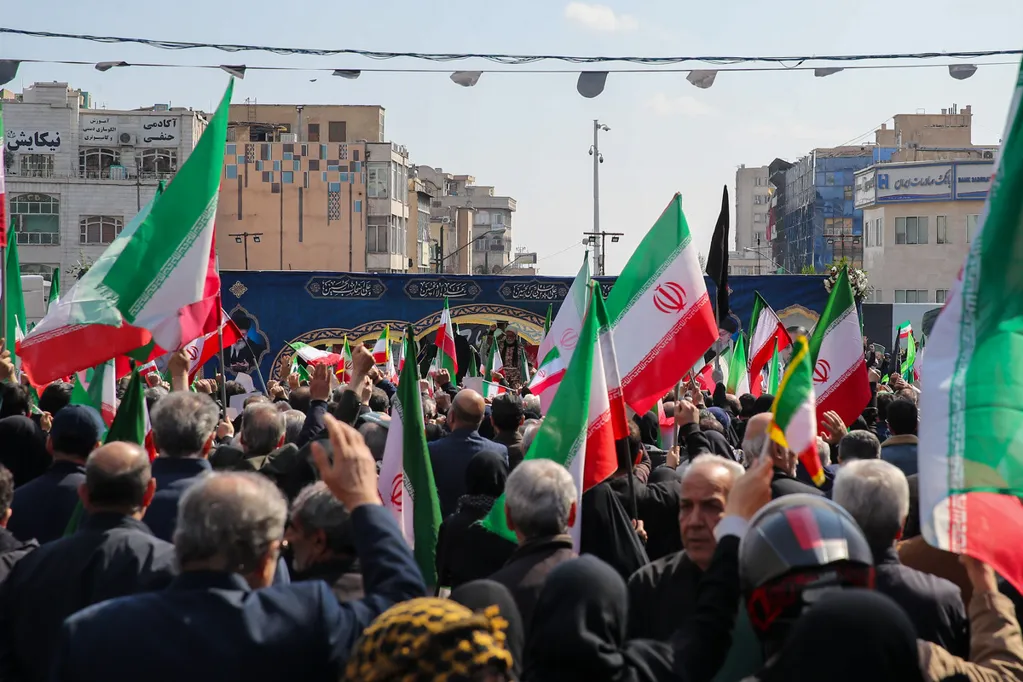
Iran, meanwhile, launched waves of attacks on Israel and on Gulf states into Wednesday, with two people killed in central Israel. Shortly after Tehran vowed a "decisive" response to the killing of Larijani. State media shared images of mourners gathered for Larijani's funeral on Wednesday.
Israel launched fresh strikes on the Lebanese capital, Beirut, and ordered residents of southern Lebanon to urgently head north ahead of new operations.
Israel's military said it had recently struck command centers, air defense systems and ballistic missile sites in and around Tehran.
Later, Iranian media reported airstrikes on multiple sites propping up Iran's natural gas, oil and petrochemical industries on the Persian Gulf coast, which is home to the vast South Pars gas field. Strikes on the area, which is shared with Qatar, drew condemnation from Doha as a government spokesperson blamed Israel for the attacks.
The Israeli military also said it had attacked targets linked to Iran-backed political and militant group, Hezbollah, in southern Lebanon shortly before issuing new evacuation orders for all areas south of the Zahrani River. It's been nearly a week since Israel first ordered those living south of the river to head north; an expansion of previous warnings that had extended up to the Litani River.
Israel renewed airstrikes on Beirut; footage quickly emerging of a multistory residential building collapsing in dramatic plumes of smoke after being hit by an Israeli munition. At least a dozen people were killed in the city, local officials said.
In Israel, two people in their 70s were killed by shrapnel in Ramat Gan, on the outskirts of Tel Aviv, after an Iranian missile attack.
Qatar, Saudi Arabia, Kuwait, Bahrain, and the United Arab Emirates (UAE) reported a mix of Iranian drone and missile attacks on Wednesday. Saudi officials said a ballistic missile was intercepted around the Prince Sultan Air Base, used by U.S. troops and aircraft, while Australia's government said none of its personnel were hurt in an attack on a base for its forces in the UAE.
Explosions were heard ringing through Baghdad overnight after a reported drone attack on the U.S. embassy in Iraq.
The U.S. Central Command, which oversees U.S. forces in the Middle East, said late on Tuesday it had dropped 5,000-pound "deep penetrator munitions" on protected sites housing Iranian anti-ship missiles near the Strait of Hormuz.
Iran has effectively choked off oil and gas flowing through the strait since the first days of the war, threatening to attack vessels braving the journey. Roughly a fifth of the world's oil and gas typically passes through the strait.
President Donald Trump had hit out at NATO countries refusing to join U.S. forces trying to police the vital waterway, despite the disruption that the extremely limited, precarious access for shipping has had on stock markets and oil prices.