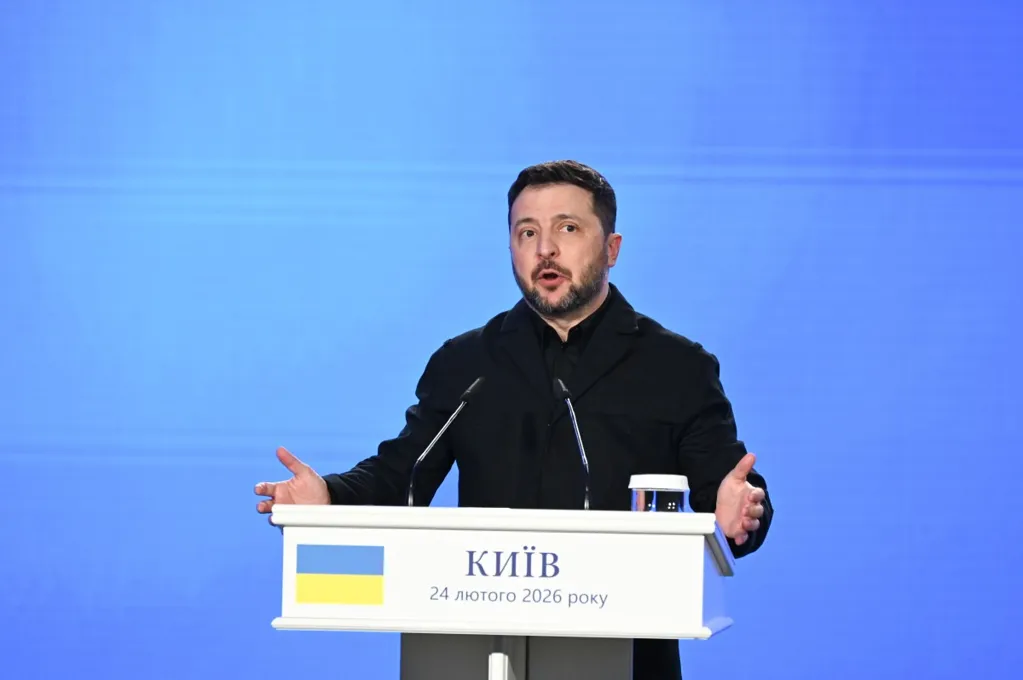
The move came following requests from partners, including the United States, as the regional conflict involving Iran escalated and strained air-defense resources across the Middle East.
Zelensky said that Kyiv would provide expertise and systems without weakening Ukraine's own defenses, according to his social media statements and interviews cited by reputable outlets.
Iran's deployment of low-cost Shahed-style drones has shifted the cost dynamics of air defense for the U.S. and Gulf allies, who have relied on expensive interceptors such as Patriot missiles to protect bases and infrastructure. Ukraine has developed tactics and relatively low-cost counter-drone systems during Russia's war, positioning Kyiv as a potential provider of expertise and equipment to partners confronting similar threats, according to independent reporting and defense analysis.
Assistance from Ukraine could bolster regional defenses while opening diplomatic avenues for Kyiv to obtain critical air-defense munitions, including Patriot interceptors, amid continued Russian attacks at home.
Zelensky said in a post on X that his team, which included military members and senior officials, was traveling to the Gulf to assist with the protection of civilian infrastructure and military bases, citing challenges from Iranian strikes and instability in critical energy corridors.
He said Ukraine's partners "have been reaching out" and that "there have been requests from the American side," adding he instructed officials to "provide the necessary means and ensure the presence of Ukrainian specialists who can guarantee the necessary security," the BBC reported last week.
Asked about the Ukrainian offer, President Donald Trump said, "I'll take any assistance from any country," according to the report.
Ukraine's years-long fight against Russian-operated, Iranian-designed Shahed drones has yielded a body of experience in detecting, defeating, and adapting to loitering munitions at scale, according to the Institute for the Study of War (ISW), which said Ukrainian know-how and industry are directly relevant to U.S. and allied defenses.
The country has dispatched interceptor drones and a team of drone specialists to help protect U.S. military bases in Jordan after a request from Washington, Zelensky told The New York Times.
Zelenskyy suggested exchanging Ukrainian interceptor drones and expertise for more U.S. Patriot air-defense missiles, arguing that shooting down large numbers of Shaheds with high-cost interceptors is inefficient, BBC reported.
At least 7 U.S. service members have died since the conflict began in Iran 11 days ago.
Volodymyr Zelensky, President of Ukraine, said in a post on social media Tuesday: "Our team now, which includes military personnel as well as Rустем Emirov, is on its way to the Gulf region, where our men can contribute to protecting lives and helping to stabilize the situation. We see the challenges emerging now as a result of the Iranian strikes, and amid this war that could drag on. In fact, the Iranian regime has closed the Strait of Hormuz, one of the main routes for oil and gas supplies to the global market. And this represents a major destabilizing factor. No one in the world is yet able to say how long this situation will last, but it is important to begin the actual work of protecting lives as quickly as possible. Stability is also essential for us."
President Donald Trump, responding to a question about Ukraine's offer, as reported by the BBC, March 5: "I'll take any assistance from any country."
Zelensky said any Ukrainian assistance would proceed without undermining national defense and could involve exchanges to secure additional Patriot interceptors for Ukraine, multiple outlets reported.
European allies have also signaled deployments to bolster regional defenses, while analysts warned that supply strains and shifting geopolitical alignments could affect Ukraine and its partners.