Prostate cancer is the most commonly diagnosed cancer in the UK. But screening is not universal, and charities are divided over whether it should be extended. What do those living with the disease think?
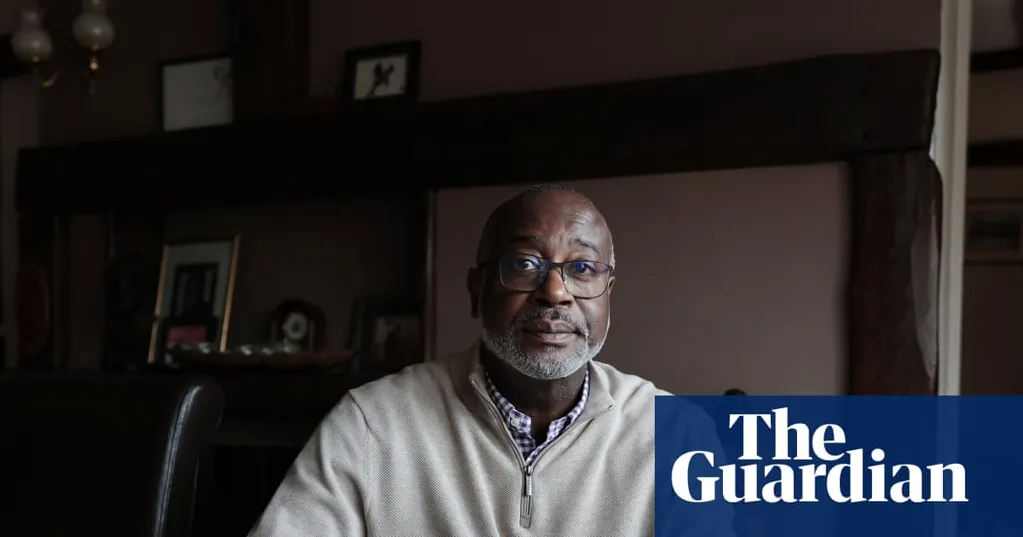
Almost seven years into his retirement, David Bulteel should be enjoying the fruits of his 40-year career in the City. On paper, he has the lot: a tidy pension, delightful grandkids, a big house in the Buckinghamshire commuter belt. He's naturally upbeat and driven, which he says was in part a reaction to the trauma of losing his right arm in a motorbike crash at 21. He was so energetic and enthusiastic in the office that his nickname was "Tigger".
"My philosophy has always been that there's no such thing as a problem that you can't solve," Bulteel, 70, tells me from his home, where he's wearing two jumpers on one of the coldest days of the winter. "The reality now is that I've been living under a shadow for 13 years, which has had a huge impact not just on me but on my whole family."
When he was still working, Bulteel’s company gave employees a biannual health check. It included a simple blood test for prostate-specific antigen (PSA), a protein made by cells in the prostate, the walnut-sized gland that helps to make semen and control urination. Low levels of PSA are normal; high or rising levels can be the first indication of prostate cancer.
Bulteel’s PSA levels had been normal until, in 2012, when he was 52, the test showed that they had gone up. He didn’t know much about prostate cancer, but when he later told an oncologist that his younger brother had had his prostate removed, successfully ending his own scare, “the consultant said: ‘Well, the odds of you having it have just gone through the roof.’”
A biopsy confirmed that Bulteel had prostate cancer, which can be highly heritable. Unlike his brother’s, it had started to spread, triggering an ongoing and punishing cycle of surgery, radiotherapy, hormone treatment, MRI scans and repeated PSA tests. The knock-on effects have included heart problems, bladder issues, a vanishing sex life and bouts of depression.
“It’s really, really tough,” says Bulteel, who is waiting for the results of yet another scan when we first speak. It may give him the closest thing he’s likely to get to an “all clear” - or yet more bad news. “But I’m very conscious of the fact that so many men are going through this now.”
Prostate cancer is now the most commonly diagnosed cancer in the UK, according to analysis of the latest available NHS figures by the charity Prostate Cancer UK. There were almost 65,000 diagnoses in 2022, almost 3,000 more than breast cancer. About one in eight men will be affected by the cancer in their lifetimes, and 12,200 will die each year (an average of 33 a day).
Phil Pennington, who works for Merseyside police, received an email three years ago from his force’s federation, one of several police federations in the UK to offer employees free private screening. “The funny thing was that I only went for the test because I’d had a bad couple of days and it was a chance to get out of the office,” says Pennington, 50, a former joiner from Liverpool who started his police career when he was 28.
Pennington had a high PSA and scans later revealed aggressive prostate cancer. “They said that had they not found it within 12 months there would have been nothing they could have done for me.” He had surgery to remove his prostate in 2023, and has had radiotherapy treatment to tackle the cancer that had spread. He has also had hormone therapy - which can be in the form of injection, or pills - to halt the production of testosterone, which prostate cancer normally needs in order to grow.
His PSA levels are now very low and he says his doctors are confident about his future. But he is still reeling from the emotional impact of his diagnosis. “The doctors told me it wasn’t a life sentence but it’s really hit me,” he says. “I was 48 and my kids were six and 11 at the time, and I was thinking: ‘Is this my last Christmas with them?’”
Part of the reason for the spike in cases, says Prostate Cancer UK, is increasing diagnoses as a result of awareness campaigns and the willingness of people to share their experiences, alongside high-profile sufferers such as the late BBC news presenter Bill Turnbull and champion cyclist Sir Chris Hoy.
It means men are becoming more aware of potential symptoms, which can include changes in urination urges or patterns, erectile dysfunction, lower back pain and unexplained weight loss. There is also growing awareness of at-risk groups, which include those with a family history of prostate cancer and Black men (geneticists are still trying to understand why Black men are understood to be twice as likely to get it).
Yet the grim diagnosis figures arrive at a time when economic inequalities mean variations in access to testing appear to be leaving less privileged men at greater risk. Prostate Cancer UK found that people living in more deprived areas were 29% more likely to be diagnosed with cancer that had spread than those living in wealthier areas.
Statistics like these are fuelling a wider debate about the availability of testing months after the UK National Screening Committee, a panel of expert government health advisers, decided against a comprehensive screening programme - something that Prostate Cancer UK is pushing for alongside Prostate Cancer Research, another charity.
The committee recommended that men aged 45-61 who have a BRCA1 or BRCA2 gene variant, which increases the risk of several cancers (this knowledge itself requires people with a family history of certain cancers getting a separate test), should be invited for screening every two years. But while other men can request a PSA test via a GP or get one privately, the expert panel determined that, on balance, the harms of wider screening outweigh the benefits - even among Black men and those with a family history. "We found that really disappointing," says Amy Rylance, director of health services equity and improvement at Prostate Cancer UK.
The problem starts with the PSA test itself, which is far from perfect and can either miss cancers or provide false positives, leading to overdiagnosis and potentially setting men on emotionally and physically punishing pathways of treatment that they may not have needed (slow-growing prostate cancers can exist indefinitely without adverse effects).
Cancer Research UK, which supported the committee's decision, estimates that of every 1,000 men aged 50-60 screened with a PSA test, 20 would likely be overdiagnosed, 12 of whom would likely be overtreated with surgery and radiotherapy. "This creates a risk that some men will experience serious side-effects like impotence and incontinence without having their life extended," the charity says.
Yet it's the two lives out of 1,000 that would be saved, according to the same calculation, that convinces Prostate Cancer UK among others that screening should be expanded, at least for at-risk groups. A consultation on possible changes to the policy is due to be completed this month. The government will also consider the cost implications for the NHS. In the meantime, men like Bulteel are in no doubt about the benefits of their own initial PSA tests. "As my urologist said to me, the point isn't just to determine how high the PSA count is," he says,"but to spot a change in direction."
I speak to two more men with prostate cancer whose journeys began with a PSA test. Martin Walsh, a 60-year-old retired purchasing manager in the car industry, knew he had a family history but because he had no symptoms didn’t get tested initially. He regrets this now: “I think it was the idea that it wouldn’t happen to me,” he says; “but in retrospect I should have started getting tested when my relative was diagnosed six years ago.” In late 2023, he started getting pains in his pelvis and needing the loo far more often in the night.
Walsh’s GP agreed to give him a PSA test. A subsequent biopsy and MRI scan confirmed he had prostate cancer. He was eligible for a trial of a new radiotherapy treatment that requires five visits to hospital over a couple of weeks rather than the standard 20 sessions which are typically carried out every weekday for four weeks. (Bulteel recalls the exhaustion that came with still trying to do his job either side of his sessions.) “I had that last year and the results are looking good,” Walsh says.
When Junior Hemans, a management consultant and mental health advocate from Wolverhampton, turned 50 in 2014, he realised he hadn’t had any kind of health checkup. He had heard about the higher risk of prostate cancer among Black men so asked his GP for a PSA test. A high result led to a period of monitoring and - before long - a diagnosis. Having been successfully treated with radiotherapy, he now campaigns for better awareness. “I had no symptoms when I was diagnosed and I often say to men now,’if you wait for symptoms you might be too late.’”
Hemans, now 62, chairs the Black Men’s Health Advisory Group at Prostate Cancer UK which is pushing for a change in government guidelines that would require GPs to start talking to Black men about prostate cancer when they hit 45. He says he has also found that fear and shame particularly in older men can still be a barrier to getting tested or to warning male relatives to be alert to the risk.
“I was running this support group and this one lady came up to me at the end of a meeting and said she was sure her husband had the symptoms but refused to talk about it or go to the GP,” he says. “When I speak to some older men, they’re concerned about sexual function and will say things like, ‘I’d rather die from it.’ I say to them that you may lose sexual function for a while; you might end up having to take a blue pill ... But what price life?”
Bulteel had little idea of what to expect when his hormone treatment began. Deprived of testosterone, he found that his Tiggerish drive dipped considerably. He had trouble maintaining his body temperature, swinging unpredictably from sweating to shivering. He could no longer get erections and he and his wife Ruth, a retired nurse, got a GP referral to a psychosexual therapist specialising in patients with prostate cancer. “It was secondary to the aim of staying alive but maintaining quality of life especially over such a long time is so important,” he says.
Bulteel’s family persuaded him to get counselling for the effects of the cancer and treatment on his mental health. “We’re a very close family and I’m very conscious of the impact this has had on them,” he says. During a particularly low point just over a year ago when the hormone therapy seemed not to be working he had to sit his grown-up children down and warn them that he might only have a year or so to live. “That was the most horrific thing,” he says; his voice cracking.
The cancer started to respond to treatment but when I check in with Bulteel in early February as he gets the results of his latest PSA test and MRI scan he says it’s not the best of news. “It appears that the hormone treatment is beginning to lose effectiveness ... There is evidence of growth where the cancer was before. Nothing to get too worried about at this stage but it will probably involve 'layering' another drug on top in order to prolong the hormone treatment's effectiveness.”
Bulteel considers himself lucky that he was in the privileged position to access private screening via his work but even he can't help the nagging feeling that he could have started treatment sooner. "I don't want to give you the impression that life is bloody miserable for me. It's not but obviously had my cancer been picked up earlier than it was it's quite possible I'd be just like my brother who's now completely clear and getting on with his life."