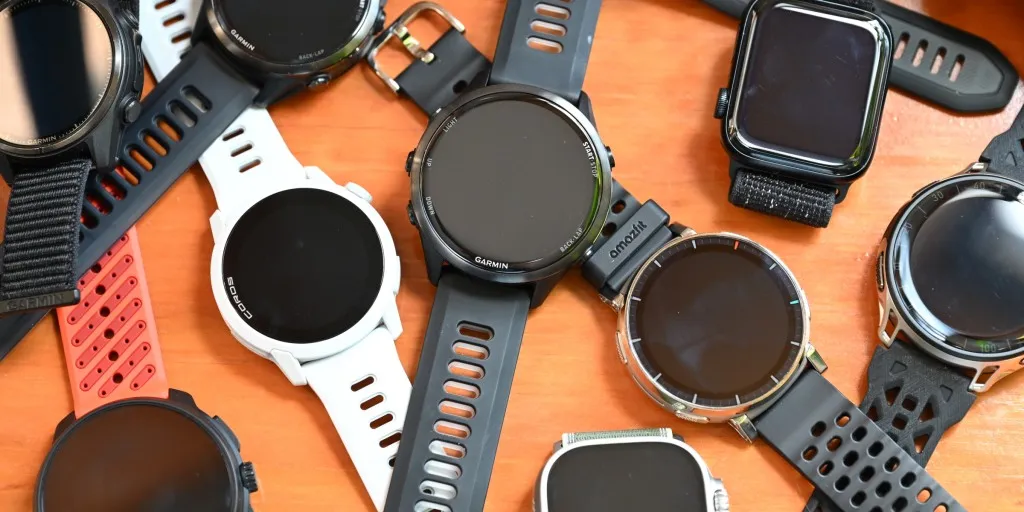
I've tested dozens of running watches from brands like Garmin, Apple, Google, Fitbit, Coros and others.
The best running watch can help you achieve your fitness goals, whether that's completing a local 5K or a world-famous marathon. They can show you key metrics like time, pace, distance, heart rate and more during your run, and advanced training and recovery stats after your run is over.
The thing is, they can be pricey, and with so many options on the market, it can be hard to figure out which one is best for your needs, regardless of whether you're new to running or have been dominating races for years. I've tested running watches, fitness trackers and smartwatches for years so you don't have to. Below I'm sharing the best ones for runners of all kinds.
My top picks come from a mix of small and large brands like Coros, Amazfit, Garmin and Apple. I request running watches directly from brands -- every watch on this list was loaned to me for testing purposes. I include key specifications like size, weight and battery life within the 'What to Know' dropdown.
I was shocked by how good the Coros Pace 4 is for runners -- it's a goldilocks watch that hits just the right mix of features and price to make it great for basically anyone. It serves beginners and marathoners alike -- I never felt the need to "upgrade" as I progressed on my running journey.
I love how lightweight and compact the Pace 4 is. Many running watches dwarf my small wrists, leading to a generally uncomfortable fit. The Pace 4 is small, but not too small, and has enough buttons that you can comfortably control the watch via touchscreen or buttons alone.
Using the watch and the Coros app feels streamlined compared to Garmin, Amazfit and others. Sure, it doesn't have as many lifestyle features (no tap-to-pay, no music streaming), but it puts running and training front and center, with an intuitive app that never feels cluttered or overwhelming.
It takes my top spot because the value per dollar is unmatched. There are almost no running watches with features like dual-band GPS, route creation, course pacing and strategy, hill alerts, marathon training plans, recovery metrics and class-leading long battery life for $250. The closest comparison I can think of is the Garmin Forerunner 265, which is far more expensive.
You can also choose between a silicone and a nylon strap at purchase (most brands make you buy one or the other afterwards), and it comes in an ultralight plastic version (linked above) and a lightweight aluminum version that costs just a little more.
If you are just starting out as a runner and have never owned a fitness tracker or smartwatch, the Fitbit Charge 6 is a great option. It's small, subtle, and simple to use -- I felt comfortable swiping through the watch and app after only a few minutes of use. The Fitbit software in particular is very straightforward, with less complicated features than other brands.
The small size, while a blessing most of the time, is a bit of a mixed bag while running -- you can only see one or two stats on your wrist during runs, less than competitors with bigger screens.
Again, this watch is best for beginners. If you are planning to run a marathon, you will outgrow the Fitbit Charge 6 quickly -- it has shorter GPS battery life, less advanced running metrics and minimal controls compared to my other recommendations.
Amazfit is a budget-friendly brand that undercuts the competition on price, and the Active 3 Premium is a prime example of that. It has features runners, cyclists and anyone working out outdoors can appreciate, namely four buttons (two on each side), long battery life, and a durable (albeit fingerprint-y) metal case and sapphire crystal screen.
The downside is software: The watch and watch app are less intuitive than other options on this list. The app has loads of useful features not often found at this sub-$200 price, including coaching plans, built-in running workouts, recovery times and offline maps and navigation; they just require patience to get up and running.
If you love running and spare no expense to get the best gear possible, check out the Garmin Forerunner 970. It's Garmin's most advanced, most premium running watch, fit for any task, from 5K to ultra-marathon.
It's bursting at the seams with features. First, it's a GPS powerhouse: It's arguably the most accurate watch on this list for distance, mapping and navigation with its multi-band GPS. Second, it has the most training, recovery, workout and course features of all our recommendations -- so much so that it's often overwhelming (especially when some training tools are only available on the Garmin Connect website, not the mobile app.)
What keeps the 970 out of the top spot is price -- it's significantly more expensive than every other watch on this list. Garmin does make the lower priced Garmin Forerunner 570 and budget-friendly Garmin Forerunner 165, but the Coros Pace 4 is still a better value comparatively.
The sleeper hit of this list, the Suunto Race 2 is a battery life king that's more sleek and user-friendly than its performance-focused marketing would suggest. The watch and mobile app are both clear, snappy and responsive, with detailed metrics and features that are not overwhelming. Maps and navigation are another standout (also clear, detailed and responsive); they load faster and pan quicker than on competitors like the Garmin Forerunner 970.
But it's battery life where the Suunto Race 2 laps the competition: It gets up to 55 hours of battery life doing dual-band GPS activities. Turn on battery saving features like tour mode and that number can reach up to 200 hours.
If you love the Suunto aesthetic but want something smaller and cheaper for your local turkey trot, consider the Suunto Run instead.
If you're an iPhone person, any Apple Watch can pull double duty as a great beginner running watch. Like Fitbit, it's incredibly easy to use but has more detailed running, health and sleep metrics -- no subscription required. Its square screen is perfect for showing multiple metrics while running and it easily syncs with your phone for controlling things like music or calls.
Where it's lacking compared to a traditional running watch is training and battery life. It doesn't have nearly as many training features as our other picks, and the 18-hour battery life is miniscule compared to a Coros or a Garmin.
This Android smartwatch also works great as a running watch for most people for two reasons: software and accuracy.
It has robust software that lets you do all the smartwatch stuff but also do things like build custom runs, with stages, intervals and more. It also has more in-depth training and recovery metrics than most smartwatches.
Perhaps more important: it's very accurate. It uses dual-band GPS and an advanced heart rate tracker to deliver consistent results, in my experience.
It's biggest miss for me is the lack of physical buttons -- it's harder to control running with sweaty hands or gloves on because of it.
I've been a runner for more than six years, and use smartwatches and fitness trackers to monitor stats during and after my runs. I test running watches for at least two weeks, using as many features as possible and comparing them to other watches. During testing, I typically wear two running watches (one on each wrist) so I can compare individual workouts across devices. I pay close attention to the following factors during testing:
Shopping for a running watch is all about your needs and goals. Keep these key factors in mind as you shop:
The best running watch is the one that fits your wrist. That can be hard to find, as many running watches only come in one size, and that size is often big. I have smaller wrists (about a 6-inch circumference), and have tested dozens of wearables, so I know that I prefer my running watches between 42 and 45 millimeters in size. You can get a good feel for this by going to a store and trying on running watches in person, noting how different watch sizes feel. Fleet Feet, REI and Dick's Sporting Goods are good options for this.
More features isn't always better. Brands like Garmin are the most impressive on paper because they can do the most things; however that can make them overwhelming to use in practice.
Think about how you use technology—and what kinds of tech experiences you enjoy. Tech-averse or love simplicity? Go for simpler options like Coros Pace 4 or an Apple Watch. Data obsessed? Advanced watches from Garmin are for you.
This goes hand in hand with your goals—anyone trying to hit a PR marathon time will find advanced training features from Coros and Garmin useful. People just trying to log steps will get more than enough from Fitbit watches.
I am a reporter at NBC Select who covers technology fitness outdoors including stories on workout headphones walking shoes point-and-shoot cameras.I've been testing smartwatches fitness trackers running watches for years—I try new models constantly comparing them against previous versions similar competitors.For this story I leveraged my years testing experience pick best running watches market today.