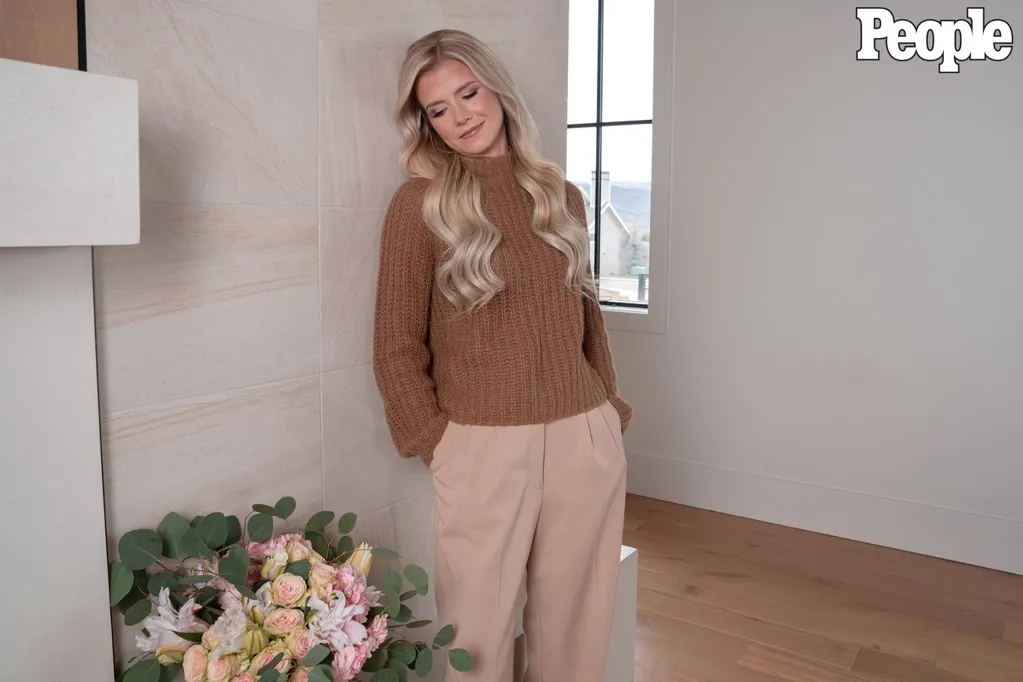
In the doc, out Jan. 21., her family, witnesses and law enforcement provide their perspectives to Smart's harrowing story
Elizabeth Smart was still reeling from being kidnapped from her bed in the middle of the night by a longtime pedophile when he gave her some jarring news.
Brian David Mitchell, the street preacher who abducted the 14-year-old from her Salt Lake City home on June 5, 2002, told her he was going to make her his wife, right there in the dilapidated tent where he brought her.
"I was in shock," she tells People in this week's cover story. "I thought, 'He can't be serious.' You can't just kidnap a child and then say, you're my wife now. It's not legal. It's not okay. I never said yes. I never said I do. None of this is okay."
Smart, 38, is telling her story in the new Netflix documentary, Kidnapped: Elizabeth Smart, debuting Jan. 21.
Smart, now a married mother of three, has spoken about the terrifying abduction before. She has authored several bestselling books about her experience, started the Elizabeth Smart Foundation to support victims and used her platform as one of the most well-known survivors of all time to fight to end sexual violence.
This time she is telling her story with others, including her father, Ed Smart, 70; her sister, Mary Katherine Smart, 33; witnesses who saw Smart wearing a veil with her head covered but didn't realize she was the teen authorities had been searching for; and members of law enforcement who worked the case.
During her brutal captivity, she was raped up to four times a day, kept in a dark hole and fed garbage—memories she would like to forget forever.
But she is talking about the depravity she endured to help others better understand the realities victims face during and well after they are assaulted—and hopefully help to make things better for survivors.
After Mitchell told her he was going to marry her, she protested. "I remember even trying to explain to him why it wasn't okay," she says.
When he ignored her, she screamed no. That's when he told her that if she ever did that again, he was going to kill her and then her family.
Trembling in fear, Smart listened as Mitchell delivered more unsettling news: that they were going to "consummate our marriage," she says.
"I remember just wanting to hold him off long enough because I thought someone would rescue me," she says. "I even got to the point of being like, 'Well, shouldn't we at least get to know each other?' while trying to create that time for someone to show up.
"He did not fall for that," she says. "But I mean, I tried to do everything I could to hold off the inevitable."
When he raped her, "I was sobbing," she says. "I begged him to stop. I remember it just being so painful."
Mitchell was convicted in 2010 of kidnapping Smart and sentenced to life in prison. Convicted of her role in the crimes, his wife, Wanda Barzee, was released from prison in 2018. She was arrested in May 2025 after allegedly visiting two Utah parks, which violated her status as a registered sex offender.
After her rescue, Smart went on to use that painful chapter in her life to speak out for others.
"One of the biggest tragedies I come across in my advocacy work," she says, "is that with so many victims that I meet, their bodies are still breathing, but they're not living. It's like a death, a living death, and the loss of life that I see these victims dealing with—that is the most tragic thing that I come across."
Speaking to some of the things people can do to help, she says, "The first thing all of us can do is start by believing victims."
So often, people immediately start scrutinizing the victims, she says. "Well, what's her background? Oh, well, she worked at a bar? Oh, she's a pole dancer? We just immediately start picking apart the victim. Is she worthy of our belief? Is she actually telling the truth? Does she have a history of lying?"
"Only between two and 8% of reports are false. So 92% of victims are telling the truth and I would rather be wrong. I would rather believe someone and be wrong than never not believe a victim."
In the documentary, she talks about the resilience she had to keep pressing forward each day, thinking of ways to safely get away. "I always thought about getting away," she says. "I always thought about getting back to my family. I never stopped thinking about that."
But she also talks about moments when she started feeling helpless and depressed.
One of the things that helped her survive most was hope, which is important for everyone, especially those going through something difficult, she says.
"Why would any of us be alive if we didn't have hope?" she says. "Hope knowing that life is only going to get better. Hope that tomorrow's better than today. Hope for happy memories to come."
"Happiness," she says, "is possible for all of us."