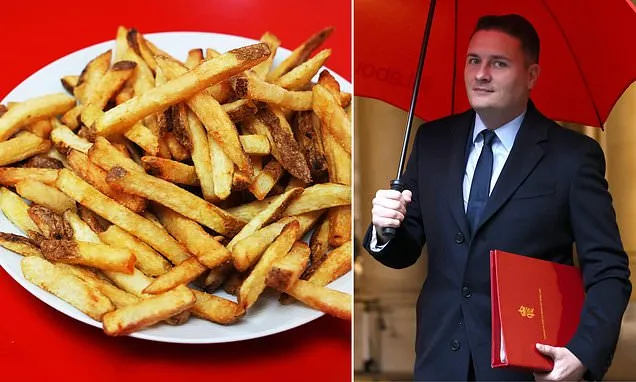
Labour is set to define smoothies and yoghurts as junk food in a move that supermarket bosses say will push up prices and confuse shoppers.
Health secretary Wes Streeting has resurrected a once-ditched plan to update the nutrient profiling model used to score whether a food is considered high in fat, salt and sugar (HFSS).
Critics say the new model - which slashes the amount of calories, saturated fat and sugar allowed in 'healthy' foods - will unfairly redefine nutrient-rich food such as yoghurt and high-fibre cereal as 'junk food' and could push up prices.
The industry is hugely concerned about being marked down for 'free sugars', which include the naturally occurring sugars in fruit juice, honey and smoothies.
It could mean a glass of orange juice is both 'junk' and one of your five a day.
Ministers say children are eating double the amount of 'free sugars' that they should be and that the change will reduce their exposure to unhealthy foods - but the industry says it is difficult to determine exactly how much sugar is 'free'.
The new model - which will go to consultation in the spring - was signed off in 2018 but shelved by the previous Conservative government amid an outcry from business leaders. However, it could be in place by the end of Starmer's term as PM.
The Food and Drink Federation (FDF), which represents producers, says firms have responded to these evolving rules by investing millions in making products healthier.
Labour is set to redefine what constitutes junk food - just as firms finished adjusting to new rules on adverts and multi-buys
The new standards have been resurrected by Wes Streeting (pictured) - having been shelved by the previous Conservative government amid an outcry from businesses
But they are now concerned that the goalposts could be shifted in as little as three years' time - prompting rethinks on whether to invest in UK products.
Kate Halliwell, chief scientific officer at the FDF and a registered nutritionist, told the Daily Mail producers are already reconsidering whether to invest in new, healthier versions of products popular with British shoppers at all, lest they face an ad ban.
'The fact is the regulation is only just in force - the ink isn't even dry and the Government is looking to change it,' she said.
At present, 'junk food' is assessed using a model that was developed by the Food Standards Agency during Tony Blair's time in Downing Street.
It was first used to ban adverts on kids' TV in 2007 and has since evolved to ban HFSS foods across all pre-watershed TV and in online advertising, and to rule them out of multi-buy promotions and prominent displays in shops.
The rules affect some 13 categories ranging from soft drinks with added sugar to cereal bars, ice cream, crisps, chocolate and pizza. 'Brand' adverts which feature the logo of a firm but no visible products can still be aired.
Ms Halliwell says the Government hasn't even given these rules a chance to bed in before raising the prospect of shifting the goalposts once again. As a whole, the industry has cut a third of sugar and salt from its foods in recent years.
'We want to talk to government about this - let these rules [on advertising and multibuys] come into force and see what happens,' she added. 'Let's see if it moves the public in the direction the Department for Health wants first.'
Major food producers have shelled out to reformulate food to meet the HFSS guidelines: Pepsico sank £13million into its factory in Coventry in order to cut salt and fat in Doritos; Mondelez reformulated Belvita products in the same way.
Analysis of the new scoring system suggests they would be back at square one again if it is enacted.
Even healthy foods like high-fibre cereals could fall foul of the rules because of the rules on 'free sugars', ultimately confusing consumers who are trying to make a healthier choice.
As an example, while the natural lactose in a yoghurt wouldn't be marked down any added fruit puree would - but not, potentially, any pieces of fruit in the puree itself.
Breakfasts such as granola could be deemed unhealthy under the new rules
Pepsico invested £13million in its Doritos factory in Coventry in order to cut the salt and fat in the tortilla chips - but the re-engineered snacks would fall foul of the new rules again
'The fact is some of these foods, like high-fibre cereal, yoghurts and smoothies contribute lots of positive things into people's diets,' Ms Halliwell added.
'If a fruit yoghurt and a high-fibre cereal is a great start to your day - to be confused about that is a worrying thing.
'There isn't a way we can chemically analyse how much of something is 'free sugar'. We can't legally declare it on the pack.'
Ultimately, there may be a point at which product lines cannot be made 'healthy' and end up being withdrawn due to poor sales.
Pepsico, which also owns Walkers Crisps, is among those sounding the alarm over the changes.
Jason Richards, senior vice president, said last week that his firm was developing new snacks with added fibre to improve nutritional content.
He warned: 'To continue to build on this progress, we need a policy landscape that encourages reformulation and innovation, which is why we urge the government not to change the regulatory goalposts that underpin public health restrictions.'
And last week, supermarket bosses warned MPs that shoppers trying to make healthy food choices could be 'confused' if foods such as yoghurts and granola are categorised as junk.
Liz Fox, of Aldi, told a Commons select committee that the new model could even affect prices, warning that work to comply with it could 'take time and investment away from... investing in price simplicity'.
The Government says the new nutrient profiling model is yet to go to consultation and that it aligns with the 10 year plan to reduce the amount of sugar children are eating.
It has also won the support of charities who say it will improve Brits' health by diverting them away from unhealthy options.
But Katharine Jenner of the Obesity Health Alliance, who co-chaired the group that developed the guidelines, said: 'Updating the Nutrient Profiling Model isn't moving the goalposts - it's making the game fairer.'
'This measured, long-overdue update better reflects modern dietary guidance and ensures genuinely healthier foods are recognised, and that more highly processed, high-sugar products can no longer hide behind outdated definitions.
'This updated model has been sitting on the shelf since 2018. Publishing it now, with a view to bringing it into use, will finally allow policy to shine a light on the foods that genuinely support people's health.'
A spokesperson for the Department for Health and Social Care said: 'We are working in partnership with businesses, who want to do the right thing and help families raise the healthiest generation of children ever.
'We can't just sit back and leave increasing numbers of kids to grow up living with obesity, setting them up poorly for life, but we also want to support industry.
'That's why we published the model ahead of the consultation so businesses could give us their views on how its implemented.'