A lack of research and innovation in brain tumour care in the UK is driving patients to crowdfund to pay for treatment options abroad, according to a new report.
New figures from The Brain Tumour Charity and GoFundMe show that one in 10 brain tumour fundraisers on the platform explicitly reference overseas care.
Examples of crowdfunding treatment abroad include a food scientist desperate to raise funds for care in Germany after being told that she had exhausted all treatment options on the NHS and a mother-of-two raffling off her house to fund care overseas.
A report by the charity says that new treatments for brain tumours are "consistently disadvantaged" by a system set up to treat more common conditions.
It said that limited access to new treatments and slow research pipelines are pushing patients to take financial risks to fund therapies that they have discovered online.
Many patients are crowdfunding these alternative treatments themselves.
The charity has called for action to make sure patients can access cutting-edge treatments for brain tumours at home.
Natalie Harding died from an aggressive brain tumour in 2021 when she was 31, just seven weeks after her wedding.
She had crowdfunded treatment abroad, and her mother Liz Paul says the care she received in Germany "bought us time".
The food scientist from Warwick was diagnosed with an aggressive brain tumour in 2017 after she was admitted to A&E following a sudden seizure.
She had four surgeries, radiotherapy and chemotherapy. But after exhausting all options available on the NHS she looked for different options available to her.
I believe the treatment in Germany did buy us time - a bit more time, at least.
She found a cancer vaccine, which is given alongside immunotherapy, in Germany.
But the treatment came with a price tag of £50,000 for each round of three treatments, so Ms Harding set up a fundraising page to fund the cost of care.
Mrs Paul said: "I believe the treatment in Germany did buy us time - a bit more time, at least. Natalie said from the start she wanted to fight, and giving Natalie hope through all this was really important.
"You just think, there's got to be something out there.
"You're researching all hours of the day, starting from ground zero.
"And you're on your own, really. But you will do whatever you can for your child."
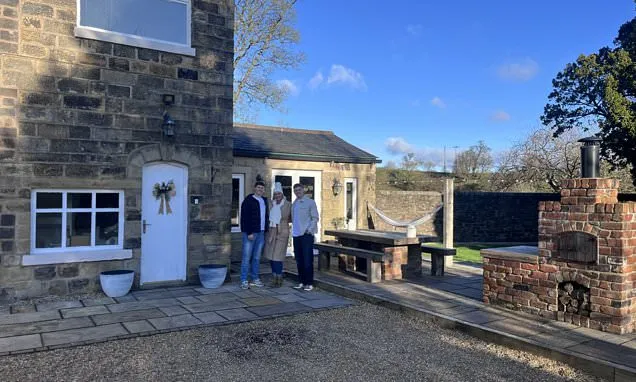
Meanwhile beauty therapist Claire Nutter, 48, launched a £5-a-ticket raffle with the chance to win her £800,000 home in Burnley, Lancashire, in January.
The mother-of-two is hoping to fund specialist surgery and therapy in Germany for her brain tumour, at a cost of £350,000.
When my partner Gary first came up with the idea to raffle the house I think I laughed; I thought it was ridiculous. But the cost of the treatment I’m researching is absolutely astronomical and out of reach otherwise.
Ms Nutter said: "When my partner Gary first came up with the idea to raffle the house I think I laughed; I thought it was ridiculous.
"But the cost of the treatment I’m researching is absolutely astronomical and out of reach otherwise.
"After I was diagnosed in 2023, I had surgery, but only 50% of the tumour could be removed safely.
"Radiotherapy was ruled out due to the fear of severe life-changing side effects, and the nine months of chemotherapy I’ve had haven’t reduced the tumour.
"To be told there weren’t any more treatments I could try was upsetting to say the least.
"I do feel lucky to have had the treatments I’ve had but also a huge part of me is upset and angry that this is happening to me.
"It’s frustrating to know that there are treatments available in other countries which we don’t have in the UK."
Cameron Miller, director of strategy at The Brain Tumour Charity, said: "Brain tumours present a profound and enduring challenge for individuals and health systems due to the nature of the disease.
"We need to see a cultural and structural shift in how we approach innovation in this country; only then will the UK reach its potential to be the life science super power we all want and need.
"This report outlines the urgent action that is needed to ensure that patients see the benefit of innovation as soon as possible."
A Department of Health and Social Care spokesperson said: "We know that brain tumour patients and their families face an incredibly difficult journey, and this Government is committed to making sure the most innovative treatments are available here at home.
"The department is investing over £25 million to unlock the latest brain cancer treatments, alongside a total spend of £141.6 million for cancer research in 2024/25.
"Our national cancer plan will also improve survival for rarer cancers, including for brain cancers, through earlier detection and improved treatment, and the Rare Cancers Act will boost research and clinical trials."