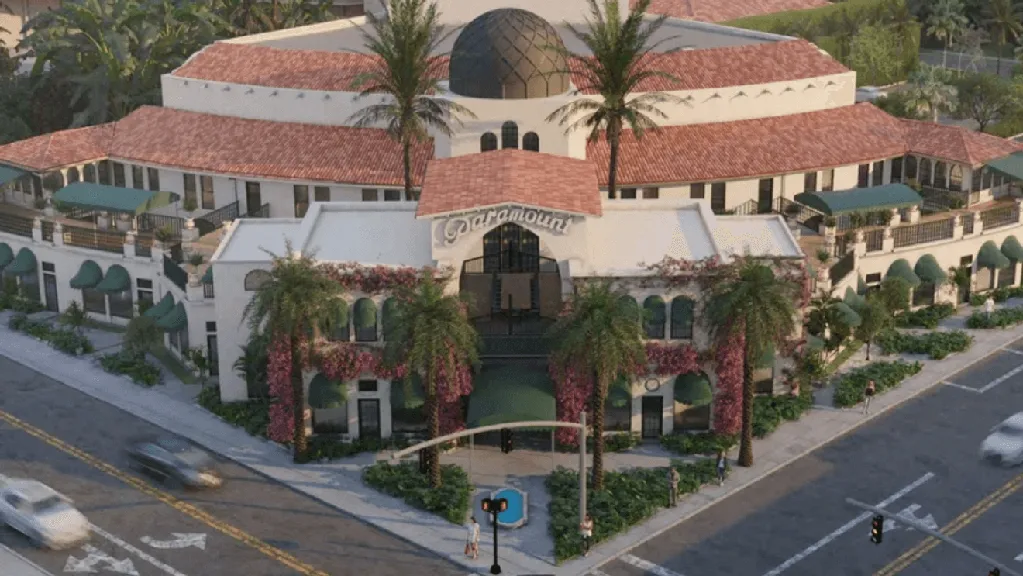
PALM BEACH, Fla. (CBS12) -- The newly filed petition challenging the redevelopment of the historic Paramount Theatre directly addresses -- and disputes key elements of -- the very plan the Palm Beach Town Council approved earlier this year.
CBS12 News previously reported on Feb. 3 that the Town Council's revised approval allowed the iconic 139 N. County Road property to be transformed into a 175-member private club, a public café, more than 5,400 square feet of retail space, a 200-seat worship area, and a single-family residence on the upper floors. The changes were described as a "scale-down" version of earlier, much larger proposals, with council members emphasizing reduced intensity and the inclusion of public-facing uses.
The lawsuit, filed on February 16, argues that despite this downsizing, the project still exceeds the limits of what the town's zoning code permits without additional oversight. Previous coverage noted that traffic and parking concerns dominated public discussion; the petitioners now claim those concerns are not just substantive objections but legal deficiencies: that the project mathematically violates the town's parking requirements and that the Town Council authorized a 20,000-plus-square-foot residence without issuing the special exception the code requires.
The petitioners are nine condominium associations located near the Paramount site, all of which argue they will be adversely affected by increased traffic, congestion, and parking overflow.
According to the lawsuit, the groups filing the suit are:
The associations say the Town Council's approval violates the town's own development rules and that the magnitude of the project will directly impact surrounding neighborhoods.
CBS12 previously reported that the project requires approximately 166 parking spaces, yet the Paramount site physically holds only 50. The lawsuit amplifies this point, highlighting the developer's own documents that show repeated overlapping uses -- retail, church, club, café, and residential -- pushing demand far beyond available parking.
Previous coverage noted the inclusion of a single-family residence approved as part of the redevelopment; the petition argues that the size of that residence -- over 20,000 square feet -- places it outside the category of a "permitted use." Under the town code, any permitted use over 3,000 square feet requires a special exception, and none was sought.
In short, the lawsuit asserts that the issues described as community concerns are statutory violations. It seeks to overturn the development order entirely until the applicant obtains the proper exceptions and submits a parking plan compliant with both the zoning code and the town's Comprehensive Plan.