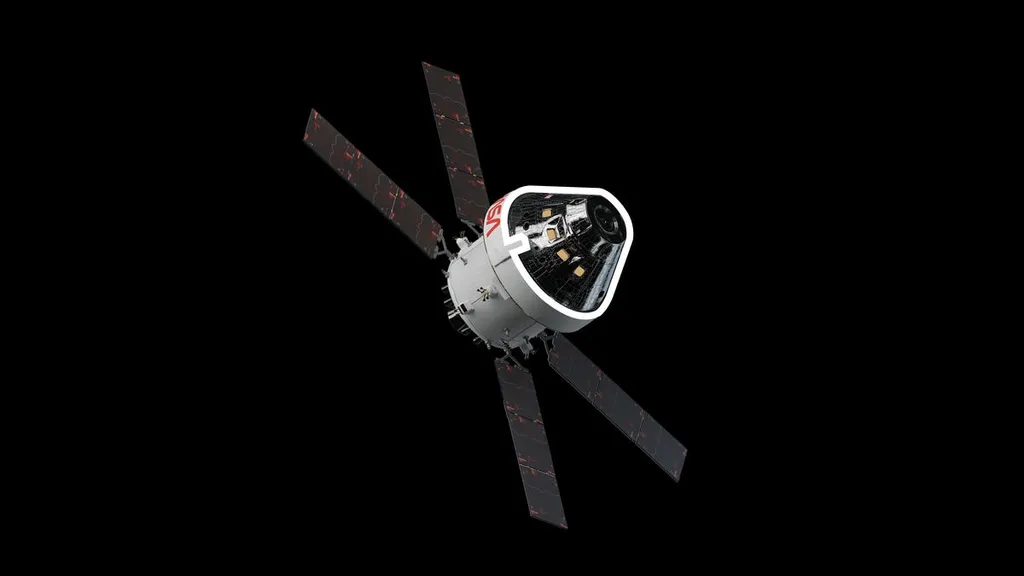
Surrounded by a vast dark expanse, huddled in sleeping bags with three of your friends in a space the size of a five-person tent.
This isn't a camping trip ‒ it's life on Orion ‒ the spacecraft conveying four voyagers to the moon for the Artemis II mission.
The crew left Earth on April 1, solid rocket boosters crackling as NASA's Space Launch System hurled them through the atmosphere 20 times faster than the speed of sound.
Once in orbit, they tested out the controls and began to convert the capsule into a living and working space for the long journey to the moon.
While Orion affords 60% more space than the Apollo command module, life on a space mission is hardly a spacious affair. Here's a closer look at how the astronauts will make the most of their 330 cubic feet during the 10-day trip to the far side of the moon and back:
How will the Artemis II astronauts prepare their meals in space?
Food for the Artemis II mission is selected to keep the crew healthy and performing well during their lunar journey. With no resupply options, all meals must be safe, shelf-stable, ready-to-eat and rehydratable. Food experts collaborate with the crew to ensure meals meet their calorie, hydration, and nutrition needs while considering personal preferences. Fresh foods won't be possible because Orion lacks refrigeration and late-load capability.
Crew members will have designated meal times and are allowed two flavored beverages per day, including coffee.
There are 189 unique food or drink items flying on the mission, including more than 10 types of beverages. There are five different hot sauces, exactly 58 tortillas and a variety of sweet treats, from pudding and cobbler to cake, chocolate and cookies.
The crew will use the potable water dispenser throughout the mission. The dispenser has two separate water lines leading into the crew module, allowing the rehydration of food, making drinks and maintaining crew hydration. It is linked to four pressurized tanks in the service module.
The food warmer heats rehydratable and thermostabilized food and beverages during crewmealtimes. It stows compactly and can be secured to cabin surfaces using Velcro when needed.The unit plugs into Orion's power utility panel for operation
How will Artemis II astronauts sleep in space?
The astronauts on the Orion capsule will use specially designed sleeping bags that are attached to the walls of the spacecraft, functioning like hammocks to keep them from drifting in microgravity. For most nights of the 10-day journey, the entire crew will sleep for eight hours simultaneously to maintain a synchronized schedule.
Hygiene in space
The astronauts will stay clean by using the hygiene bay next to the crew area. Orion's restroom, known as the Universal Waste Management System, or UWMS, which was not available to Apollo crews, is a compact, titanium, vacuum-based toilet designed for microgravity. It uses suction to pull urine and feces into separate containers. Feces are stored and urine is vented into space. The system features a privacy stall and an ergonomic seat. Airflow starts automatically when opened. This system is similar to the one in use on the International Space Station.
If the toilet malfunctions, the crew can use collapsible urinals that collect urine in a bag and discharge it overboard. If the UWMS fails, the toilet can still collect feces without the fan that separates it.
Shortly after launch, NASA reported a toilet malfunction. "The toilet fan is reported to be jammed," said NASA spokesperson Gary Jordan during live mission commentary. NASA confirmed astronauts could still use the space toilet to poop, just not urinate,Space.com reported.The Artemis II crew, working closely with mission control in Houston, was able to restore the Orion spacecraft's toilet to normal operations following the proximity operations demonstration.
How will the Orion crew exercise?
The Artemis II crew will exercise for 30 minutes daily using a flywheel, a simple cable-based device for aerobic exercises like rowing and resistance workouts like squats and deadlifts. The flywheel device is situated on the floor next to the bathroom door, along the wall where the hatch is located.