USA TODAY's Michelle Del Rey explores the nation's capital to visit some of its hidden gems.
When Abraham Lincoln stood on the piazza of his summer home overlooking the rolling hills of Northwest Washington, DC, he saw young soldiers being prepared for burial, an unfinished Washington Monument rising in the distance, and a divided nation as he gazed toward Confederate Virginia.
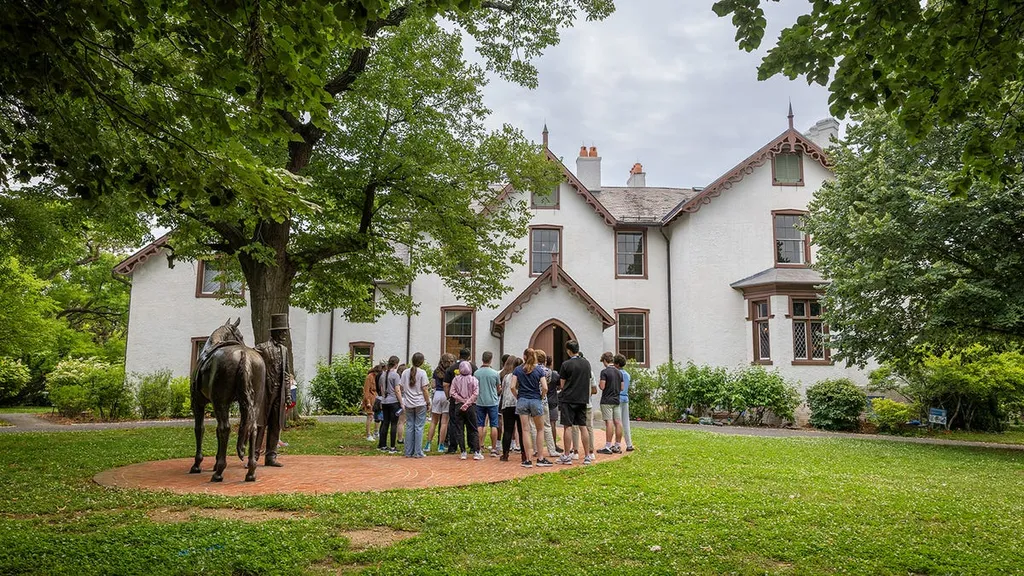
The home, a 34-room Gothic Revival country estate now known as President Lincoln's Cottage, stands on a 250-acre campus on the outskirts of the city and offers visitors the chance to experience the same view the Civil War-era president once admired.
Though Lincoln spent over a quarter of his presidency at the estate, it became a national monument in 2000, under President Bill Clinton, and was opened to the public in 2008.
Hidden gem location
Far from downtown, the site is an under-the-radar tourist destination, which is what made it an ideal escape for the Lincolns, but it struggles to draw visitors in 2026. To get to the cottage from the National Mall, visitors will either need to drive, hire a car or take public transportation.
One-hour tours of the home are offered daily from 10 a.m. to 3 p.m. Tickets are $15 for adults and $5 for children six to 12.
Why President Lincoln's Cottage matters
Grief first brought the Lincolns to the home in 1862. In February of that year, the president's 11-year-old son Willie tragically died from typhoid fever in the White House.
Devastated by the loss, first lady Mary Todd Lincoln refused to go in parts of the home that reminded her of her son and told the president she felt the residence was haunted. She asked to leave the White House, and the couple found solace at the Soldiers' Home (as it was then called), a mansion built in 1842.
The Lincolns moved in in June 1862.
During the president's first summer at the estate, he drafted the preliminary Emancipation Proclamation. The building's master bedroom holds a replica of the walnut desk used to write the executive order.
The original sits in the White House's Lincoln Bedroom.
Callie Hawkins, CEO and executive director of the site, said one of the greatest challenges with preserving the home is what happens with time.
"Everybody knew that it was here. But as the campus became more and more closed off due to a number of different factors, people kind of forgot about it," she said. "But what we've really tried to focus on is providing really an unparalleled look at Lincoln."
As a result, the museum is sparsely furnished, but officials added pieces to spark conversation on the president's legacy.
Plan your visit to President Lincoln's Cottage
At the cottage, visitors are invited to sit on 19th-century chairs and pull themselves up using the original wooden banister, unlike most historic homes. Instead of looking at rooms full of stuff, Hawkins wants to create an experience that evokes reflection and thought on the first family.
Still, there are occasional Lincoln accents. A top hat hangs from a wooden mirror in the foyer. The windows are adorned with 19th-century lace curtains.
Life at the cottage
Living at the home exposed the president to wounded soldiers and self-emancipated adults and children. There were constant funeral processions as the cemetery below saw 30 to 40 burials per week, bringing the war to the president's doorstep.
Lincoln last visited the home a day before his assassination in April 1865. He planned to return in the summer, but the family never came back. The residence sat empty.
After his death, the cottage remained a vacation home for presidents, became an office and community center for the retirement home, and a dormitory for female residents.
Most recently, it was the public affairs office for the retirement home.
The idea to turn the cottage into a museum emerged around 2000. The National Trust for Historic Preservation raised $17 million to renovate the site, and it opened to the public eight years later. Most of the visitors who come to the cottage hear about it through word of mouth, museum officials said.
In addition to the historic house and visitor center, the cottage hosts Students Opposing Slavery, a youth education program for students ages 14 to 24 that teaches both Lincoln's legacy and contemporary issues of slavery.
"We don't have a lot of spaces in society where we can gather with strangers and some of our closest people and have deep, thoughtful, reflective conversations that remind us about what is so special about this country," Hawkins said.
Lincoln often spoke of the unfinished work of our nation and the pursuit of a more perfect union, the museum director noted. She wants the cottage to serve as a stepping stone for visitors to determine how they want to be involved in shaping our country's future.
"Lincoln really is no good to us if we leave him enshrined in a temple and seated on a throne," said Hawkins. "We need leaders whom we can interrogate and really add nuance and complexity to their legacies."