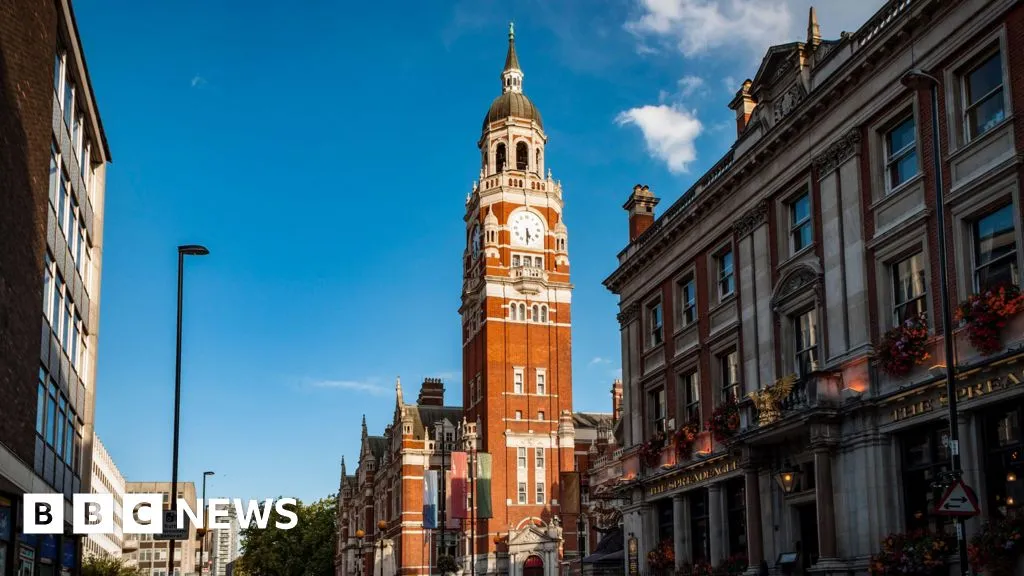
Ahead of the local elections on Thursday 7 May, we have produced short guides to London's 32 boroughs.
Where is it? The London Borough of Croydon is in south London and is bordered by Sutton, Merton, Lambeth, Bromley and Surrey.
What's it like? Croydon has become a centre of high-rise living and a commercial hub with a tram system. The south of the borough is part of a national nature reserve including rare flower-rich chalk downland, that looks as rural as Croydon town is urban.
Neighbourhoods: Central Croydon, South Croydon, East Croydon, West Croydon, Norbury, Thornton Heath, Shirley, Sanderstead, Coulsdon, Purley.
Places of interest: Museum of Croydon, Croydon Minster, Croydon Airport Visitor Centre (limited opening times) Fairfield Halls, Addington Hills, Sanderstead Plantation, Whitgift Centre, Surrey Street Market and the South London Downs National Nature Reserve.
Pub quiz fact: Mayday! The emergency word was invented at Croydon Airport by radio operator Frederick Stanley Mockford and was approved for cross-Channel flights in February 1923.
Population (2024 estimate): 409,342 - Croydon is the most populous borough in London.
Demographics: According to the 2021 census, 48.4% identify as white, 17.5% as Asian, 22.6% as black, 7.6% as mixed race and 3.7% as another ethnic group.
Average property price: According to the Office for National Statistics (ONS), the average house price in Croydon in December 2025 was £402,106.
Average monthly rent: The ONS reported that the average monthly rent in Croydon was £1,556 in February 2026.
Council tax: Band D council tax in the borough for 2026-27 is £2,600.
Transport: According to Transport for London there are two London Overground stations, 24 tram stops and about 990 bus stops in Croydon. There are also more than 20 railway stations in the borough.
Local history: Croydon existed before the Norman Conquest as a Surrey parish. The Domesday Book records more than 300 people living there in 1086. By the Middle Ages it was a market town and in 1803 a horse-drawn iron railway opened, linking it to Wandsworth.
The expansion of the railways made Croydon a major commuting town and industrial area - it used to be known for car manufacturing. It was also the site of London's main international airport for both cargo and passengers during the 1920s and 1930s.
Croydon was transferred from Surrey to Greater London as part of the reorganisation of local government in 1965.
What is the borough's electoral history?
Croydon was formed from the merger of the Surrey borough of Croydon and the urban district of Coulsdon and Purley, to become part of Greater London.
In the past 60 years it has gone from no overall control (NOC) to Conservative from 1968 to 1994, then Labour until 2006, back to the Conservatives until 2014 then Labour and finally in 2022 back to NOC.
What happened in 2022?
The council fell to NOC, but the Conservatives won the first ever election for the directly-elected mayor of Croydon.
The turnout in the council election was 34.4% and there was a swing of 5.1% from Labour to the Conservatives.
- Labour 34 seats (-7)
- Conservatives 33 seats (+4)
- Green 2 (+2)
- Lib Dems 1 (+1)
Jason Perry was elected as mayor of Croydon in May 2022.
The inaugural mayoral contest was a close-run race with the Conservatives beating Labour by 589 votes.
The Conservatives have held three by elections on the council since 2022. Labour has held one seat in a by-election.
Croydon has government inspectors overseeing it and the borough has effectively gone bankrupt three times since 2020.
Croydon's mayor will be directly elected by voters on 7 May.
Professor Tony Travers, of the London School of Economics, said: "Croydon currently has a Conservative mayor but a no overall control council.
"It could well be that the Conservative mayor, by bringing together the centre-right vote, holds on, but the council looks as if it will split with four or five parties winning seats.
"So it will be very 'no overall control' indeed."