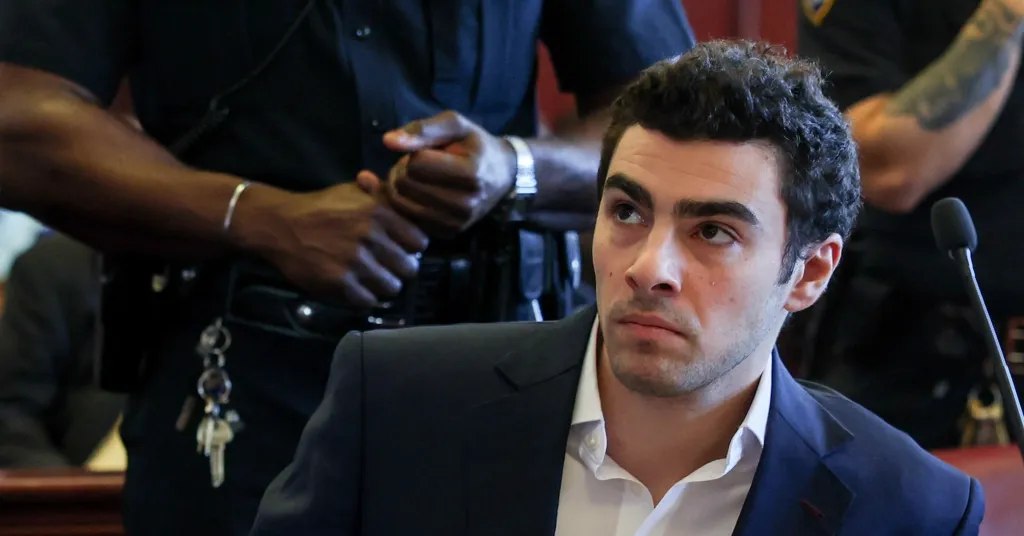
NEW YORK, Feb 6 (Reuters) - Luigi Mangione will face trial on June 8 accused of gunning down a health insurance executive on a sidewalk in Midtown Manhattan, a state court judge said on Friday.
While being led from the courtroom in prison garb and shackles, Mangione said the decision would unfairly expose him to two trials for the same offense due to his looming October 13 trial date in a separate federal case.
"It's the same trial twice. One plus one equals two. Double jeopardy by any common-sense definition," Mangione said. Double jeopardy refers to the U.S. legal doctrine that people cannot be prosecuted twice for the same crime.
Mangione's lawyer Karen Agnifilo objected to the trial date. She said the defense would not be ready in time and accused prosecutors of seeking "two bites at the apple."
Mangione has pleaded not guilty to murder, weapons and forgery charges. He also pleaded not guilty to stalking charges in the federal case.
Supreme Court Justice Gregory Carro, who set the trial date in the state case, expressed frustration that federal prosecutors "reneged" on a promise to let state prosecutors go first.
Prosecutors with the office of Manhattan District Attorney Alvin Bragg have been pushing for a speedy trial in hopes of going before federal prosecutors.
Assistant District Attorney Joel Seidemann said during the hearing that state prosecutors are entitled to go first because they were the first to arrest Mangione
Mangione, 27, has pleaded not guilty to murder and other charges related to the killing of UnitedHealthcare CEO Brian Thompson. Public officials condemned the assassination, but it sparked an outpouring of criticism of U.S. health insurance industry practices.
Thompson, who led UnitedHealth Group's (UNH.N) health insurance business, was shot and killed on December 4, 2024 outside the Hilton hotel where he was staying for an investors' meeting.
Mangione was arrested in Pennsylvania after a five-day manhunt and has been jailed ever since. He became an online folk hero for some Americans who decry steep healthcare costs and claim denial practices by insurance companies.
State prosecutors initially charged Mangione with terrorism, but Carro threw out that charge after finding there was not enough evidence to show Mangione's alleged actions were aimed at influencing public policy.
Federal prosecutors with the U.S. Attorney's Office for the Southern District of New York separately brought murder, weapons and stalking charges against Mangione and said they would seek the death penalty.
The judge overseeing that case threw out the murder and weapons charges on a legal technicality in January. That eliminated the possibility of the death penalty, but Mangione could face life in prison if he is convicted of stalking.