Maryland has some of the highest cases of Lyme disease in the nation, yet funding for research is in jeopardy.
Lyme disease is the most common and fastest-growing vector-borne disease in the United States. Approximately 476,000 Americans are diagnosed and treated for it each year, according to the Centers for Disease Control and Prevention (CDC).
In Maryland, Lyme disease cases have nearly doubled since 2020, according to the latest data from the Maryland Department of Health.
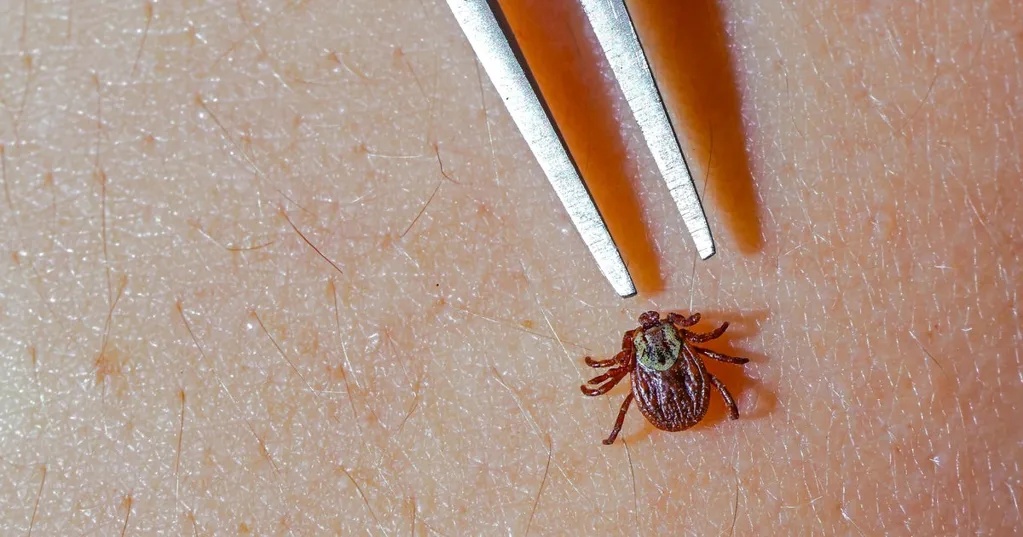
The infection is spread by black-legged tick bites, or deer ticks, which are most common across the eastern U.S. In early stages of the disease symptoms appear as flu-like, but if left untreated, it can affect the joints, heart, and nervous system.
"It's not an illness that can be taken lightly," said Nicole Baumgarth, director of the Lyme and Tickborne Diseases Research and Education Institute at Johns Hopkins University. "These long ongoing symptoms can really change some person's life."
Baumgarth said the Kay Hagan Tick Act was a big source of funding for Lyme disease research. It provided $30 million annually from 2021-2025 for prevention, early detection, and treatment of tick-borne and other vector-borne diseases.
The funding enabled the first-ever clinical trial for a Lyme disease vaccine for humans, which is currently underway at the MaineHealth Institute for Research.
Now some lawmakers are pushing to renew the Kay Hagan Tick Act. The new reauthorization act would provide more than $27 million annually through 2030. It's named after former North Carolina Senator Kay Hagan who died from a tick-borne disease in 2019.
Democratic Rep. Jamie Raskin of Maryland is a co-sponsor of the companion bill in the House bill to reauthorize the Kay Hagan Tick Act.
A date has not yet been scheduled for a full vote in the Senate.
In 2025, researchers across the country faced federal funding cuts and tick-borne disease researchers were no exception.
Funding from the Department of Defense for Lyme and other tick-borne disease research was eliminated in 2025, after previously receiving $7 million in Fiscal Year 2024.
Congress's March 2025 continuing resolution to fund the government for the rest of the fiscal year included a 57% cut to the Department of Defense Congressionally Directed Medical Research Programs (CDMRP). Funding for the Tick-Borne Disease Research Program (TBDRP), fell under this umbrella and was cut for 2025.
In June, Johns Hopkins University joined a federal lawsuit to block cuts to research funding by the Department of Defense. Johns Hopkins has active grants from the Department of Defense totaling approximately $375 million across multiple years, according to the university.
Baumgarth said she applied for grant funding with colleagues through CDMRP.
"We spent weeks and months writing, and it's just not being considered," said Baumgarth.
It was for research to identify biomarkers that could tell early on if a patient was likely to develop Post-Treatment Lyme Disease Syndrome, sometimes referred to as "long Lyme." It's when patients experience prolonged symptoms of the disease.
Another source of funding for Baumgarth's lab is the National Institutes of Health.
"The NIH has massive funding delays currently," said Baumgarth. "That affects, of course everybody not just tick-borne illnesses but that is still our biggest source of funding."
One grant Baumgarth submitted studies the impact of Borrelia burgdorferi infection (the disease-causing agent of Lyme disease) on gastrointestinal health and immune dysfunction. It's undergone both peer review and NIH council review, but she has not been told whether it will be funded.
Another grant application she's submitted focuses on developing a predictive model of what type of ticks may be in a particular location, what diseases they may transmit and the likelihood of that transmission. Baumgarth is hoping to learn more once it undergoes a peer review set for early January.
"Every researcher that runs a lab is running, in a way, a small business," said Baumgarth. "We hire people; we have to lay people off if the funding runs out; and so we are used to the sort of coming and going of grants; but it seems that the playbook has changed and so it's very hard to predict where the money comes [from], when it will come, will it come in the total amount we requested or half the amount; and so that uncertainty makes it very difficult."
Baumgarth said she is fortunate her lab has not had to lay people off yet, but said that might change in the future.
Johns Hopkins University consistently receives more funding from the NIH than any other university or entity in the U.S. In fiscal year 2024, it received approximately $1,022,300,000 in research funding from NIH, according to the university. In February, Johns Hopkins joined a federal lawsuit against the National Institute of Health over medical research funding cuts.
Most Lyme disease cases are found in states in the Northeast including Maryland, New York, Pennsylvania, Massachusetts and New Jersey.
"Certainly climate is driving a lot of this," said Baumgarth. "Ticks like it warm and they like it moist and so as the northern hemisphere is currently increasing in temperature clearly that becomes more hospitable for ticks."
Climate change exacerbates the problem because ticks that carry the Lyme-causing bacteria are expanding their ranges, according to the CDC. As of 2023, Wisconsin now has the fifth highest number of Lyme disease cases in the U.S.