A mother-daughter tale inspired by director Clare Watson's life, the family show has a fantastic cast, an innovative set and all the hallmarks of a hit.
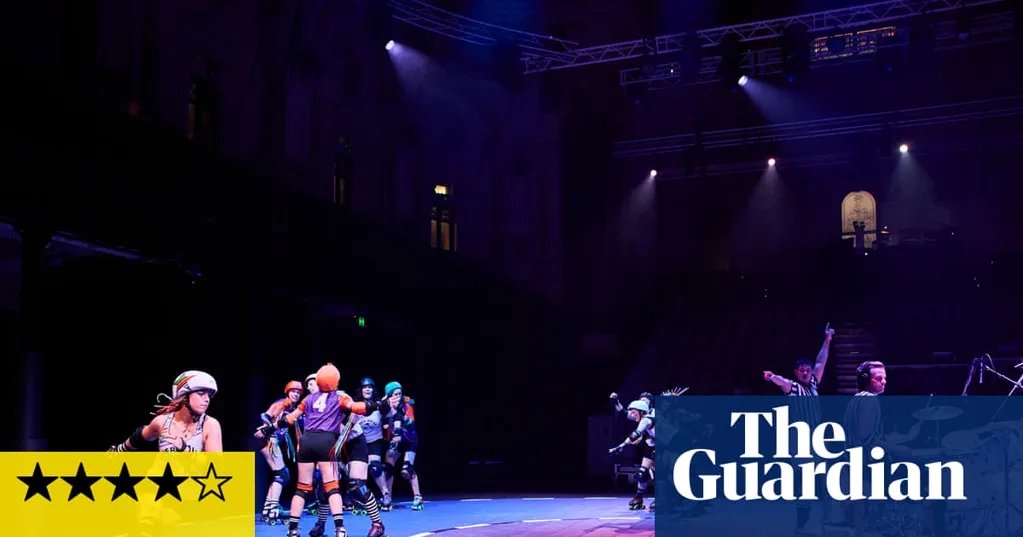
Sydney's Town Hall has transformed into a tennis court and a beach for recent iterations of the Sydney festival; this year, it's a roller derby rink, with a moving set and music stage, and a live band belting covers.
Inside the ornate Victorian interior of Centennial Hall, an oval flat track has been installed; on either side are stadium-style seating banks. This is the set for Mama Does Derby, the new family dramedy from Adelaide's Windmill Production Company, premiering in Sydney ahead of Adelaide festival.
There's something thrilling about seeing art in unusual spaces, and about seeing familiar places rendered strange and wonderful through art. This has become the bread and butter for city festivals over the past decade, offering the thrill of the catch-it-while-you-can live communal experience as a counterpoint to our increasingly isolated lives.
As the audience fills the seating banks on opening night, a flock of skaters drawn from the Sydney Roller Derby League are already in flight, running drills and relaxed loops around the track. By the time the show's lead actors appear, even a roller derby novice has got a sense of the sport.
We'll have to wait a while longer to find out how roller derby fits into this tale. First, we meet our protagonists: mum Maxine, or Max (consummate comic actor Amber McMahon); and teen daughter Billie (Elvy-Lee Quici). They're here to usher us into their story: a globetrotting, fly-by-the-seat-of-her-pants, hot-mess single woman and her earnest, anxious, responsible-beyond-her-years daughter, who unexpectedly inherit a rundown house in regional Victoria, and are forced to a standstill in which their demons and dysfunctions catch up with them.
Over the next 90-or-so minutes, we get to know and love Max and Billie and their droll, Gilmore Girls-esque comedy-duo energy, and watch as they build a new life and community: Billie with school and driving lessons, Max with a new hobby - roller derby. There’s an eccentric neighbour, a fastidious counsellor-cum-family therapist, cute love interests for both Max and Billie, and a fabulous spandex-clad demon called Nathan (Benjamin Hancock, take an extra bendy bow please), who threatens to steal every scene he’s in. The entire cast is fantastic, and even these smaller parts are living, lovable characters rather than mere narrative chess pieces.
Mama Does Derby is inspired by director Clare Watson's real life experience. She entrusted the scripting to friend and former collaborator Virginia Gay - and you couldn't pick a better theatre-maker for the job. As the writer and lead of shows such as Calamity Jane and Cyrano, Gay has proven herself a virtuoso in a kind of generous, communal, fourth wall-breaking theatrical style that brings people in, and a special-sauce narrative mix of relatable comedy and vulnerability. Gay makes shows that are like a big hug, full of heart and community.
It's what we all need right now - and this show knows it. It might be a mother-daughter tale, but Billie is the heart of it: beset by the anxiety of living in an erratic co-dependent relationship within a politically and socially unstable world on the brink of climate catastrophe, in which gender-based violence is on the rise - and, as she reminds us, there are literal Nazis on our streets. "I think being a grown up means dissociating," Max quips early on. Billie is still a teen though, and the show is really about her facing her fears, finding her strength and stepping up to advocate for her needs.
Gay navigates this with a typically light touch, and she and Watson keep things - for the most part - clipping along, with witty banter and playful pop cultural references, moving stage pieces, and fast-flowing transitions between scenes and music breaks. Skaters thread in and out, serving as stage hands when they're not playing themselves, holding props or pushing larger pieces of stage furniture - therapy couches, a makeshift car - around the track.
As with most new Australian work, there are some lags in momentum and some repetition. It feels like 15 minutes could be shaved out of the script with no noticeable deficit; the music breaks are too frequent and long, and the skating sequences are frustratingly slow at times. For a roller derby show, it takes a little too long for that part of the narrative to arrive.
But these are small quibbles for this ambitious, entertaining and irresistibly warm show that speaks not only to parents and teens but to the broader community; the village it takes to raise young people and sustain the rest of us.