Maps released with the American Lung Association's State of the Air 2026 report paint a stark picture of where breathing air might be most dangerous in the United States -- especially for children.
From sprawling metro areas in California and the Southwest to parts of Texas, the Midwest and the Northeast, the report, which was released this week, shows large portions of the country continue to struggle with unhealthy levels of air pollution, even after decades of progress under the Clean Air Act.
The annual report evaluates air quality using county-level data collected from 2022 through 2024, grading communities on ground-level ozone -- commonly known as smog -- as well as short-term and year-round exposure to fine particle pollution. These pollutants are linked to serious health consequences, and children are among those most at risk.
Several metro areas repeatedly appear among the worst places to live for air pollution. California dominates many of the "most polluted" lists, with communities in the Central Valley and Southern California ranking especially poorly for both ozone and fine particle pollution. Bakersfield, Fresno, Visalia and Los Angeles remain among the most polluted regions in the nation, driven by a combination of traffic emissions, industrial activity, geography that traps pollutants, and increasingly frequent wildfire smoke.
Outside California, the report highlights persistent problems in parts of Texas, including metro areas such as Houston, Dallas-Fort Worth, Brownsville and McAllen, which rank high for unhealthy ozone days. The Southwest and Mountain West also face challenges, particularly during wildfire season, while cities like Phoenix and Las Vegas struggle with smog formation fueled by extreme heat.
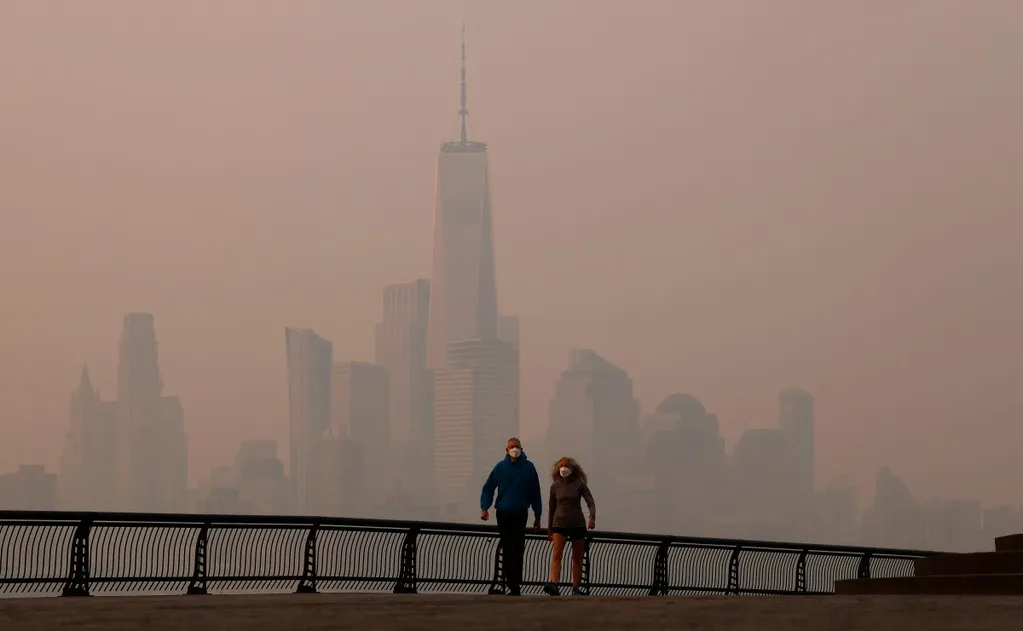
The Midwest and Northeast are not spared. Maps show that large population centers, from Chicago to New York and Philadelphia, experience repeated days of unhealthy ozone or soot levels, often during summer heat waves. In some regions, short-term spikes in particle pollution -- frequently tied to wildfire smoke transported hundreds or even thousands of miles -- have become more common.
While poor air quality poses health risks to people of all ages, the report underscores that children are particularly vulnerable. Their lungs are still developing; they breathe more air relative to their body size than adults; they often spend more time outdoors—factors that increase their exposure to harmful pollutants.
Exposure to ozone can inflame airways, reduce lung function and trigger asthma attacks. Fine particle pollution can penetrate deep into the lungs and even enter the bloodstream, contributing to respiratory infections, worsened asthma and other long-term health problems. For children, these exposures can carry lifelong consequences.
The report warns that breathing polluted air in childhood is associated with reduced lung growth, a higher likelihood of developing asthma, and increased risk of respiratory disease later in life. Some research cited in the report also links early exposure to air pollution with impaired cognitive development and potential impacts on cardiovascular health.
Infants and very young children are at particular risk because their immune and respiratory systems are still maturing. Even prenatal exposure to polluted air has been associated with lower lung function in early childhood, according to the findings summarized in the report.
One of the most alarming findings in the report is the sheer number of children exposed to unhealthy air. Nearly half of all children in the United States live in counties that earned failing grades for at least one measure of air pollution. Millions live in communities that fail all three measures considered in the report: ozone, short-term particle pollution and year-round particle pollution.
The maps included in the report show that these exposures are not evenly distributed. Children living in densely populated urban areas are often exposed to vehicle emissions and industrial pollution, while those in the West and Southwest face growing risks from wildfire smoke. Rural communities are also affected, although limited air monitoring in some regions means the true extent of exposure may be undercounted.
The report links worsening air quality trends to a combination of climate-driven extremes and policy challenges. Rising temperatures contribute to the formation of ground-level ozone, making hot, sunny days especially dangerous for smog buildup. At the same time, longer and more intense wildfire seasons have driven increases in fine particle pollution, sometimes affecting regions far from the fires themselves.
For example, on Friday morning, air quality alerts remain in place across parts of the Carolinas because of wildfires raging in Georgia and Florida.
"Sensitive groups should reduce prolonged or heavy outdoor exertion, take more breaks, and do less intense activities especially during afternoon and early evening hours," an air quality alert in South Carolina said. "You can help prevent ozone pollution by walking or riding your bicycle, taking your lunch to work, reducing idling, conserving energy, and keeping your vehicle properly tuned."
Smoke from large wildfires can degrade air quality across entire states or multiple regions at once, exposing children to dangerous levels of soot even in places that historically enjoyed cleaner air.
Health officials urge parents and caregivers in high-risk areas to pay close attention to air quality alerts, especially on days when ozone or particle pollution reaches unhealthy levels. Children with asthma or other respiratory conditions are particularly susceptible, and even healthy children can experience symptoms such as coughing, wheezing or shortness of breath during poor air quality days.
The report advises limiting outdoor activity when air quality is poor, ensuring schools and child care facilities follow air quality guidance, and using indoor air filtration where possible. However, the report also stresses that individual precautions cannot substitute for broader efforts to reduce emissions and improve air quality nationwide.
As policymakers debate the future of air quality regulations, the report warns that the health of millions of children hangs in the balance. Without stronger protections and sustained efforts to reduce pollution, the places labeled on these maps as the worst for air quality might remain dangerous environments for children to grow up in for years to come.