The election results are due Friday, with Modi's Bharatiya Janata Party aiming to capture Mumbai for the first time, and a win will be seen as a barometer of voter sentiment in urban India.
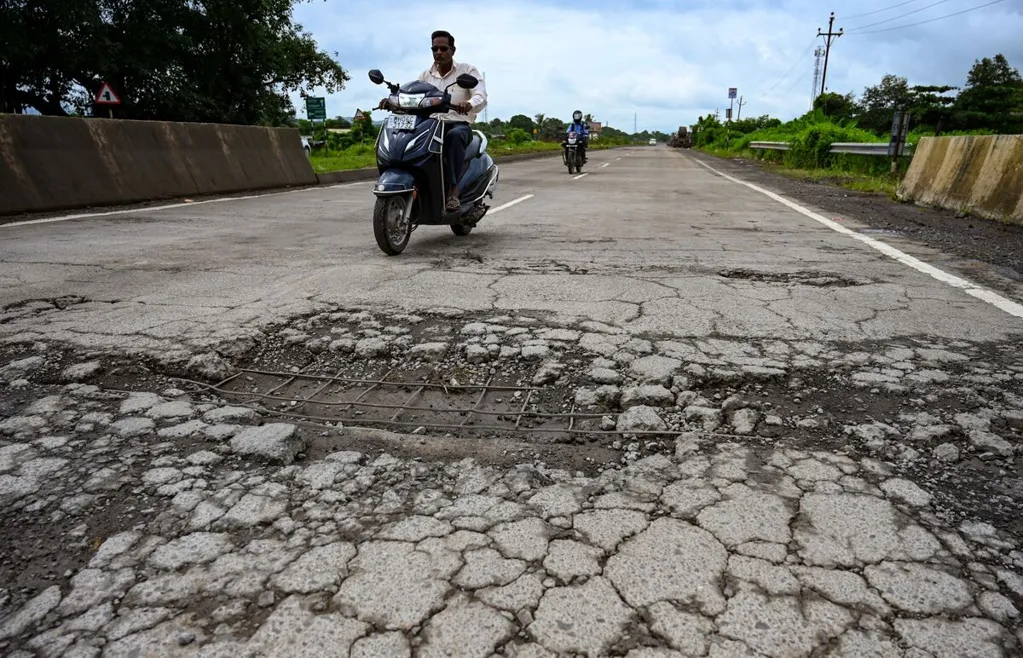
Mumbai is known for potholed roads, traffic snarls and monsoon flooding. On Thursday, the municipality will hold long overdue elections to choose new councilors to upgrade India's financial capital.
Voters will elect leaders for a civic governing body with a budget of almost 800 billion rupees ($8.9 billion), the richest in the country and about five times that of national capital New Delhi. They will be tasked with delivering on an ambitious $30 billion plan to transform the city's creaking infrastructure to bring it at par with other Asian mega cities like Tokyo and Hong Kong.
Home to about 20 million residents, including some of the wealthiest business leaders in the region, the city is undergoing rapid changes that includes building new bridges, roads, underground rail and an ambitious plan to redevelop Asia's largest slum. Overhauling weak infrastructure is a priority for Prime Minister Narendra Modi as he seeks to draw more foreign capital flows and match India's aesthetics to its ambitions -- or in his words, create "several Singapores" in the country.
"Mumbai is the crown jewel of India's global ambitions and its pretty natural for political parties to vie for its control," said Sanjay Patil, a researcher with University of Mumbai. "Municipal bodies have a significant say in policy making and this election gathers more significance because new leaders will define how Mumbai's massive infrastructure growth shapes up."
Results are due Friday with Modi's Bharatiya Janata Party aiming to capture Mumbai for the first time ever. A win will be seen as a barometer of voter sentiment in urban India ahead of larger electoral battles.
The BJP is contesting most seats with its ally, the Shiv Sena faction led by Eknath Shinde. But Modi's party which governs the province of Maharashtra and whose capital is Mumbai, faces criticism over civic issues such as water supply, waste management and urban services.
Last year, Modi inaugurated two transit projects worth $4 billion, including an airport developed by the Adani Group. In addition, an ambitious $1.5 billion redevelopment project in under way to transform one of the world's largest slums into a modern township.
Close to half of Mumbai's population lives in slums, with its cost of living the highest in the country.
Nevertheless, signs of Mumbai's growing importance in international finance are hard to miss. Commercial real estate is booming and salaries for top bankers have already surpassed those offered in Hong Kong. Global family offices are bullish on exposure to India, the world's fastest-growing major economy. BlackRock Inc. has ventured back country's asset management business, and HSBC Holdings Plc, which shut its private banking operation in India a decade ago, has reopened its business.
Some other global firms are also betting on Mumbai's future. Singapore-based Mapletree Investments Pte is building a 2 million square foot commercial complex spread across two towers. And Japan's Sumitomo Corp. entered into a new building project near Mumbai's office district and which is slated for completion in 2028.
To lure more foreign capital into the world's densest metropolitan area, billions more will have to be allocated by the municipality -- which has been called one of the most corrupt institutions by the Bombay High Court in 2011 and is often accused of mismanaging funds amid an influx of immigrants who come looking for jobs and better livelihood.
"The next administration must also address the realities of informal labor and housing, which support a large part of Mumbai's population," said Sheema Fatima, an assistant professor at the Balwant Sheth School of Architecture. "Losing the sense that residents have a voice and a stake in their neighborhoods is extremely dangerous for the future of the city."