Claudia Sheinbaum's decision to halt oil shipments to Cuba is testing her standing within Mexico's ruling party just over a year into her presidency, even as it staves off confrontation with Donald Trump.
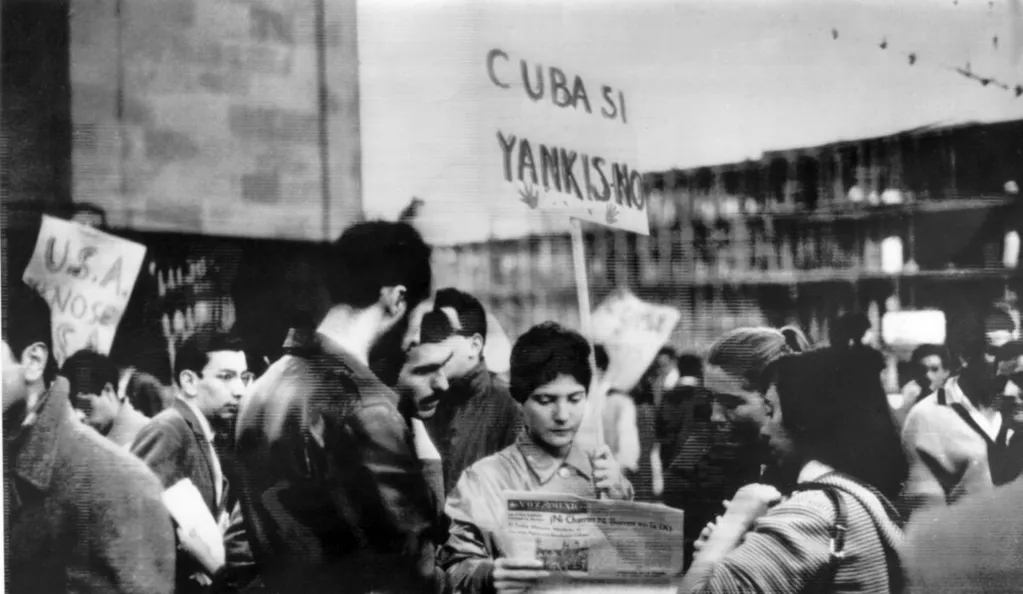
Mexico's political left has seen Cuba as a source of inspiration ever since Fidel Castro and Che Guevara hatched the 1959 revolution in the nation's capital. A trip to the island, not far from the Yucatan Peninsula, has since been a rite of passage for thousands of young Mexicans seeking to strengthen their ideological credentials.
The relationship between Cuba and Mexico, however, goes beyond youthful romanticism or political idealism. Havana's clash with Washington after Castro took power helped form key pillars of Mexico's foreign policy, including non-intervention, self-determination and pacifism. Which is why Sheinbaum is doing everything she can to avoid shunning the island entirely.
Though it's becoming a minority, the leftist wing of the governing Morena Party that supports Cuba and other socialist nations like Venezuela remains powerful, according to Viridiana Rios, a political analyst and columnist. "They are an important faction, no doubt," she said in an interview. "They have a share of the presidential communication office, they have Mexico City, they have positions in Congress at the federal level."
While Sheinbuam will continue to send aid to Cuba out of personal and political conviction, if forced to choose outright between Washington or Havana, Rios sees the president siding with the US no matter the internal consequences. Doing so would "cause a big stir among sectors of the traditional left, but her priorities seem clear," Rios said.
Chief among those priorities at the moment is shielding Mexico's export-focused economy from potential harm. At the end of January, Trump threatened punitive tariffs on any nation that supplies oil to Cuba -- a move aimed squarely at Sheinbaum.
Historically, though, US attempts to isolate Cuba through aggressive economic sanctions in 1960 changed how Mexico approached the world.
The imposition of a trade embargo on the island, for example, strengthened what's known as the Estrada Doctrine. Created in 1930 by Genaro Estrada, the foreign minister at the time, it says Mexico won't formally recognize any foreign government because doing so would be akin to meddling in the internal politics of another country.
Then the Cuban missile crisis, which brought the US and Russia to the brink of nuclear war in 1962, prompted Mexico to work toward the Treaty of Tlatelolco. Signed five years later, the pact made Latin America a nuclear disarmament zone. Its author, Alfonso Garcia Robles, another foreign minister, was awarded the Nobel Peace Prize in 1982 for his efforts.
Even Mexico’s more conservative administrations, such as those of Carlos Salinas and Vicente Fox, maintained their support for Cuba. Doing so allowed them to avoid conflict with the political left and, at the same time, reinforce the country’s sovereignty and independence from Washington.
Shipments of crude to the island, meanwhile, are nothing new. Ever since the 1970s oil boom, Mexican governments have used fuel as a means of exerting influence on both Cuba and other countries in the region.
"There is nothing hidden, nothing shady, nothing wrong being done," Sheinbaum told reporters at her daily press briefing on Feb. 4. "Mexico has always supported Cuba, even under the most authoritarian Mexican governments."
Asked about Cuba's single-party system and lack of democracy, Sheinbaum refused to denounce or even acknowledge either fact. "That's your opinion. There are different ones and we respect them," she said. "You can support, or not, Cuba's regime but the Cuban people are the Cuban people and Mexico doesn't abandon anyone."
A day after Sheinbaum's remarks, Cuban President Miguel Díaz-Canel held a rare press conference in which he signaled he'd be willing to negotiate with the US, but not over Havana's system of government. Later, he included Morena on a list of supporters of Cuba in its time of need.
Though Sheinbaum opted to bow to Trump's tariff threat and halt oil shipments, she also decried his Cuba policy as "unfair" and warned it risks creating a humanitarian disaster. Her repeated commitment to keep sending non-energy aid -- two ships loaded with food and personal hygiene products that left Mexico last weekend arrived on Thursday -- appears aimed at keeping key figures in Morena onside.
Paco Ignacio Taibo II, who heads one of Mexico's leading cultural institutions, wrote one of the most widely read biographies of Che Guevara. Martí Batres, named after Cuban independence hero Jose Martí, is one of Mexico’s top health officials and one of the Cuban regime’s biggest defenders.
Luisa Alcalde, Morena’s president, argues its official position remains one of support to Cuba and a full rejection of US interventionism. “We must always uphold our policy,” she said on a party podcast. “No country owns the world, can dictate to others, or impose blockades because it does not like their economic model.”
A full break from Cuba would sever an important link with the left-wing coalition surrounding the governing party. And withholding fuel will become increasingly hard to defend should the already dire humanitarian situation on the island worsen to the point of a headline-making crisis.
Getting all the support she needs to advance her political agenda won't come as easy as for Sheinbaum as it did for her predecessor and mentor, Morena founder Andrés Manuel López Obrador. His inauguration was attended by both Ivanka Trump and Cuban troubadour Silvio Rodríguez, who dedicated his song El Necio, or "The Stubborn One," to the incoming president at a concert in Mexico's largest public square.
Sheinbaum will need a dose of that stubbornness to stand her ground on Cuba -- both internally and externally.