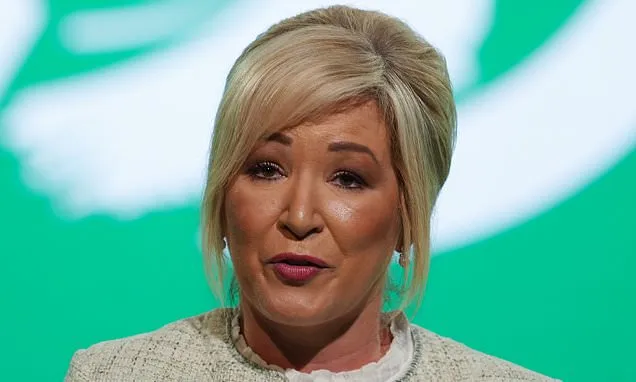
Michelle O'Neill has declined to say if Sinn Fein's proposed Stormont reforms would see an equalisation of the First and deputy First minister labels, saying she is "not fixated on titles".
The First Minister also described a "very challenging arrangement" with the DUP in the Executive, claiming the party "seeks the days of unionist misrule".
In her speech opening the Sinn Fein Ard Fheis on Friday, the party's vice-president said they would work to "reform the institutions of the Assembly" in an effort to "end the blockage on progress."
Speaking to the media in Belfast outside the party's conference on Saturday, Ms O'Neill said the party would bring forward proposals "in the next number of weeks" because "politics has to work for people".
"Whilst you move towards constitutional change and the (Irish unity) referendum being put to the people, in the meantime we will work to reform the institutions, to try to make them work better, make them deliver for people better," she said.
When Sinn Fein held the office of deputy First Minister under Martin McGuiness the party used the title 'Joint First Ministers' reflecting the roles' equal power and responsibilities in the Executive.
Asked if their reforms of Stormont institutions would see an equalisation of the titles, Ms O'Neill said the party will "look at everything in the round".
"The reform can't be superficial," she said.
"The reform has to be something that's meaningful, that actually makes politics work better and we say a lot more about that.
"Titles of the office don't make politics work better.
"Partnership working makes politics work better, good partners in government makes politics work better, delivers better for people.
"So I'm not fixated on titles."
The First Minister said the public "understand the DUP are who they are".
"They seek yesterday, they seek the days of unionist misrule but that's not available to them," she said.
"So I think the job of work here in politics is, and our eyes are certainly very wide open when we walked into those doors when I became First Minister, the DUP weren't going to change their ways, they weren't going to stop trying to attack everything to do with Irish national identity, they weren't going to stop trying to be who they are, which is reaching for yesterday.
"So I think we're alert to that, I think the public are alert to that, so you have to recognise the challenge of the public arrangement and it is a very challenging arrangement. It's very, very difficult to be there every day. But we turn up.
"We turn up for people. We turn up to try and do our best for people, despite the challenges, despite who your partners are in government.
"At the heart of the Good Friday Agreement was partnership working; you don't have that arrangement if you're honest with people; you don't have that kind of good partnership that actually would let an end itself to actually making politics work here.
"But you could either bury your head in the sand or you can keep driving forward."